

Choosing a personal finance book as a holiday gift is partly a question of what the recipient needs: a thoughtful change in perspective, or a plan they can put to work. The Psychology of Money by Morgan Housel is a collection of concise stories about behavior, risk, patience, and wealth. I Will Teach You to Be Rich by Ramit Sethi is a practical guide to organizing spending, saving, credit, and investing. The main tradeoff is reflection versus instruction. Housel is the safer pick for a broad range of readers and makes an easy-to-browse gift; Sethi is better for someone who actively wants a financial system and will follow through on its steps.

Get smart everyday buys delivered free with Prime
- Fast, free delivery on millions of items
- Prime Video, Amazon Music and more included
- Member-only deals all year
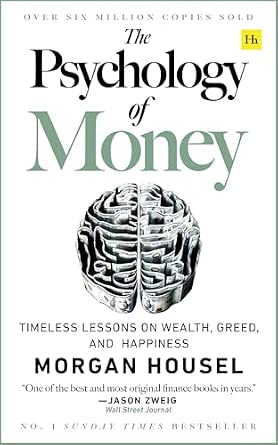
The Psychology of Money: Timeless Lessons on Wealth, Greed, and Happiness
- ✔ ASIN: 0857197681
- ✔ Format: Book
- ✔ Primary subject: How people think about money
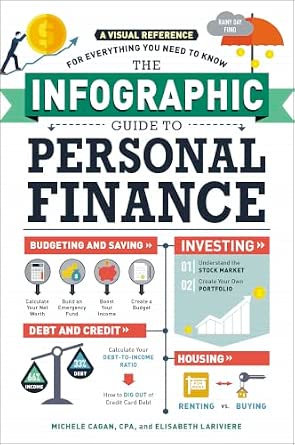
The Infographic Guide to Personal Finance: A Visual Reference for Everything You Need to Know
- ✔ ASIN: 1507204663
- ✔ Series: Infographic Guide Series
- ✔ Stated format: Visual reference guide

The Wall Street Journal Complete Personal Finance Guidebook
- ✔ ASIN: 030733600X
- ✔ Publisher attribution: The Wall Street Journal
- ✔ Stated category: Personal finance guidebook
At a Glance
| Criteria | The Psychology of Money by Morgan Housel | I Will Teach You to Be Rich by Ramit Sethi | Winner |
|---|---|---|---|
| Primary purpose | Builds perspective on money behavior and decision-making | Provides a system for personal finance decisions | Depends |
| Best suited to | Readers who enjoy ideas, stories, and reflection | Readers who want to organize finances and act | A |
| Reading style | Short, self-contained chapters | Conversational, direct, and more instructional | A |
| Practical action | Prompts reflection; fewer step-by-step instructions | Concrete tasks and suggested systems | B |
| Range of financial topics | Behavior, risk, saving, wealth, and long-term thinking | Budgeting, banking, credit cards, investing, and spending | B |
| Gift accessibility | Easy to sample and read in short sittings | More demanding; advice may need adapting to the reader | A |
| Value for money | Usually the lower-cost, lower-commitment choice | Worth a higher price for someone ready to use the plan | A |
The Psychology of Money: Timeless Lessons on Wealth, Greed, and Happiness
For a holiday gift, this is the most clearly differentiated choice in the lineup. The Psychology of Money examines how behavior and perspective shape financial decisions, with wealth, greed, and happiness named as central themes. That gives us a strong basis for matching it to someone who likes ideas that prompt discussion, rather than a book selected mainly for its reference format.Compared with The Infographic Guide to Personal Finance, this title’s appeal is explicitly behavioral, while the infographic book signals visual presentation and reference use. It also has a more defined description than The Wall Street Journal Complete Personal Finance Guidebook, whose supplied details do not explain its contents. That makes this our easiest recommendation when we want a gift with a recognizable point of view.The limitation follows from that same focus. A reader looking for a clearly specified visual resource or a detailed, step-by-step personal finance manual may find the other titles’ apparent formats more appealing. We also have no supplied information about the book’s chapter structure, particular techniques, or intended experience beyond its themes. We should choose it for its human-centered subject, not assume it covers every practical money task.
Pros:
- Has a clearly stated focus on behavior and perspective around money
- Connects financial decisions with wealth, greed, and happiness
- Offers a distinct theme compared with the two guidebook-style alternatives
- Makes a conversation-starting gift for a reflective reader
Cons:
- The supplied description does not specify practical exercises or step-by-step guidance
- Its behavior-focused premise may not suit a reader who mainly wants a visual reference
- Details about organization and specific coverage are not provided
Best for: Readers who enjoy reflective discussions about how attitudes and behavior influence financial decisions.
Not ideal for: Someone seeking a specifically described visual reference or a practical manual with confirmed topics and structure.
Bottom line: We rank it first because its defined focus on money and human behavior gives it the clearest gift appeal and strongest identity in this comparison.
“We rank it first because its defined focus on money and human behavior gives it the clearest gift appeal and strongest identity in this comparison.”
The Infographic Guide to Personal Finance: A Visual Reference for Everything You Need to Know
When the recipient responds better to visual material than to extended discussion, The Infographic Guide to Personal Finance has the most distinctive format cue here. Its title presents it as a visual reference, which separates it from the behavior-centered Psychology of Money. That could make it a fitting gift for someone who likes information presented for browsing and revisiting.We should keep the recommendation measured. The supplied description says it covers personal finance topics, but it does not identify those topics, explain how the infographics are arranged, or indicate whether it functions as a beginner’s overview or a deeper reference. Compared with the Wall Street Journal guidebook, at least this book has a stated presentation style. Compared with our top-ranked pick, however, its specific editorial perspective is less clear from the available information.That uncertainty is the central tradeoff. A visual format is a useful differentiator, but it does not tell us whether the material matches a particular recipient’s needs. We would choose it for someone who appreciates reference-style presentation, while avoiding promises that it covers any named financial subject or provides a particular level of detail. Its holiday-gift strength is how the information is presented; the supplied description leaves the precise scope open.
Pros:
- Its visual-reference positioning gives it a clear distinction from the other books
- Covers personal finance topics according to the supplied description
- May suit readers who like to browse rather than follow a behavior-centered discussion
- Belongs to the Infographic Guide Series
Cons:
- The supplied description does not name the topics covered
- The organization and level of detail are not specified
- The title’s broad promise cannot be assessed from the limited product details
Best for: A visual learner who likes browsing reference material and wants a book centered on personal finance.
Not ideal for: A recipient who prefers a strongly defined narrative or needs confirmed coverage of particular financial topics.
Bottom line: We recommend it for a visual learner because its reference format stands apart, while its unspecified scope makes it a less certain match than our top pick.
“We recommend it for a visual learner because its reference format stands apart, while its unspecified scope makes it a less certain match than our top pick.”
The Wall Street Journal Complete Personal Finance Guidebook
The title signals a traditional, wide-ranging personal finance guide, which may appeal to a recipient who would rather receive a general guidebook than a book framed around psychology or infographic presentation. That apparent role is distinct from The Psychology of Money, whose described focus is behavior, and The Infographic Guide, whose stated differentiator is visual reference.But the information available to us is unusually sparse. The supplied description identifies the book as a personal finance guidebook from The Wall Street Journal and offers no further detail about coverage, organization, audience, or format. We therefore cannot responsibly say which financial subjects it explains or how its approach compares in depth with the other two. Its broad title suggests a possible fit; it does not confirm the specific contents.For gift selection, that makes this the most conditional recommendation. It may be worth considering when the recipient already wants a general guidebook and the title aligns with that request. For a more confidently matched present, the psychology-focused book has a clearer subject, and the infographic option at least specifies how it presents information. The main drawback here is limited product detail, which makes it harder to predict whether the book suits a particular reader.
Pros:
- The title clearly identifies personal finance as its subject
- Presented as a guidebook rather than a psychology-focused book
- The Wall Street Journal attribution may be relevant to readers who recognize the publication
- Could suit someone specifically looking for a general guidebook
Cons:
- The supplied description gives no details about topics or coverage
- Format, organization, and intended audience are not specified
- Its title alone provides less basis for matching it to a recipient than the other picks
Best for: A reader who has asked for a general personal finance guidebook and is comfortable choosing based on the title.
Not ideal for: A gift giver who needs confirmed topic coverage, a known format, or a clearly described editorial approach.
Bottom line: We place it third because its guidebook positioning may fit a broad request, but limited supplied details make this the hardest book to match confidently as a gift.
“We place it third because its guidebook positioning may fit a broad request, but limited supplied details make this the hardest book to match confidently as a gift.”
As an Amazon Associate we earn from qualifying purchases.
Key Differences
The books solve different gift problems. Housel helps a reader examine the habits and assumptions behind financial choices. Its short chapters make it suitable for someone who may not want a conventional finance manual, and many ideas can be discussed without sharing personal financial details. The tradeoff is that readers looking for a complete plan may finish it inspired but still need to decide what to do next.
Sethi is more useful when the recipient has asked for help getting organized or wants a sequence of practical moves. It covers more day-to-day financial territory and pushes readers toward action. That usefulness comes with a greater commitment: the recipient must be willing to engage with prescriptive advice and adapt it to their income, debts, country, and circumstances. For an unprompted gift, Housel is less likely to feel like a critique of the recipient’s finances.
Price is rarely the decisive difference between these books; editions and retailers vary. Housel tends to offer better value as a broadly appealing, easy-entry gift. Sethi earns its place when the recipient wants a working guide and will use its recommendations. Pick according to the person, not the ambition of the gift giver.
Detailed Comparison
Primary purpose (major difference)
Housel is designed to shift how readers think about money, using stories and behavioral insights. Sethi is designed to help readers set up and manage personal finances with a more defined approach. This is a major difference: choose Housel for perspective and conversation, Sethi for a plan.
Best suited to (The Psychology of Money by Morgan Housel wins — moderate)
Housel suits a wider range of readers, including people who are curious about money but have not asked for coaching. Sethi is a stronger fit for someone who wants guidance on practical decisions and is open to a firm, action-oriented voice. Housel wins on gift versatility by a moderate margin; Sethi wins when the need is specific.
Reading style (The Psychology of Money by Morgan Housel wins — moderate)
Housel’s compact chapters can be read out of order or in short sessions. Sethi takes a more sustained, instructional approach, which can help readers who want continuity but asks for more attention. Housel has a minor-to-moderate advantage for casual or inconsistent readers.
Practical action (I Will Teach You to Be Rich by Ramit Sethi wins — major)
Sethi is the clear choice for readers seeking concrete steps around spending, saving, credit, and investing. Housel offers useful principles but leaves more of the translation into action to the reader. The gap is major if the recipient wants a checklist; it matters less if they prefer to draw their own lessons.
Range of financial topics (I Will Teach You to Be Rich by Ramit Sethi wins — moderate)
Sethi covers more of the mechanics of personal finance, including banking, credit, investing, and spending. Housel concentrates on the behavior and judgment that shape financial outcomes. Sethi wins on breadth of practical topics, a moderate advantage for a reader building a financial foundation; Housel’s narrower focus is a strength for readers interested in mindset.
Gift accessibility (The Psychology of Money by Morgan Housel wins — moderate)
Housel’s stories and short chapters make it easier to browse, pause, and return to. Sethi’s direct advice can feel more personal, particularly if the recipient did not ask for financial guidance. Housel wins by a moderate margin as a low-pressure gift. Sethi works best when the recipient has signaled interest.
Value for money (minor difference)
Both are typically available as reasonably priced books, though cost varies by format, edition, and retailer. Housel is generally the safer value when the recipient’s goals are unclear: it is accessible without requiring a financial overhaul. Sethi can be the better value for a reader who uses its system, making the winner depend on readiness and intent.
The Psychology of Money by Morgan Housel: Pros and Cons
Pros:
- Short chapters suit busy or casual readers.
- Broadly relevant ideas make it a safer gift when needs are unclear.
- Encourages thoughtful conversations about money without prescribing a single system.
Cons:
- Offers fewer step-by-step instructions for changing financial routines.
- Readers may need another resource to turn its ideas into a plan.
- Its emphasis on behavior may feel abstract to someone seeking immediate financial guidance.
I Will Teach You to Be Rich by Ramit Sethi: Pros and Cons
Pros:
- Provides a more actionable framework for everyday money management.
- Covers practical topics including spending, credit, banking, and investing.
- A strong fit for readers who have requested clear guidance.
Cons:
- Requires more attention and follow-through than a collection of short essays.
- Its prescriptive tone may not suit every reader or financial situation.
- Can feel pointed as an unsolicited gift to someone who has not asked for advice.
Who Should Choose What
Choose The Psychology of Money by Morgan Housel if:
- You want a thoughtful, accessible gift for someone interested in money but unsure where to start.
- The recipient prefers stories and ideas over assignments or a financial checklist.
- You want a book that can be read in short sessions and discussed casually.
Choose I Will Teach You to Be Rich by Ramit Sethi if:
- The recipient has asked for a practical guide to organizing their finances.
- They are ready to act on advice about spending, saving, credit, and investing.
- They prefer direct recommendations and a structured approach over broad reflection.
Skip both if: The recipient has not shown interest in money books and may interpret one as unsolicited advice; choose a gift aligned with their expressed interests instead.
Value for Money
Pay more for I Will Teach You to Be Rich only when its practical guidance matches the recipient’s goals and they are likely to use it. The extra value lies in its breadth and action-oriented structure, not in being automatically better for every reader. For a general holiday gift, The Psychology of Money is usually the safer value: it is easier to dip into and does not assume the recipient wants a financial plan. Check the edition and format, since prices vary.
Final Verdict
For most holiday gift-givers who are unsure what the recipient wants, choose The Psychology of Money. It is approachable, reflective, and less likely to feel like a personal prescription. Choose I Will Teach You to Be Rich when the recipient has asked for actionable help or enjoys structured self-improvement. The deciding factor is readiness to act: Housel is the better gift for broad interest; Sethi is the better tool for a motivated reader. Neither is a substitute for advice tailored to someone’s individual financial circumstances.
Frequently Asked Questions
Which book is better for someone new to personal finance?
The Psychology of Money is the easier first gift for someone whose interests and goals are unclear. For a beginner who specifically wants practical instructions, I Will Teach You to Be Rich may be more useful, provided its advice fits their circumstances.
Which book gives more actionable advice?
I Will Teach You to Be Rich gives more concrete direction and covers more everyday financial tasks. The Psychology of Money focuses on the thinking and behavior behind decisions, leaving readers to choose how to apply its lessons.
Is I Will Teach You to Be Rich worth paying more for?
It can be, if the recipient wants a structured guide and will work through its recommendations. If they are more likely to read a few chapters casually, Housel is often the better value even if Sethi’s edition costs only a little more.
Could a personal finance book feel awkward as a holiday gift?
It can if it seems to comment on someone’s spending or financial problems. Choose Housel for a lower-pressure gift, or give Sethi when the recipient has expressed interest in getting organized. A personal note explaining why you chose it can help make the gift feel considered.