

For couples comparing joint bank accounts, the best starting point in this roundup is The Fair Split, which focuses on combining finances when incomes and debts differ. YOURS. MINE. OURS. offers a clear three-bucket framework, while Managing Money as a Couple is geared toward beginners weighing joint, separate, and hybrid accounts. These books are guides to choosing a money system, not bank accounts or banking services themselves. The main tradeoff is how much to combine while keeping personal spending and different financial circumstances in view. Read on for how the six guides differ and which one fits your conversations best.

Get smart everyday buys delivered free with Prime
- Fast, free delivery on millions of items
- Prime Video, Amazon Music and more included
- Member-only deals all year
Key Takeaways
- The Fair Split is the most directly tailored to couples with different incomes or debts, while the three-bucket books center on dividing shared and personal money.
- YOURS. MINE. OURS. and Yours, Mine, Ours have the same subtitle and appear closely related; the supplied titles alone do not establish meaningful differences between them.
- Managing Money as a Couple and Joint or Separate Accounts? foreground the choice among account structures rather than assuming every couple should combine money.
- Two Accounts, One Future is framed around reducing conflict, which may appeal to couples whose main challenge is financial communication.
- These are books, not deposit accounts: none can be ranked on bank fees, interest, access, deposit protection, or account features based on the information provided.
| The Fair Split: How Couples Combine Finances in One Weekend, With Different Incomes, Debts and All |  | Best for Unequal Incomes and Existing Debt | Format: Guide | Subject: Combining finances as a couple | Income situations: Different incomes | VIEW LATEST PRICE | See Our Full Breakdown |
| YOURS. MINE. OURS.: A Three-Bucket System for Couples Ready to Build Financial Peace |  | Best for Couples Who Want a Shared-and-Individual Framework | Format: Book | Framework: Three-bucket system | Intended audience: Couples | VIEW LATEST PRICE | See Our Full Breakdown |
| Yours, Mine, Ours: A Three-Bucket System for Couples Ready to Build Financial Peace |  | Best for Readers Seeking the Three-Bucket Concept | Format: Book | Framework: Three-bucket system | Intended audience: Couples | VIEW LATEST PRICE | See Our Full Breakdown |
| Managing Money as a Couple: A Beginner’s Guide to Joint, Separate, or Hybrid Accounts and Financial Conversations |  | Best for Beginners Comparing Account Setups | Format: Guide | Experience level: Beginner | Account options: Joint, separate, and hybrid | VIEW LATEST PRICE | See Our Full Breakdown |
| Joint or Separate Accounts? How Couples Can Choose a Money System | 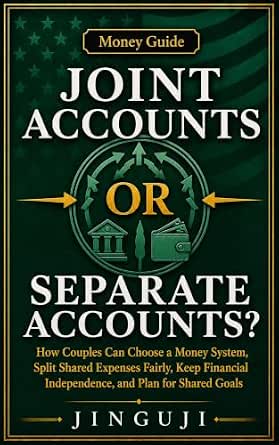 | Best for Fair Expense Sharing and Financial Independence | Format: Guide | Intended audience: Couples | Money systems: Joint and separate | VIEW LATEST PRICE | See Our Full Breakdown |
| Two Accounts, One Future: Couples’ Finances Without Fighting |  | Best for Conflict-Aware Couples | Format: Not specified | Author: Not specified | Publisher: Not specified | VIEW LATEST PRICE | See Our Full Breakdown |
| joint bank accounts for couple | Format | Intended audience |
|---|---|---|
| The Fair Split: How Couples Co | Guide | Couples |
| YOURS. MINE. OURS.: A Three-Bu | Book | Couples |
| Yours | Book | Couples |
| Managing Money as a Couple: A | Guide | Couples |
| Joint or Separate Accounts? Ho | Guide | Couples |
| Two Accounts | Not specified | — |
More Details on Our Top Picks
The Fair Split: How Couples Combine Finances in One Weekend, With Different Incomes, Debts and All
The Fair Split is aimed at couples who want to discuss a shared account without assuming both partners earn the same amount or arrive debt-free. Its focus on different incomes and existing debts gives it a more specific starting point than Joint or Separate Accounts? How Couples Can Choose a Money System, which is framed around comparing money systems and shared goals. The one-weekend framing may help couples turn a big conversation into a defined project, though it can make the process sound more straightforward than it will be for partners with complex finances or unresolved disagreements. Since the description does not name particular account structures or budgeting tools, readers seeking a detailed joint-versus-hybrid comparison may prefer Managing Money as a Couple. This pick fits couples who need to address fairness before deciding how much to pool.
Pros:- Directly addresses income differences that can complicate equal expense splits.
- Includes guidance for handling debts brought into the relationship.
- Presents the conversation as a defined weekend project.
- Focuses on combining finances as a couple.
Cons:- The weekend framing may not suit couples who need more time for difficult financial conversations.
- The description does not specify account models, budgeting tools, or detailed implementation steps.
Best for: Couples with noticeably different incomes or personal debts who want a focused starting point for combining finances.
Not ideal for: Couples seeking a detailed comparison of joint, separate, and hybrid accounts, since those options are not specified in the description.
- Format:Guide
- Subject:Combining finances as a couple
- Income situations:Different incomes
- Debt guidance:Addresses existing debts
- Suggested timeframe:One weekend
- Intended audience:Couples
Our verdict“Choose this guide if unequal incomes or existing debts are the main issues you need to resolve before sharing an account.”
YOURS. MINE. OURS.: A Three-Bucket System for Couples Ready to Build Financial Peace
YOURS. MINE. OURS. gives couples a named three-bucket framework for organizing shared and individual finances. That makes its approach more defined than The Fair Split, whose description emphasizes income differences, debts, and a weekend process rather than a particular system. For couples considering a joint bank account, the promise of distinct shared and personal buckets may help clarify what to pool and what to keep separate. The tradeoff is that both partners need to participate for the arrangement to work, and the description does not explain how the buckets are funded or managed. Couples who are still weighing account types and want conversation guidance may find Managing Money as a Couple a closer fit. This book is best for partners ready to try a structured shared-and-individual setup.
Pros:- Designed specifically around couples’ finances.
- Offers a clear three-bucket structure for shared and individual money.
- Addresses financial harmony as a shared goal.
Cons:- The approach depends on both partners actively taking part.
- The description does not explain bucket funding rules or day-to-day account management.
Best for: Couples who agree to manage money together and want a clear framework that separates shared finances from individual funds.
Not ideal for: Partners who do not want an ongoing shared budgeting system or who need guidance designed for single people.
- Format:Book
- Framework:Three-bucket system
- Intended audience:Couples
- Money categories:Shared and individual finances
- Stated aim:Financial peace
- Participation:Both partners
Our verdict“Pick this if both partners are ready to use a shared-and-individual framework, and skip it if you need a neutral comparison of account choices first.”
Yours, Mine, Ours: A Three-Bucket System for Couples Ready to Build Financial Peace
Yours, Mine, Ours is described as presenting a three-bucket system for couples seeking to build financial peace together. That gives it the same broad framework as YOURS. MINE. OURS. (ASIN B0HLPRGLSY), but the information supplied here offers fewer details about how the system works. For a joint-account decision, the concept may help partners think about shared and personal money, while the limited description makes it hard to judge whether the book provides practical setup guidance. Compared with Joint or Separate Accounts?, which explicitly covers account choices, fair expense sharing, independence, and shared goals, this title offers less stated detail about the decisions couples need to make. It suits readers drawn to the three-bucket idea who are comfortable evaluating a book with sparse available information.
Pros:- Presents a money framework specifically for couples.
- Uses a three-bucket concept to organize shared financial planning.
- Connects the system to a shared aim of financial peace.
Cons:- The available description gives no details about how the buckets work.
- The listed data does not establish whether it covers account setup or expense-splitting steps.
Best for: Couples interested in a three-bucket approach who want to explore the concept of building financial peace together.
Not ideal for: Readers who need clearly described instructions for comparing account types, splitting bills, or setting up a joint account.
- Format:Book
- Framework:Three-bucket system
- Intended audience:Couples
- Stated aim:Building financial peace together
- Title:Yours, Mine, Ours: A Three-Bucket System for Couples Ready to Build Financial Peace
- ASIN:1066728100
Our verdict“Choose this if the three-bucket concept appeals to you, but consider Joint or Separate Accounts? if you need more explicitly described account-choice guidance.”
Managing Money as a Couple: A Beginner’s Guide to Joint, Separate, or Hybrid Accounts and Financial Conversations
Managing Money as a Couple is the clearest fit for beginners who have not settled on a shared bank account structure. It explicitly covers joint, separate, and hybrid accounts, so couples can compare a fully shared approach with keeping some money independent. Its attention to financial conversations also addresses the coordination that account mechanics alone cannot solve. Compared with YOURS. MINE. OURS., which offers a specific three-bucket framework, this guide appears broader in the account choices it names, though the description does not promise the same kind of defined system. The tradeoff is that beginners looking for one prescribed method may find the range of options less decisive. It is suited to partners who want to discuss tradeoffs before opening or restructuring an account.
Pros:- Explicitly covers joint, separate, and hybrid account arrangements.
- Designed as a beginner’s guide.
- Includes financial conversations alongside account choices.
- Connects account structure to avoiding money disagreements.
Cons:- The description does not specify detailed steps for implementing each account arrangement.
- Its broad coverage may offer less structure than a dedicated framework such as the three-bucket system.
Best for: Couples new to shared banking who want to compare joint, separate, and hybrid arrangements before choosing.
Not ideal for: Partners who already agree on their account structure and want a detailed, specified system for allocating each paycheck.
- Format:Guide
- Experience level:Beginner
- Account options:Joint, separate, and hybrid
- Intended audience:Couples
- Conversation guidance:Financial conversations
- Stated focus:Reducing financial disagreements
Our verdict“Start here if you and your partner are beginners deciding whether a joint, separate, or hybrid account setup suits you.”
Joint or Separate Accounts? How Couples Can Choose a Money System
Joint or Separate Accounts? is aimed at couples weighing how to pay shared expenses while keeping room for financial independence. Its description covers fair expense sharing and shared-goal planning, giving readers several practical questions to weigh before joining accounts. Compared with Managing Money as a Couple, which explicitly includes hybrid accounts and beginner financial conversations, this title centers its stated coverage on choosing a money system and distributing shared costs. That focus may help couples who already know the account options but disagree about what feels fair. The tradeoff is that the description does not name a specific budgeting framework or detail how to implement each choice. It makes the most sense for partners who want to balance joint goals with personal control over some money.
Pros:- Covers both joint and separate money systems.
- Addresses fair sharing of shared expenses.
- Includes financial independence as part of the decision.
- Connects money choices to planning shared goals.
Cons:- The description does not specify a detailed budgeting method.
- It does not state how to set up or administer a joint account.
Best for: Couples who want to split household costs fairly while preserving individual control and planning for shared goals.
Not ideal for: Beginners looking for a clearly described guide to joint, separate, and hybrid account mechanics or a step-by-step setup process.
- Format:Guide
- Intended audience:Couples
- Money systems:Joint and separate
- Expense guidance:Fair sharing of shared expenses
- Personal finance focus:Financial independence
- Planning focus:Shared goals
Our verdict“Choose this if your main challenge is balancing fair shared expenses and personal financial independence while planning together.”
Two Accounts, One Future: Couples’ Finances Without Fighting
Two Accounts, One Future is the most conflict-focused title in this group: its stated aim is managing money together while avoiding arguments. That makes it a natural fit for couples who already agree they need a shared plan but want help talking through it. Compared with Joint or Separate Accounts?, whose title centers on choosing an account structure, this book foregrounds the relationship tension around money. The tradeoff is that the available description gives no detail about its methods, account options, or practical exercises, so I can’t judge how thoroughly it addresses day-to-day banking decisions. The Fair Split signals a more specific focus on combining finances across different incomes and debts; couples facing those questions may find its scope easier to assess from the title alone.
Pros:- Directly addresses conflict around managing money as a couple.
- Frames finances as a shared future, which may suit couples seeking a common direction.
- Its relationship-first focus distinguishes it from titles centered on account structures or split methods.
Cons:- The available description does not specify practical exercises or financial systems.
- No details confirm whether it covers joint, separate, or hybrid bank accounts.
- Its advice for couples with different incomes or debts is unclear.
Best for: Couples who want to discuss shared finances with less conflict and are seeking a relationship-focused starting point.
Not ideal for: Readers who need confirmed guidance on joint-account setup, different-income arrangements, or concrete budgeting steps, since no such details were provided.
- Format:Not specified
- Author:Not specified
- Publisher:Not specified
- Publication date:Not specified
- Page count:Not specified
- Subject:Managing finances as a couple
- Stated focus:Avoiding conflict
- ASIN:B0H7P39N1P
Our verdict“Choose this title if reducing money-related conflict is your main goal, but look to a more specifically described guide if you need concrete account-planning details.”

How We Picked
I ranked these titles by how clearly their stated focus helps couples make a joint-account decision: whether to combine income, keep personal accounts, or use a hybrid system. I gave more weight to a specific framework or a stated situation—such as unequal incomes, debt, beginner questions, or money conflict—than to a broad promise alone. I also treated similar titles cautiously: the two three-bucket entries share a subtitle, and the supplied information does not support claiming one is more effective than the other.
This ranking is about the apparent usefulness of each book’s topic and framing for the search, not a review of its contents or a comparison of actual bank products. The supplied material does not include author details, publication data, sample chapters, or evidence about methods, so claims about depth and quality would be unsupported. Readers who need a bank account should compare providers separately, including eligibility, fees, account access, and protections available where they live.
| joint bank accounts for couple | Format |
|---|---|
| The Fair Split: How Couples Co | Guide |
| YOURS. MINE. OURS.: A Three-Bu | Book |
| Yours | Book |
| Managing Money as a Couple: A | Guide |
| Joint or Separate Accounts? Ho | Guide |
| Two Accounts | Not specified |
Factors to Consider When Choosing Joint Bank Accounts For Couples
Choosing a guide is only one part of setting up shared finances. I would use these broader questions to decide what kind of account arrangement to discuss and what to verify with a bank before opening anything.
Decide What “Joint” Needs to Cover
Some couples want one account for rent, utilities, and groceries; others intend to deposit most or all income into a shared account. Those are different commitments, even when both arrangements are called joint finances. List the expenses you actually share before choosing a system, then decide whether contributions will be equal or tied to income. A common mistake is to open a joint account first and work out boundaries later, which can make routine spending feel like a dispute about trust. A guide focused on account structures can help frame that conversation, but the couple still needs to agree on what counts as shared. Ask the bank how both owners can access and manage the account before relying on it for household bills.
Match Contributions to Your Income and Debt
Equal contributions are simple to calculate, but they can leave one partner with far less personal money when incomes differ. A percentage-based contribution may feel more manageable, though it requires deciding which income figure to use and how often to revisit it. Debt adds another layer: partners should distinguish shared household costs from individual obligations rather than assume every balance becomes a joint responsibility. Compare The Fair Split’s stated focus on different incomes and debts with the broader three-bucket framing when deciding which discussion you need. Do not treat a book’s framework as a legal agreement or a bank’s account terms. Write down the contribution rule and agree on a review date so a change in pay or expenses does not quietly make the arrangement unfair.
Set Personal Spending Boundaries
A joint account can cover shared bills while each partner keeps an individual account for personal spending. That hybrid setup may offer more autonomy than pooling all income, but it also means maintaining multiple balances and coordinating transfers. Agree on whether either person needs to check in before a purchase from shared funds, and set a threshold that fits your household. Avoid rules that are so vague that ordinary expenses become a source of friction. The three-bucket concept in the similarly titled guides points toward separating shared and individual money, while the broader account-choice books may suit couples still deciding how much to combine. Before adopting any model, check whether the bank’s account permissions match the access and visibility both partners expect.
Plan for Uneven Contributions and Changes
Income, caregiving duties, work hours, and household costs can change, so a contribution plan should be adjustable. Couples sometimes mistake a temporary arrangement for a permanent promise, then struggle when one person changes jobs or takes leave. Decide what events will trigger a review, such as a move, a new child, or a major shift in income. A proportional split can adapt more easily than a fixed amount, but it may take more discussion to calculate and maintain. Keep personal emergency savings in the conversation, especially if shared funds would leave one partner with little independent access to money. Choose a guide that addresses your current challenge, then revisit the plan as circumstances change.
Check the Bank’s Terms Before Opening an Account
Books can help couples think through their arrangement, but only the bank can confirm the account’s actual terms. Check whether both partners must apply, what identification is required, how either owner can withdraw or close the account, and what happens if you separate. Review fees, minimum balance rules, overdraft handling, transfer limits, and account access in the relevant country. A joint account can also affect each person’s exposure to account activity or debt, depending on the provider and local rules, so read the agreement rather than relying on a general guide. Do not assume a title’s advice applies across jurisdictions or bank policies. If the consequences are unclear, ask the bank or a qualified local adviser before opening the account.
Frequently Asked Questions
Are these six products actual joint bank accounts?
No. The titles supplied are books or financial guides about couples’ money systems, not bank accounts offered by financial institutions. They cannot be compared on account fees, interest, deposit protection, eligibility, or transaction features. Use them to shape questions and discussions, then compare banks directly in your country. Confirm account terms with the provider before applying.
Which guide makes the most sense if we earn different amounts?
The Fair Split is the clearest match by title because it explicitly addresses different incomes and debts. That focus makes it a natural first choice for couples deciding how much each person contributes. The title does not establish the book’s exact method or quality, so check its description or sample before choosing it. If you are still deciding whether to share an account at all, Managing Money as a Couple also speaks directly to joint, separate, and hybrid arrangements.
Should we choose a joint, separate, or hybrid system before reading a guide?
You do not need to settle the choice first; the decision is one of the main questions these titles address. Start by listing shared expenses, each person’s income pattern, and the level of personal spending autonomy you want. A shared bills account with separate personal accounts can be a practical middle ground, but it requires agreed contributions and regular transfers. Compare the account-choice titles with the three-bucket books based on whether you need help selecting a structure or dividing money within one. Make the final choice together and check the bank’s rules for joint owners.
What should we do if one partner has debt and the other does not?
First separate the question of shared household costs from responsibility for an individual debt. Agree whether debt payments remain personal or form part of a broader household plan, and discuss how each approach affects cash available for bills and savings. The Fair Split names debt alongside different incomes, so its stated focus fits this concern. A book cannot tell you how a joint account changes legal responsibility where you live; check the bank agreement and seek local advice if needed. Keep enough independent access to money that neither partner feels pressured into an arrangement they do not understand.
How can we tell which of the two three-bucket titles is the better choice?
The supplied titles do not provide enough information to distinguish YOURS. MINE. OURS. from Yours, Mine, Ours; both share the subtitle about a three-bucket system. Compare their authors, publication details, contents, and sample pages before buying, since those details may reveal whether they are separate editions or substantially different books. The shared framing suggests both are relevant if you want to divide money into shared and personal categories. I would not choose between them based on capitalization alone. If the available descriptions remain identical, look for a preview that shows which explanation suits you better.
Conclusion
For the best overall fit, start with The Fair Split if unequal incomes or debt shape your decision. The best value in approach is the three-bucket framework in either YOURS. MINE. OURS. or Yours, Mine, Ours, though the supplied information does not show which title offers more. For beginners, Managing Money as a Couple directly lays out joint, separate, and hybrid choices; for couples focused on communication, consider Two Accounts, One Future. Joint or Separate Accounts? is a useful match when the main question is which structure to choose. None is a premium bank account recommendation: compare actual providers separately, and check their terms before opening a joint account.