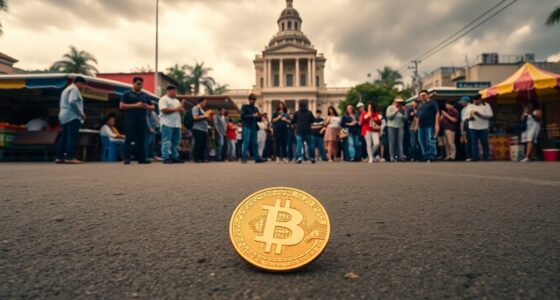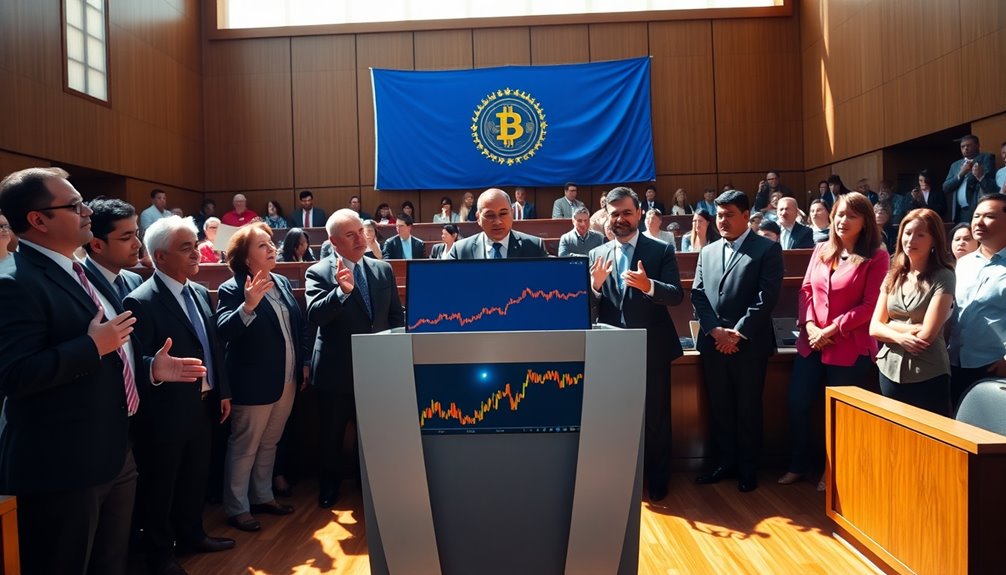

As the government in El Salvador pushes forward with Bitcoin as legal tender, you might wonder about the implications of this bold move. With only 7.5% of the population engaging in crypto transactions, skepticism looms large. The International Monetary Fund has even warned about the risks tied to Bitcoin's volatility. What does this mean for the country's economic future, and how will the government address the growing concerns? The answers could shape El Salvador's financial landscape.

Get smart everyday buys delivered free with Prime
- Fast, free delivery on millions of items
- Prime Video, Amazon Music and more included
- Member-only deals all year

As El Salvador continues to navigate its controversial decision to adopt Bitcoin as legal tender, concerns about its practicality and economic impact linger. You might wonder why only 7.5% of the population uses Bitcoin for transactions when it's recognized as legal tender. The government's push to use Bitcoin was intended to enhance financial inclusion, but it hasn't achieved that goal. In fact, most Salvadorans still prefer cash, with many expressing distrust in digital currencies and the Chivo Wallet due to privacy issues.
El Salvador's Bitcoin adoption faces skepticism, with only 7.5% using it, as cash remains the preferred choice.
The government remains committed to Bitcoin despite the low adoption rates. Holding around 6,024 BTC, they continue to buy one Bitcoin daily, indicating a strong belief in its potential. However, the economic impact of Bitcoin has been minimal, with the U.S. dollar still dominating. The International Monetary Fund (IMF) has raised red flags over Bitcoin's volatility, emphasizing the risks it poses to economic stability. Their conditions for financial support require El Salvador to limit Bitcoin's role, highlighting the growing international pressure on the country. According to a recent survey, 92% of respondents indicated that they do not use Bitcoin for transactions, which underscores the challenges the government faces in promoting its use.
The government's recent reforms have made Bitcoin acceptance optional for businesses, signaling a shift in strategy. This reform is part of a $1.4 billion loan agreement with the IMF, which underscores the precarious debt situation El Salvador faces. By adopting Bitcoin, the government hoped to reduce remittance costs, but this hasn't materialized either. The ongoing volatility of Bitcoin dissuades its use among the population, further complicating the economic landscape.
Despite the government's efforts, public perception remains skeptical. You can see how the incentives provided haven't significantly increased Bitcoin adoption, leaving many Salvadorans unconvinced about its benefits.
With tourism experiencing a 22% increase in 2024 due to improved security and infrastructure, there are signs of economic diversification. However, this growth seems disconnected from Bitcoin's intended benefits.
Top picks for "government debate salvador"
As an affiliate, we earn on qualifying purchases.
Fall Picks
fall essentials
As an affiliate, we earn on qualifying purchases.