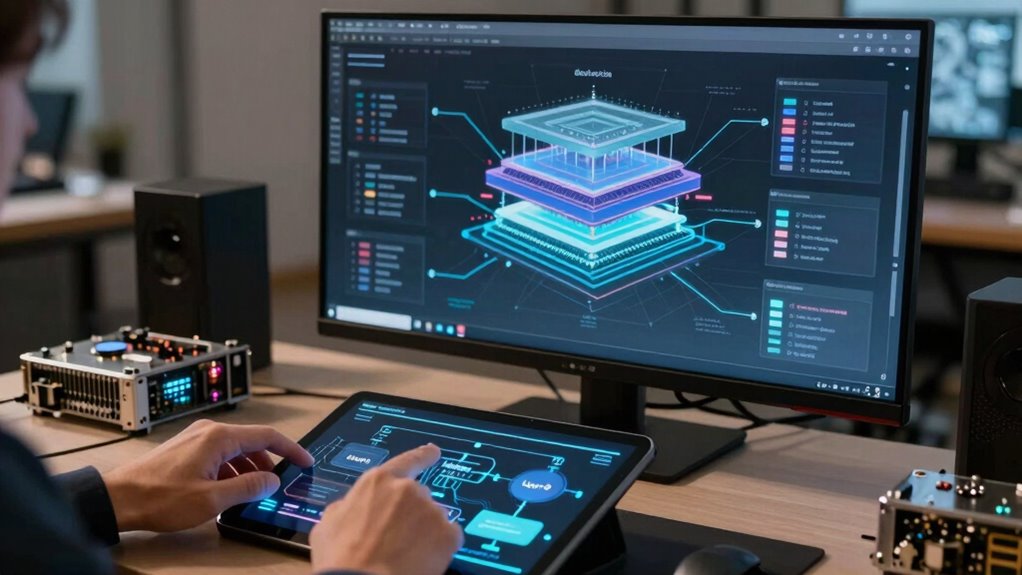

Layer-0 blockchains serve as a foundational layer that connects multiple blockchains, making the whole ecosystem more scalable and flexible. They address limitations of traditional chains by enabling seamless interoperability, faster transactions, and lower fees. Modular architectures allow you to customize and upgrade your chains without sacrificing security. This approach promotes innovation and long-term relevance, transforming blockchain networks into a more unified and adaptable system. Keep exploring to discover how these advancements really shape the future of blockchain technology.

Get smart everyday buys delivered free — and shop member deals
- Fast, free delivery on millions of items
- Access to Prime Big Deal Days deals on October 6–7
- Prime Video, Amazon Music and more included
Key Takeaways
- Layer-0 blockchains act as foundational layers enabling interoperability and scalability across multiple blockchains or shards.
- Modular architectures allow customization, faster transactions, and independent processing, enhancing overall network efficiency.
- They reduce reliance on complex bridges, facilitating secure cross-chain asset transfers and data exchange.
- These architectures support ongoing upgrades, technological integration, and adaptability to evolving blockchain needs.
- Layer-0 and modular designs aim to create a cohesive, scalable, and flexible blockchain ecosystem for diverse use cases.

Have you ever wondered how blockchain networks can become more scalable and flexible? That’s where Layer-0 blockchains and modular architectures come into play. These innovations aim to solve some of the biggest hurdles in blockchain development, especially interoperability challenges and scalability solutions. Traditional blockchains, like Bitcoin or Ethereum, often face limitations in processing speed, transaction throughput, and how easily they can communicate with other networks. Layer-0 blockchain technology addresses these issues by providing a foundational layer that connects multiple blockchains, creating a more unified ecosystem. Instead of building siloed chains, you get a network where different blockchains can interact seamlessly, overcoming interoperability challenges that once slowed down innovation.
Layer-0 blockchains enable seamless interoperability and scalability across multiple networks, fostering a unified blockchain ecosystem.
By design, Layer-0 blockchains serve as the infrastructure layer that hosts multiple blockchains or “shards.” This modular approach allows developers to customize their chains for specific use cases, without sacrificing the security or decentralization of the overall network. The key advantage here is scalability solutions. Since each shard or chain can process transactions independently, the network can handle a much larger volume of activity than traditional single-chain systems. This means faster transaction speeds, lower fees, and a more flexible environment for deploying decentralized applications. You don’t have to rely on a single, monolithic blockchain that struggles under heavy load; instead, you leverage a layered architecture that distributes workload efficiently. Additionally, these architectures are inherently adaptable, enabling ongoing improvements and integrations as technology advances.
Furthermore, these architectures are inherently adaptable. They enable interoperability—meaning different blockchains can communicate, exchange data, and transfer assets without intermediaries. This interconnectedness is essential for fostering a more integrated blockchain ecosystem, where users and developers aren’t confined to isolated networks. For example, Layer-0 solutions can facilitate cross-chain swaps or interoperability between different DeFi platforms, which previously required complex bridges or third-party solutions. This not only enhances user experience but also reduces security vulnerabilities associated with bridging assets across incompatible chains. Additionally, these layered architectures can incorporate emerging interoperability protocols, further expanding their connectivity potential.
In essence, understanding Layer-0 blockchains and modular architectures helps you see how the industry is evolving to meet future demands. They offer a pathway to more scalable, flexible, and interconnected systems—turning the fragmented landscape of blockchain networks into a cohesive, thriving ecosystem. With these advancements, you can expect faster transactions, more innovative use cases, and a more inclusive environment that empowers developers and users alike. It’s a significant step forward in creating blockchain networks that are not only faster but also more adaptable to the diverse needs of the decentralized world. Recognizing the importance of interoperability can help you appreciate how these layered systems are transforming blockchain technology. Moreover, modular designs enable easier upgrades and customization, ensuring the longevity and relevance of these networks as technology continues to evolve.
Layer-0 blockchain infrastructure
As an affiliate, we earn on qualifying purchases.
As an affiliate, we earn on qualifying purchases.
Frequently Asked Questions
How Do Layer-0 Blockchains Compare to Traditional Layer-1 Solutions?
Layer-0 blockchains differ from traditional layer-1 solutions because they focus on providing a foundational network that enhances consensus mechanisms and boosts network scalability. You’ll find that layer-0 acts as a backbone, enabling multiple layer-1 chains to interoperate efficiently. Unlike standalone layer-1 chains, they improve overall performance and flexibility, allowing you to build decentralized applications with better speed, security, and scalability across various blockchain ecosystems.
What Are the Main Security Concerns With Modular Blockchain Architectures?
You should be aware that modular blockchain architectures face security concerns like cross-chain vulnerabilities, which can expose assets across interconnected layers. Validator security is also critical; if validators are compromised, it risks the integrity of the entire system. Ensuring robust security protocols, regular audits, and strong validator protections help mitigate these risks, keeping the network resilient and trustworthy.
Can Layer-0 Blockchains Support Decentralized Applications Directly?
Think of Layer-0 blockchains as the sturdy foundation of a skyscraper. They can support decentralized applications directly by providing essential infrastructure like consensus mechanisms and scalability strategies. These base layers enable dApps to run smoothly, much like a solid foundation ensures a building’s stability. With the right design, Layer-0 blockchains guarantee direct dApp deployment, offering scalability and security without relying solely on higher-layer solutions.
How Does Interoperability Work Between Different Layer-0 Protocols?
Interoperability between different Layer-0 protocols relies on cross-chain communication, allowing diverse blockchains to exchange data and assets seamlessly. You can think of protocol interoperability as a bridge that connects separate networks, enabling them to work together efficiently. By using specialized protocols and standards, these Layer-0 platforms facilitate secure, fast, and reliable cross-chain communication, ensuring that decentralized applications can interact across multiple ecosystems without friction or central points of failure.
What Are the Typical Use Cases for Modular Blockchain Architectures?
You’ll find that modular blockchain architectures shine when tackling scalability challenges and offering network customization. These setups are perfect for projects needing tailored solutions, like ensuring fast transaction speeds or specialized security features. Use cases include decentralized finance platforms, supply chain management, and gaming. By breaking down functions, you can optimize each layer, making your network more adaptable, scalable, and aligned with your specific needs, creating a more efficient blockchain experience.
interoperability blockchain solutions
As an affiliate, we earn on qualifying purchases.
As an affiliate, we earn on qualifying purchases.
Conclusion
Understanding layer-0 blockchains and modular architectures unlocks the future of scalable, flexible networks. While traditional blockchains focus on single functions, these advanced systems act as the backbone, supporting diverse applications with ease. It’s like building a city on a strong foundation versus a fragile platform—you get durability and adaptability. Embrace these innovations, and you’ll be shaping the next era of decentralized technology, where performance and customization go hand in hand.
modular blockchain architecture tools
As an affiliate, we earn on qualifying purchases.
As an affiliate, we earn on qualifying purchases.
cross-chain asset transfer platforms
As an affiliate, we earn on qualifying purchases.
As an affiliate, we earn on qualifying purchases.
Halloween Picks
halloween
As an affiliate, we earn on qualifying purchases.