

Evaluating the true cost of homeownership involves more than knowing the purchase price. You need to take into account mortgage payments, property taxes, insurance, and ongoing maintenance expenses like repairs and landscaping. Don’t forget utility bills and service fees, which can fluctuate seasonally. Planning for future costs, market changes, and occasional surprises helps you stay prepared. If you want a clear picture of all these factors, keep exploring how to build an all-encompassing financial plan.
Key Takeaways
- Include initial purchase costs like closing, staging, and repairs to determine the true upfront investment.
- Account for ongoing expenses such as property taxes, insurance, utilities, and regular maintenance.
- Consider potential future costs from market fluctuations, tax reassessments, and unexpected repairs.
- Evaluate mortgage terms, interest rates, and refinancing options to understand long-term financial commitments.
- Monitor home equity and savings goals to ensure financial stability and manage costs effectively over time.
Understanding the Purchase Price and Initial Costs

When you’re buying a home, understanding the purchase price and initial costs is essential to accurately assess the true financial commitment. The purchase price is just the beginning; you’ll also need to contemplate closing costs, home staging expenses, and potential repairs. Additionally, neighborhood safety impacts your long-term investment, as a safer area often means higher property values and lower risk of future costs due to crime-related issues. Before making an offer, research the neighborhood’s safety record and factor in costs associated with making the home move-in ready, including any staging to help you envision its potential. Knowing these factors helps you set a realistic budget and avoid surprises, ensuring your investment aligns with your financial goals.
Calculating Monthly Mortgage Payments and Interest Rates
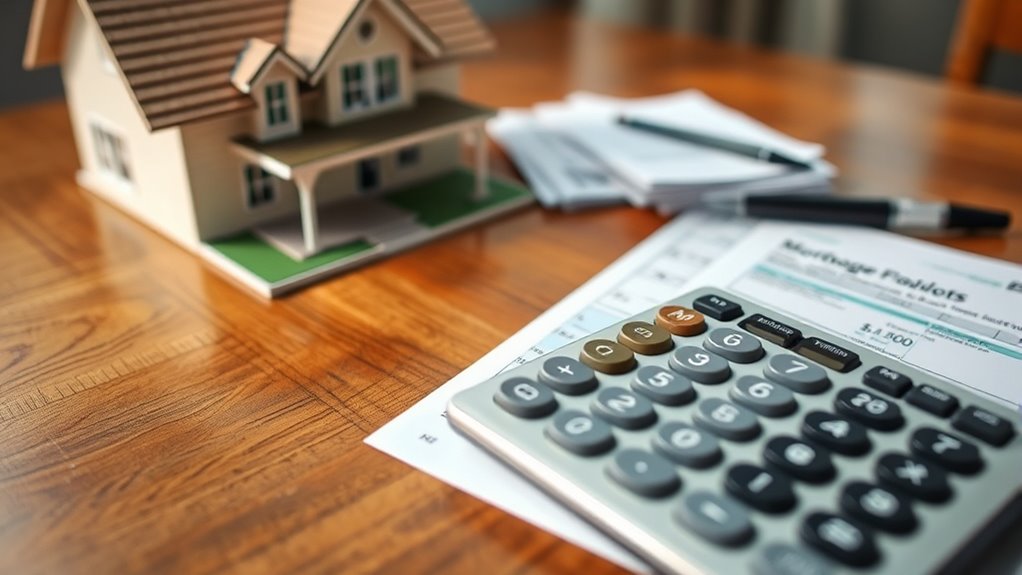
After determining your purchase price and initial costs, the next step is to understand how your mortgage payments will affect your budget. To do this, you’ll need to calculate your monthly payments based on your interest rate and loan term. Your interest rate directly impacts your monthly amount and overall cost, so shop around for competitive rates. Gaining mortgage preapproval can give you a clear picture of what you qualify for, streamlining your calculations. If interest rates rise, consider refinance options that might lower your payments or reduce your total interest paid over time. Remember, a fixed-rate mortgage offers stability, while adjustable-rate options can start lower but may increase later. Proper calculation guarantees you stay within your budget and plan for future financial commitments.
Estimating Property Taxes and Homeowners Insurance

Estimating your property taxes and homeowners insurance is essential for understanding the full cost of homeownership. Property tax assessments determine how much you’ll pay annually based on your home’s value, so checking local rates and assessment methods helps you approximate expenses accurately. Homeowners insurance policies protect your property from risks like fire, theft, and weather damage; premiums vary depending on coverage and location. To estimate costs, review recent tax assessments and insurance quotes from providers. Keep in mind that property taxes can change with reassessments, and insurance premiums may fluctuate based on coverage options and personal factors. Including these costs in your budget ensures you’re prepared for ongoing financial responsibilities beyond your mortgage payments.
Budgeting for Ongoing Maintenance and Repairs

You need to set aside funds for regular maintenance tasks like HVAC checks and gutter cleaning so your home stays in top shape. Unexpected repairs, such as a burst pipe or roof leak, can hit your wallet hard if you’re unprepared. Creating a dedicated emergency repair fund helps you handle these surprises without stress.
Regular Maintenance Planning
Planning for regular maintenance is essential to keep your home in good condition and avoid costly repairs down the line. You should budget for routine tasks like maintaining landscaping costs, which help prevent overgrowth and damage to your property’s foundation. Additionally, setting aside funds for appliance replacements ensures your home runs smoothly and avoids unexpected breakdowns. Create a maintenance schedule that includes seasonal tasks, such as gutter cleaning and HVAC inspections, to catch issues early. Regular upkeep extends the life of your systems and structures, saving you money over time. By proactively managing these ongoing expenses, you’ll reduce the risk of major repairs and keep your home safe and comfortable. Proper planning makes homeownership more affordable and less stressful.
Emergency Repair Funds
Have you set aside enough funds to handle unexpected repairs? Emergency repair funds are essential for covering unforeseen expenses that can arise suddenly, like a leaky roof or broken furnace. Without these funds, you risk dipping into savings or taking on debt, which can strain your finances. Budgeting for ongoing maintenance and repairs ensures you’re prepared for these surprises, providing peace of mind and financial stability. Typically, experts recommend setting aside 1-3% of your home’s value annually for emergency repair funds. This allocation helps you manage unexpected expense coverage without disrupting your budget. Regularly reviewing and increasing your emergency fund as needed helps you stay ahead of costly repairs, safeguarding your home and your finances over the long term.
Considering Utility and Service Expenses
Utility and service expenses can substantially impact the overall cost of homeownership, often catching new homeowners off guard if they’re not carefully considered. These costs include more than just your utility bills; service fees for trash collection, water, and sewer are also important. To manage them effectively, keep in mind:
- Utility bills vary based on usage and season, so plan for higher costs during extreme weather.
- Service fees can fluctuate depending on your provider and local regulations.
- Unexpected charges, such as late fees or increased rates, may arise if you don’t monitor your bills regularly.
Accounting for Potential Future Expenses and Market Fluctuations

While it’s impossible to predict every future expense, overlooking potential costs can lead to financial strain down the line. Market volatility and inflation impact your costs over time, making it essential to plan for fluctuations. Unexpected repairs, rising property taxes, or shifts in interest rates can increase your expenses. Consider this table to understand potential future costs:
| Expense Type | Possible Fluctuation Impact |
|---|---|
| Property taxes | Rise with inflation or market changes |
| Maintenance & repairs | Increase during market downturns |
| Mortgage rates | Fluctuate with market volatility |
| Insurance premiums | Adjust with inflation or risk factors |
Creating a Long-Term Financial Plan for Homeownership
To guarantee your homeownership remains financially sustainable, you need a solid long-term plan. This includes budgeting for maintenance costs, planning for future expenses, and setting clear savings goals. Taking these steps helps you stay prepared for unexpected costs and maintain your home’s value over time.
Budgeting for Maintenance Costs
Are you prepared for the ongoing costs that come with homeownership? Budgeting for maintenance is essential to avoid surprises and keep your home in top shape. Start by setting aside funds for regular landscaping costs, which keep your yard attractive and prevent overgrowth. Next, plan for appliance replacements, as appliances don’t last forever and can be costly. Ultimately, include a reserve for unexpected repairs, like plumbing issues or roof repairs, which can strike suddenly. Creating a detailed budget helps you stay on top of these costs so they don’t derail your finances. Regularly review and adjust your plan, ensuring you’re always prepared for routine maintenance and unforeseen expenses. Proper budgeting keeps your home comfortable and preserves its value over time.
Planning for Future Expenses
Creating a long-term financial plan for homeownership is essential to guarantee you’re prepared for future expenses that may arise years down the road. As your home appreciates in value, building home equity can serve as a financial resource, offering opportunities for cash-out refinancing if needed. Planning ahead allows you to contemplate potential costs like property taxes, insurance, and necessary upgrades. Mortgage refinancing can be a strategic move to lower interest rates or extend your repayment period, reducing monthly costs and freeing up cash for future needs. By proactively managing your home’s equity and staying informed about refinancing options, you ensure your financial stability remains intact, even as your home’s costs evolve over time. This foresight helps you avoid surprises and stay on track financially.
Setting Long-Term Savings Goals
Establishing long-term savings goals is essential for maintaining financial stability throughout your homeownership journey. By setting clear targets, you can better plan for future expenses and safeguard your investment. Consider these key steps:
- Determine your savings for potential investment strategies, such as home improvements or emergency funds, to boost your property’s value.
- Save for eventual mortgage refinancing, which can lower interest rates and reduce long-term costs.
- Establish a timeline and specific dollar amounts to stay motivated and track progress effectively.
Having these goals in place helps you prioritize savings, adapt to changing circumstances, and ensure you’re financially prepared for ongoing homeownership costs. This strategic approach keeps your financial plan resilient and flexible.
Frequently Asked Questions
How Do Homeowners Handle Unexpected Major Repairs Financially?
When unexpected major repairs strike, you handle them by tapping into your home repair fund or emergency savings. You’ve likely set aside money specifically for such surprises, so you’re not caught off guard. If your emergency stash isn’t enough, you might consider short-term loans or credit options, but ideally, your home repair fund and emergency savings cover these costs. Staying prepared guarantees you manage repairs without financial stress.
What Are Hidden Costs Not Included in Initial Home Buying Estimates?
Think of buying a home like opening Pandora’s box—hidden fees and maintenance costs lurk beneath the surface. You might overlook property taxes, homeowners association fees, or unexpected repairs that aren’t included in initial estimates. These hidden costs can surprise you, so always budget for ongoing maintenance and extra expenses. Staying vigilant helps you avoid financial pitfalls and keeps your homeownership journey smooth, just like a well-guarded treasure chest.
How Does Neighborhood Development Impact Long-Term Property Value?
Neighborhood development, like revitalization projects and new community amenities, can markedly boost your property value over time. As the area improves through better parks, schools, and infrastructure, your home becomes more desirable, attracting potential buyers and increasing resale value. Staying informed about local development plans helps you anticipate how these changes will impact your investment, ensuring you make smart decisions for long-term growth and stability in your home’s worth.
What Tax Benefits Are Available for Homeowners?
You can benefit from tax advantages like mortgage deductions, which let you lower your taxable income by deducting interest paid on your home loan. Additionally, you might qualify for property tax credits, reducing the amount you owe on your property taxes. These benefits can substantially cut your overall costs, making homeownership more affordable. Be sure to consult a tax professional to maximize your deductions and credits based on your specific situation.
How Can Homeowners Plan for Inflation Affecting Future Expenses?
Picture your home’s value rising like a steady tide—this is home price appreciation. To navigate inflation’s waves, you can use your property as an inflation hedge by investing in upgrades that boost value and generate income, or locking in fixed-rate loans to maintain predictable payments. Stay vigilant by monitoring market trends and adjusting your finances accordingly, ensuring your home remains a safe harbor amid economic changes.
Conclusion
By understanding all these costs, you can see that homeownership isn’t just about the purchase price. It’s a long-term commitment that requires careful planning and budgeting. Some believe owning a home is always a good investment, but market fluctuations and unexpected expenses can challenge that notion. Ultimately, a well-prepared financial plan helps you navigate these uncertainties, proving that the true cost of homeownership is as much about strategy as it is about the house itself.