

To protect your finances from fraud and scams, start by recognizing common tactics like phishing emails and high-return investment scams. Set up secure accounts with reputable banks, using strong, unique passwords and enabling two-factor authentication. Regularly monitor your bank statements for suspicious activity and act quickly if you spot anything unusual. Keep emergency contacts handy and prepare a response plan to act swiftly. Continue exploring ways to strengthen your defenses and stay ahead of scammers.
Key Takeaways
- Maintain an up-to-date contact list of your bank, credit card companies, and authorities for quick reporting.
- Regularly review all financial accounts and statements for unauthorized transactions.
- Enable two-factor authentication and strong, unique passwords across all financial platforms.
- Set up alerts for suspicious activity and familiarize yourself with fraud response procedures.
- Keep detailed records of suspicious activity and communication to support investigations and recovery.

Yubico – Security Key C NFC – Basic Compatibility – Multi-Factor authentication (MFA) Security Key and passkey, Connect via USB-C or NFC, FIDO Certified
- Security Protection: Protects against phishing attacks
- Wide Compatibility: Works with 1000+ accounts including Google, Microsoft, Apple
- Easy Authentication: USB-C plug-in or NFC tap for quick login
As an affiliate, we earn on qualifying purchases.
As an affiliate, we earn on qualifying purchases.
Recognizing Common Financial Scams

How can you tell if a financial offer or request is a scam? One key sign is suspicious phishing tactics, like emails or messages that urge immediate action or ask for personal info. These scams often mimic legitimate companies to deceive you. Be wary of investment fraud schemes promising high returns with little risk—they’re usually too good to be true. Scammers often pressure you to make quick decisions or ask for wire transfers, which are hard to trace. Always verify the source before sharing sensitive data or sending money. Recognizing these common tactics helps you avoid falling for scams that can drain your finances or steal your identity. Stay vigilant, and never let your guard down when it comes to financial offers.

NordPass Premium, Unlimited Devices, 2-Year, Password Manager, Digital Code
- Autofill Login Credentials: Save time with automatic form filling
- Password Health Check: Identify weak or reused passwords
- Emergency Access: Trusted contacts can request vault access
As an affiliate, we earn on qualifying purchases.
As an affiliate, we earn on qualifying purchases.
Setting Up Secure Financial Accounts
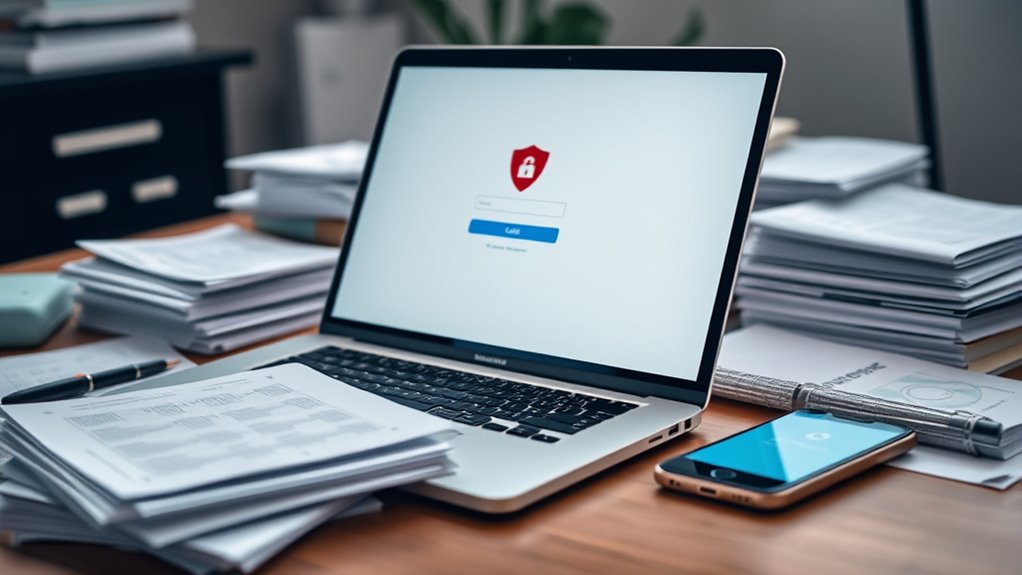
To safeguard your financial information, establishing secure accounts from the outset is vital. Start by choosing reputable banks that prioritize bank account security and offer robust online banking safeguards. When setting up your accounts, use strong, unique passwords and avoid sharing login details. Enable two-factor authentication whenever possible to add an extra layer of protection. Regularly review your account activity for any suspicious transactions and set up alerts for unusual activity. Be cautious with email links or attachments asking for personal information, even if they appear legitimate. By taking these proactive steps, you guarantee your financial accounts remain protected against unauthorized access and fraud. Secure accounts form the foundation of your overall financial safety, especially in today’s digital banking environment.

Before the Money Moves: A Practical Family System to Protect Aging Parents from AI Voice Clones, Fake Bank Alerts, Romance Scams, and Identity Theft (Modern Family Safeguards Book 1)
As an affiliate, we earn on qualifying purchases.
As an affiliate, we earn on qualifying purchases.
Implementing Strong Password and Authentication Practices

To protect your accounts during an emergency, you need to use unique passwords for each one. Turning on two-factor authentication adds an extra layer of security you can’t ignore. Remember to update your credentials regularly to keep your information safe.
Use Unique Passwords
Using unique passwords for each of your online accounts is essential for strengthening your security. This prevents hackers from accessing multiple accounts if one gets compromised. To create strong passwords, focus on password complexity by combining uppercase and lowercase letters, numbers, and symbols. Avoid common words or patterns that are easy to guess. Managing multiple complex passwords can be challenging, but password managers simplify this task by securely storing and autofilling your login details. Using a password manager ensures you don’t reuse passwords across different accounts, reducing vulnerability. Regularly updating your passwords and avoiding personal information also enhance security. By adopting strong, unique passwords and leveraging password managers, you make it considerably harder for scammers to breach your financial accounts.
Enable Two-Factor Authentication
Enabling two-factor authentication (2FA) adds an extra layer of security to your online accounts by requiring a second form of verification beyond just your password. This could be a text message, authentication app, or biometric verification, making it harder for scammers to access your information. Choose strong authentication methods that suit your needs and are difficult for others to replicate. Many services also provide account recovery options if you lose access, so set these up carefully to avoid getting locked out. Activating 2FA helps protect your finances by making unauthorized access considerably more challenging. Regularly review your account recovery settings and keep your authentication methods up to date to ensure your accounts stay secure and accessible only to you.
Regularly Update Credentials
Have you updated your passwords and authentication methods recently? Regularly updating your credentials is crucial to keeping your finances safe. Use a reliable password management tool to generate and store strong, unique passwords for each account. Avoid reusing passwords or choosing easily guessable ones. If you ever forget a password, credential recovery options should be current and secure, so you can regain access quickly without risking your information. Changing passwords periodically minimizes the risk of unauthorized access if a breach occurs. Remember, strong authentication practices, including updating credentials, help prevent scammers from exploiting outdated or weak passwords. Taking these steps ensures your financial information stays protected and makes it easier to respond swiftly if your account is compromised.

Guard Your ID Identity Theft Protection Roller Stamp for Mail, Green
- Easy to Use: Quickly conceal personal info with roller
- Effective Design: Patent-patterned design masks private info
- Shredder Alternative: Mess-free, quiet, space-saving protection
As an affiliate, we earn on qualifying purchases.
As an affiliate, we earn on qualifying purchases.
Monitoring Your Financial Statements Regularly
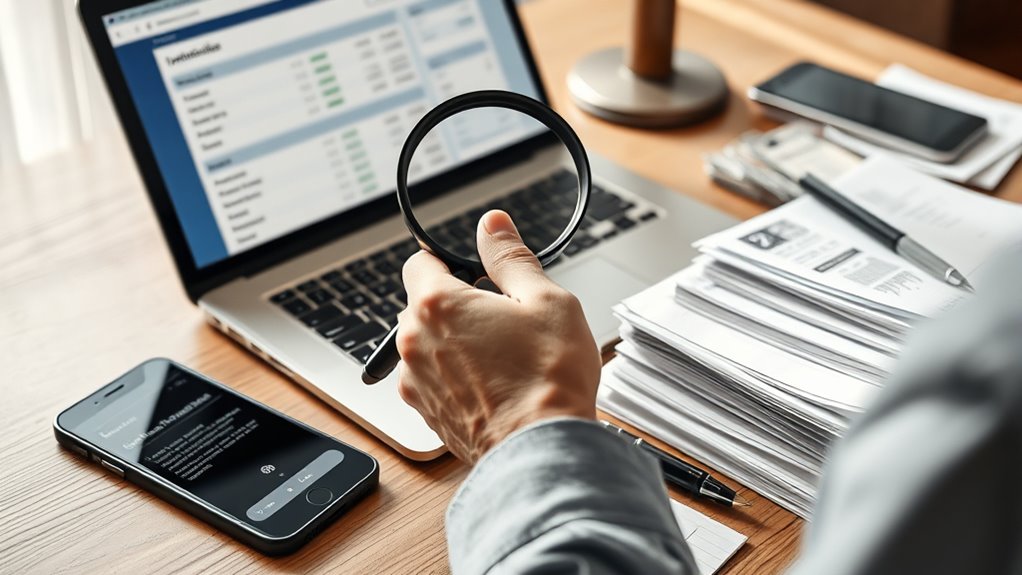
Regularly monitoring your financial statements is essential to staying on top of your emergency plan. By reviewing your bank and credit card statements frequently, you can quickly detect any unauthorized transactions or suspicious activity. Incorporate budgeting tips to help you manage your finances more effectively, making it easier to spot discrepancies early. Consistent oversight also supports your financial goal setting, ensuring you stay aligned with your savings and spending targets. Set aside time each month to review all accounts thoroughly, and keep records of your transactions. This proactive approach minimizes the risk of fraud and scams going unnoticed, giving you peace of mind. Staying vigilant with your financial statements empowers you to respond swiftly if any irregularities arise, protecting your money and financial health.
Establishing a Quick Response Strategy

Creating a quick response strategy is essential for minimizing damage when you detect suspicious activity or unauthorized transactions. A rapid response can notably improve your chances of fraud recovery and limit financial loss. First, have a list of key contacts, including your bank, credit card companies, and relevant authorities. Immediately notify them of any suspicious activity, and freeze or block affected accounts if possible. Keep detailed records of your communications and any evidence of the fraud. Acting swiftly helps prevent further unauthorized charges and secures your finances. Regularly review and update your response plan so you’re prepared when an incident occurs. Remember, the faster you react, the better your chances of minimizing damage and recovering from fraud.
Educating Yourself and Family About Scams

How can you protect yourself and your family from falling victim to scams? Start by educating everyone about common fraud tactics. Here are four key steps:
- Learn about identity theft signs and how to prevent it.
- Increase phishing awareness—never click suspicious links or share personal info.
- Share real scam examples to help recognize red flags.
- Encourage secure password habits and regular account monitoring.
Keeping Emergency Contact and Support Information Handy
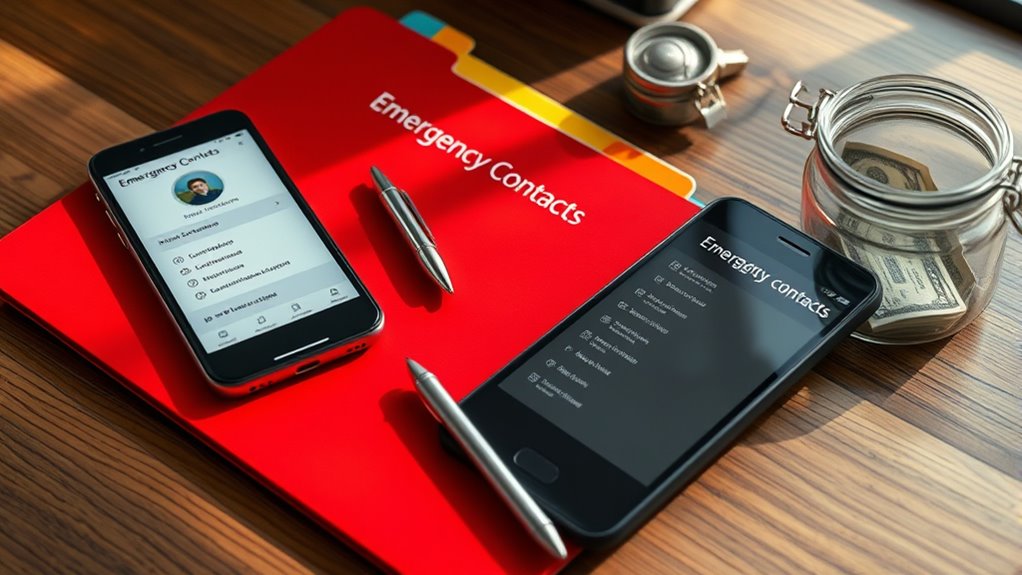
Having quick access to emergency contact and support information can be lifesaving during a crisis. Keep a list of your emergency contacts easily accessible, such as in your phone, wallet, or a secure printed location. Include key people like family members, close friends, your bank, and trusted advisors. Make sure your support network knows how to reach you quickly if needed. Share your emergency contact details with trusted individuals so they can assist or act on your behalf if you’re unable to do so. Regularly update this information to ensure accuracy. Having your emergency contact and support network details readily available helps you respond swiftly, reducing stress and confusion during emergencies, including financial scams or fraud attempts.
Frequently Asked Questions
How Often Should I Review My Financial Security Measures?
You should review your financial security measures at least once every six months. Regularly conducting a financial audit helps identify any vulnerabilities or suspicious activity. Make sure to update your security protocols more frequently if you experience a major life change or suspect potential fraud. Staying proactive with your security update frequency guarantees your finances stay protected from scams and fraud, giving you peace of mind.
What Signs Indicate I’Ve Fallen Victim to a Scam?
If you notice unexpected charges, strange emails, or calls asking for personal info, you’ve likely fallen victim to a scam. Watch out for signs like identity theft or phishing scams, where your sensitive info might be stolen. It’s like catching a sneaky thief in your digital house. Stay alert, monitor your accounts regularly, and act quickly if something feels off—your financial security depends on it.
How Can I Recover Stolen Funds Quickly?
If your funds are stolen, act quickly by reporting the fraud to your bank and credit card companies. Contact your financial institution to freeze accounts and prevent further loss. Use credit monitoring services to detect any suspicious activity related to identity theft. File a police report and consider placing a fraud alert on your credit reports. Prompt action helps recover stolen funds and minimizes damage from scams.
What Are the Best Tools for Detecting Fraud Early?
You should use credit monitoring services to detect fraud early, as they regularly track your credit reports for suspicious activity. Additionally, activate fraud alert systems with your bank and credit bureaus, which notify you of any unusual transactions or account changes. These tools give you real-time alerts, allowing you to act quickly and prevent further damage. Combining credit monitoring and fraud alerts offers strong early detection to protect your finances effectively.
Who Should I Contact if I Suspect a Scam?
Ever wonder who you should turn to when suspecting a scam? You should contact reporting agencies like the FTC or your local consumer protection office immediately. They can investigate and help stop the scam. For legal help, consider consulting an attorney who specializes in fraud cases. Acting quickly is essential to protect your finances, so don’t hesitate to reach out to these authorities—they’re there to support you and fight fraud.
Conclusion
Think of protecting your finances like locking a treasure chest—you need the right keys and vigilance. Just last year, a friend almost lost savings to a scam, but quick action and secure accounts saved the day. Regular monitoring and awareness act as your guard dogs, alerting you before damage spreads. Stay informed, stay prepared, and keep your financial defenses strong—because a proactive approach keeps your financial treasure safe from any thief’s reach.