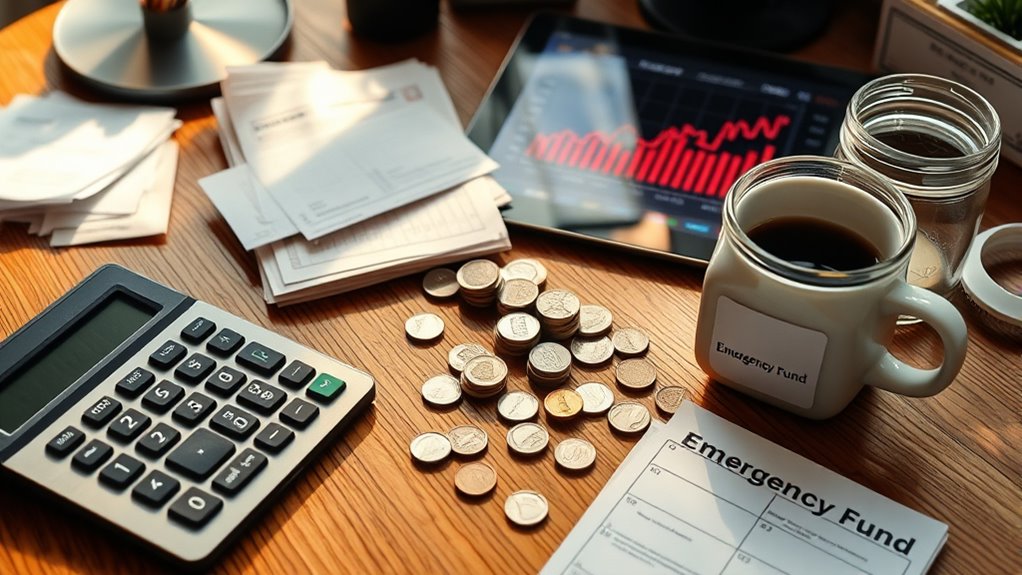

To build an emergency fund that keeps up with rising costs, start by calculating how much you need to cover your essentials for 3 to 6 months, leaning toward the higher end. Contribute a fixed amount regularly and automate your savings to stay consistent. Keep most funds in accessible, low-risk accounts, and consider small high-yield investments if comfortable. Managing debt first helps free up cash, so you’re better prepared for unexpected expenses—get ready to learn more about growing your financial safety net.

Get smart everyday buys delivered free — and shop member deals
- Fast, free delivery on millions of items
- Access to Prime Big Deal Days deals on October 6–7
- Prime Video, Amazon Music and more included
Key Takeaways
- Aim for 3 to 6 months’ worth of living expenses, leaning toward the higher end to account for inflation.
- Prioritize low-risk, highly liquid accounts to ensure quick access during emergencies.
- Automate consistent contributions to steadily grow your emergency fund over time.
- Incorporate short-term, high-yield investments cautiously to outpace rising costs without sacrificing liquidity.
- Reduce high-interest debt first to free up more money for building and maintaining your emergency fund.

Have you ever faced an unexpected expense that threw your finances into chaos? Suddenly, you’re scrambling to cover an emergency, and your savings fall short. Building an emergency fund isn’t just about setting aside money; it’s about creating a safety net that can handle today’s rising costs without forcing you into debt. To do this effectively, you need a clear strategy that combines smart investment strategies with disciplined debt management. This approach guarantees your emergency fund grows steadily and stays accessible when you need it most.
Start by evaluating your current financial situation. Calculate your monthly expenses to determine how much you’d need to cover essential costs like rent, utilities, groceries, and healthcare. Experts recommend aiming for three to six months’ worth of living expenses, but given inflation and rising prices, leaning toward the higher end is wise. Once you have a target, develop a dedicated savings plan. Open a separate, easily accessible account—preferably one with high liquidity—to prevent the temptation to dip into your emergency fund for non-emergencies. Consistently contribute a fixed amount from each paycheck, making it a non-negotiable part of your budget. Implementing budgeting tips such as automating savings contributions can make this process more manageable and less prone to impulse spending.
Effective investment strategies can accelerate your fund’s growth. While the bulk of your emergency savings should remain in low-risk, liquid accounts, you can consider a small portion in short-term, high-yield investments if you’re comfortable with minimal risk. These can help your savings keep pace with inflation, especially as prices tend to rise faster than traditional savings accounts. However, never compromise liquidity for higher returns; your emergency fund needs to be accessible instantly.
Debt management plays an essential role in building your safety net. If you carry high-interest debt, prioritize paying it down before funneling too much into savings. Reducing debt not only lowers your monthly expenses but also frees up more cash for emergency savings. Once your debt is under control, you can redirect those funds toward your emergency fund, knowing that your financial foundation is stronger. This reduces overall financial stress and guarantees that unexpected costs don’t push you further into debt.
As an affiliate, we earn on qualifying purchases.
Frequently Asked Questions
How Much of My Income Should I Allocate to My Emergency Fund?
You should aim to allocate around 20% of your income to your emergency fund, but it depends on your budget. Use budgeting tips to identify your necessary expenses and set realistic savings milestones. Start with small, consistent contributions, and gradually increase them. Prioritize building a fund that can cover three to six months of living expenses, ensuring you’re prepared for unexpected events and rising costs.
How Long Should I Aim to Have My Emergency Fund Cover Expenses?
Think of your emergency fund as a sturdy boat on a turbulent sea. You should aim for it to cover at least three to six months of expenses, giving you a safe harbor during storms. This cushion supports your investment strategies and debt repayment plans by providing stability. The longer it can sustain you, the better prepared you are to navigate unexpected financial waves and keep your financial journey steady.
What Expenses Should I Prioritize in My Emergency Fund?
When determining what expenses to prioritize in your emergency fund, focus on essential costs like medical bills and home repairs. These are unexpected, high-impact expenses that can quickly drain your finances. By setting aside money specifically for these urgent needs, you guarantee you’re prepared for emergencies without sacrificing your day-to-day stability. Prioritizing these expenses helps you build a solid safety net that truly covers life’s unpredictable surprises.
How Often Should I Review and Adjust My Emergency Fund?
Thinking about your emergency fund is like tending a garden—you need to check it regularly. You should review and adjust it at least every six months, especially during major life changes or economic shifts. Use this time to evaluate your investment strategies and prioritize debt repayment, ensuring your fund keeps pace with rising costs. Regular reviews help you stay prepared for unexpected expenses and maintain financial stability.
Can I Use High-Yield Savings Accounts for My Emergency Fund?
You can definitely use high-yield savings accounts as an investment option for your emergency fund. They offer better interest rates while keeping your money accessible for withdrawal strategies when needed. This makes them ideal for emergency funds, since you can quickly access funds without penalties. Just guarantee the account is FDIC insured and compare rates to maximize your savings, giving you peace of mind during unexpected expenses.
As an affiliate, we earn on qualifying purchases.
Conclusion
Building an emergency fund is like planting a sturdy tree that grows stronger with each new contribution. Imagine your savings as roots digging deep to weather any storm—rising costs included. When unexpected expenses hit, you’ll be glad you nurtured this financial safety net. Just like a tree provides shade on a hot day, your prepared fund offers peace of mind amid life’s unpredictable weather. Start planting today, and watch your security grow.
As an affiliate, we earn on qualifying purchases.
automatic savings transfer device
As an affiliate, we earn on qualifying purchases.
As an affiliate, we earn on qualifying purchases.
Fall Picks
fall essentials
As an affiliate, we earn on qualifying purchases.