For a practical starting point, Quicken Classic Business & Personal is my best overall pick for readers who need both household and business money management, while Excel for Personal Finance suits people who want flexible spreadsheets and GnuCash stands out for users seeking desktop accounting across major operating systems. The main tradeoff is between guided, ready-made tools and software that gives you more control but asks you to do more setup. Some options are focused trackers or educational resources rather than full-featured finance applications, so the right fit depends on what you want to manage. I compare each product by purpose, platform, usability, and flexibility—not by promotional claims. Continue reading for the full breakdown and help matching a pick to your needs.

Get smart everyday buys delivered free with Prime
- Fast, free delivery on millions of items
- Prime Video, Amazon Music and more included
- Member-only deals all year
Key Takeaways
- Quicken Classic Business & Personal has the broadest stated scope in this lineup, pairing personal and business finance features; that breadth may be unnecessary if you only want a household budget.
- Excel for Personal Finance and the Basic Income and Expense Tracker for Excel both rely on spreadsheets, but the former is the more flexible choice while the latter is aimed at simpler tracking.
- GnuCash is the standout for buyers who want accounting tools on Windows, Mac, or Linux; its accounting-oriented approach may feel less approachable than a basic tracker.
- Kiplinger’s CA-Simply Money guide and the Dave Ramsey and Financial Peace products differ from general-purpose software by foregrounding guidance or a particular approach to managing money.
- The lineup includes desktop applications, spreadsheet-based tools, and software supplied on USB drives, so compatibility and installation requirements matter as much as feature scope.
| Kiplinger’s CA-Simply Money Personal Finance Software Guide |  | Best for Legacy Software Reference | Software covered: CA-Simply Money | Compatibility: Windows 3.1 | Account management: Account balancing and financial management | VIEW LATEST PRICE | See Our Full Breakdown |
| Excel for Personal Finance |  | Best for Spreadsheet-First Planners | Product name: Excel for Personal Finance | Stated subject: Personal finance | Excel reference: Excel is named in the product title | VIEW LATEST PRICE | See Our Full Breakdown |
| Basic Income and Expense Tracker for Excel |  | Best Value for Small-Business Tracking | Format: Excel spreadsheet | Expense categories: 21, customizable | Income categories: 8, customizable | VIEW LATEST PRICE | See Our Full Breakdown |
| Dave Ramsey’s Personal Finance Software, Version 5.3 |  | Best for Ramsey-Focused Money Management | Version: 5.3 | Product type: Personal finance software | Stated purpose: Help users manage their money | VIEW LATEST PRICE | See Our Full Breakdown |
| Quicken Classic Business & Personal, 1-Year Subscription, PC/Mac Download |  | Best for Combined Business, Rental, and Personal Finances | Subscription term: 1 year | Platform: PC/Mac | Delivery format: Online code | VIEW LATEST PRICE | See Our Full Breakdown |
| SavePoint Personal Finance Software with 8GB USB Drive for PC and Mac |  | Best for Offline FIRE Planning | Storage: Local-only, offline | License: Lifetime license; updates for the current version | Device limit: Up to 2 devices | VIEW LATEST PRICE | See Our Full Breakdown |
| 3-in-1 Personal Finance 3.0 for Mac |  | Best for Mac-Based Budget and Goal Worksheets | Platform: Mac | Version: 3.0 | Calculators and worksheets: 26 | VIEW LATEST PRICE | See Our Full Breakdown |
| Financial Peace Personal Finance Software | 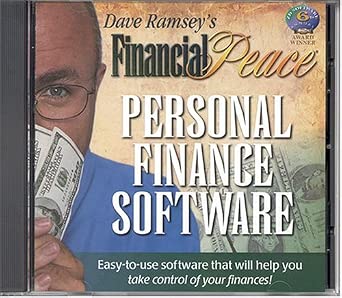 | Best for Buyers Seeking a Named Personal Finance Program | Product name: Financial Peace Personal Finance Software | Software category: Personal finance software | Platform: Not provided | VIEW LATEST PRICE | See Our Full Breakdown |
| GnuCash Accounting Software on 16 GB USB Flash Drive for Windows, Mac, and Linux |  | Best for Cross-Platform Personal and Small-Business Books | USB storage capacity: 16 GB | Hardware interface: USB | Compatibility: Windows, Mac, and Linux | VIEW LATEST PRICE | See Our Full Breakdown |
| Express Accounts Accounting Software for PC |  | Best for Windows Small-Business Transactions | Operating system: Windows (all versions) | Reports: Over 20 financial reports | Backup: Automatic integrated backup | VIEW LATEST PRICE | See Our Full Breakdown |
| SayMoney Pro Personal Finance Management Software |  | Best for Voice-First Tracking | Minimum processor: 1000 MHz | Minimum RAM: 1 GB | Minimum hard disk space: 100 MB | VIEW LATEST PRICE | See Our Full Breakdown |
More Details on Our Top Picks
Kiplinger’s CA-Simply Money Personal Finance Software Guide
This guide is the most useful fit here for someone who already relies on CA-Simply Money and needs help with its established workflows. Its coverage spans account balancing, investments, tax preparation, electronic check entry and printing, and customization—broader subject matter than the category-specific reporting in Basic Income and Expense Tracker for Excel. The guide can clarify how to use those functions, but it is not a current, standalone finance app or a substitute for updated tax guidance. Its stated compatibility with Windows 3.1 also makes it a poor match for most present-day computers. I’d choose it as documentation for a legacy setup, not as a starting point for a new household or business finance system.
Pros:- Covers account balancing and general financial management
- Includes guidance on investments and tax preparation
- Explains electronic check entry and printing
- Offers tips for customizing CA-Simply Money
Cons:- Designed for Windows 3.1, limiting relevance for modern systems
- A software guide rather than a current, standalone finance product
- Tax-related material may not reflect current rules
Best for: People maintaining a CA-Simply Money setup who need reference help with account balancing, checks, investments, or tax-preparation features
Not ideal for: Buyers seeking current personal finance software or guidance compatible with modern operating systems
- Software covered:CA-Simply Money
- Compatibility:Windows 3.1
- Account management:Account balancing and financial management
- Investment guidance:Included
- Tax preparation guidance:Included
- Check functions covered:Electronic check entry and printing
- Customization guidance:Included
Our verdict“Choose this as a how-to reference for an existing CA-Simply Money setup, not as a modern alternative to Excel or current finance software.”
Excel for Personal Finance
The title points to a spreadsheet-based approach, which may suit someone who prefers building a personal finance system in Excel rather than adopting dedicated software. But the supplied product information provides no feature, compatibility, or format details, so I can’t verify whether it includes templates, formulas, instructions, or a downloadable workbook. That uncertainty makes it harder to recommend than Basic Income and Expense Tracker for Excel, whose categories and reporting are described. I’d treat this as a possible fit for Excel users who are comfortable checking the listing for specifics before buying. If you need defined reports or a clear setup process, the documented tracker is the safer choice among these two spreadsheet options.
Pros:- The title indicates a personal-finance focus
- May appeal to people who prefer working in Excel
- Could suit spreadsheet users seeking an alternative to dedicated finance software
Cons:- Available product data does not describe included features
- Compatibility and delivery format are unspecified
- No reporting, budgeting, or account-management functions are confirmed
Best for: Excel users looking for a personal-finance resource who are willing to verify the included materials before purchasing
Not ideal for: Buyers who need confirmed budgeting features, reporting functions, compatibility details, or a clearly specified product format
- Product name:Excel for Personal Finance
- Stated subject:Personal finance
- Excel reference:Excel is named in the product title
- Product format:Not specified in provided data
- Compatibility:Not specified in provided data
- Included tools:Not specified in provided data
Our verdict“Consider it only if you want an Excel-oriented personal finance option and can confirm exactly what the product includes before buying.”
Basic Income and Expense Tracker for Excel
This tracker earns its place by making a modest, clearly defined job easier: recording small-business income and expenses, then viewing results across monthly, quarterly, and year-to-date reports. Renamable categories let owners adapt the sheet to their own bookkeeping labels, while charts make the summaries easier to scan than a plain ledger. It is more focused than Quicken Classic Business & Personal, which also covers rental property and personal finances, but that narrower scope may be an advantage for someone who only needs basic tracking. The tradeoff is dependence on Microsoft Excel and, for the physical version, possible need for a CD/DVD player. I’d pick it for straightforward business reporting, not for integrated household, rental, and tax workflows.
Pros:- Customizable 21 expense categories and 8 income categories
- Produces monthly, quarterly, and year-to-date reports
- Reports include charts for quick visual review
- Download option is available upon request if a CD/DVD player is unavailable
Cons:- Requires Microsoft Excel
- Physical version may require a CD/DVD player
- Focused on income and expense tracking rather than broader personal finance management
Best for: Small-business owners who want customizable income and expense categories with periodic spreadsheet reports
Not ideal for: Users who need personal and business finances combined, rental-property tools, or a solution that works without Microsoft Excel
- Format:Excel spreadsheet
- Expense categories:21, customizable
- Income categories:8, customizable
- Reports:Monthly, quarterly, and year-to-date
- Report features:Charts included
- Requirement:Microsoft Excel
- Download option:Available upon request if a CD/DVD player is unavailable
Our verdict“Choose this for customizable, report-ready small-business tracking in Excel, but pick Quicken if you need business, rental, and personal finances in one system.”
Dave Ramsey’s Personal Finance Software, Version 5.3
This pick is the most directly tied to a named personal-finance approach: it is presented as Dave Ramsey’s money-management software, with the stated aim of helping users take control of their money. That clear identity may appeal to buyers who already want a tool associated with Ramsey’s guidance. The product data, however, does not describe budgeting methods, account syncing, reporting, or supported operating systems. Compared with Basic Income and Expense Tracker for Excel, whose reports and customizable categories are documented, this listing offers much less information for judging day-to-day functionality. I’d only shortlist it if the Ramsey connection is your main reason for buying and you can confirm the software’s compatibility and capabilities before purchase.
Pros:- Designed for personal money management
- Has a clearly identified association with Dave Ramsey
- Version number is specified as 5.3
Cons:- Provided product data does not list specific budgeting or reporting features
- Supported platforms are not specified
- The available details do not establish how it compares with newer finance tools
Best for: Buyers who specifically want personal finance software associated with Dave Ramsey and can verify that Version 5.3 suits their setup
Not ideal for: People who need documented compatibility, detailed feature information, or clearly specified reporting and account-management tools
- Version:5.3
- Product type:Personal finance software
- Stated purpose:Help users manage their money
- Brand association:Dave Ramsey
- Platform:Not specified in provided data
- Delivery format:Not specified in provided data
Our verdict“Consider this if the Dave Ramsey association is a priority, but verify compatibility and included functions before choosing it over the better-documented Excel tracker.”
Quicken Classic Business & Personal, 1-Year Subscription, PC/Mac Download
Quicken stands apart from the simpler spreadsheet products by bringing business, rental-property, and personal finances into one system, while still letting users view those areas separately. That makes it a stronger match for owners who need more than the monthly income-and-expense summaries in Basic Income and Expense Tracker for Excel. Its Schedule C and E tax reports, plus profit-and-loss and cash-flow tools, support a broader view of business and rental activity. The tradeoffs are a one-year subscription and eligibility specified for new subscribers; it is also a more involved choice than a narrowly focused tracker. I’d prioritize it when combining these financial areas matters, but skip it if you only need a simple spreadsheet ledger.
Pros:- Combines business, rental-property, and personal finance tools
- Allows combined or separate views of financial areas
- Includes Schedule C and Schedule E tax reports
- Provides profit-and-loss, cash-flow, and rental-property tools
Cons:- Offered as a one-year subscription
- Specified for new subscribers
- Broader scope may be unnecessary for users who only need a basic expense tracker
Best for: New subscribers managing personal finances alongside a small business and rental property who want separate views and tax-oriented reports
Not ideal for: People who only need simple income and expense tracking, prefer a non-subscription product, or are not eligible as new subscribers
- Subscription term:1 year
- Platform:PC/Mac
- Delivery format:Online code
- Finance areas:Business, rental property, and personal
- Tax reports:Schedule C and Schedule E
- Business tools:Profit and loss and cash flow
- Rental features:Rental-property management
- Subscriber eligibility:Specified for new subscribers
Our verdict“Choose Quicken if you need one system for personal, business, and rental finances; for basic small-business reports alone, the Excel tracker is more focused.”
SavePoint Personal Finance Software with 8GB USB Drive for PC and Mac
For buyers who want budgeting and long-range retirement scenarios without storing financial records in the cloud, SavePoint is the most planning-focused option in this group. It combines budgets, cash flow, balance sheets, and Monte Carlo FIRE projections, including Lean, Traditional, Fat, and Coast strategies. That gives it a different purpose from 3-in-1 Personal Finance 3.0, which centers on calculators, worksheets, and goal tracking rather than the same breadth of FIRE planning. Local-only storage and support for two devices suit someone who wants control over where their records live, while unlimited accounts and transactions leave room to model a detailed household picture. The tradeoff is that the lifetime license includes updates only for the current version, and the two-device cap limits flexibility for larger households.
Pros:- Stores financial data locally and works offline
- Combines budgeting, cash flow, balance sheets, and FIRE planning
- Includes four FIRE strategies and Monte Carlo simulations
- Supports unlimited accounts and transactions, 8 languages, and over 150 currencies
Cons:- Use is limited to two devices
- Updates are included only for the licensed software version
Best for: Privacy-conscious planners who want offline budgeting and multiple FIRE scenarios on a Windows PC or Mac.
Not ideal for: People who need cloud syncing across several devices or expect lifetime updates to cover future software versions.
- Storage:Local-only, offline
- License:Lifetime license; updates for the current version
- Device limit:Up to 2 devices
- Accounts and transactions:Unlimited
- FIRE strategies:Lean, Traditional, Fat, and Coast
- Reports:10+ report types
- Languages and currencies:8 languages; 150+ currencies
- Compatibility and accessory:Windows PC and Mac; 8GB USB drive included
Our verdict“Choose SavePoint if offline privacy and detailed FIRE modeling matter more than cloud access or broader device coverage.”
3-in-1 Personal Finance 3.0 for Mac
3-in-1 Personal Finance 3.0 is aimed at Mac owners who prefer structured worksheets and calculators to a more feature-rich accounting setup. Its 26 calculators and worksheets, 14 budget categories, and more than 190 default budget items provide a ready-made framework for sorting household spending. The goal tracker adds savings projections, charts, and what-if scenarios, though it is not the same kind of retirement modeling offered by SavePoint, which includes multiple FIRE strategies and Monte Carlo simulations. Reports can be viewed, saved, and printed, making the tool useful for people who want to review or keep a record of plans. Its main limitation is compatibility: the listed operating systems are Mac OS X Lion and Mountain Lion, and Java 7 or higher is required. I’d skip it for a current Mac unless compatibility is confirmed.
Pros:- Provides 26 financial calculators and worksheets
- Includes 14 budget categories and over 190 default budget items
- Tracks savings goals with projections, charts, and what-if scenarios
- Supports generating, viewing, saving, and printing reports
Cons:- Listed operating system support is limited to Mac OS X Lion 10.7 and Mountain Lion 10.8
- Requires Java 7 or higher
- The hard disk requirement is stated without a unit
Best for: Mac users with a compatible older system who want guided budgeting worksheets, calculators, and savings-goal tracking.
Not ideal for: Owners of newer Macs who need clearly stated current operating-system support, or planners seeking SavePoint-style FIRE simulations.
- Platform:Mac
- Version:3.0
- Calculators and worksheets:26
- Budget categories:14 income and expense categories
- Default budget items:Over 190
- Listed operating systems:Mac OS X Lion 10.7 and Mountain Lion 10.8
- Processor and memory:Mac 266 MHz or higher; 256 MB RAM or higher
- Additional requirements:Java 7 or higher; hard disk requirement listed as 390 with no unit
Our verdict“Pick this for worksheet-led budgeting on a compatible Mac, but verify system compatibility before choosing it over SavePoint.”
Financial Peace Personal Finance Software
Financial Peace Personal Finance Software has a clear personal-finance identity, but the product information available here provides only its title. It does not specify supported devices, budgeting tools, account handling, data storage, licensing, or included reports, so I can’t compare its practical capabilities with SavePoint or 3-in-1 Personal Finance 3.0 on equal terms. That lack of detail is a real buying limitation in a roundup about personal finance software deals: a familiar-sounding name alone does not tell a buyer whether the program fits their computer or financial routine. I’d only shortlist it after confirming the software version, system requirements, and features with the seller. Compared with the better-documented options here, this listing offers too little evidence to recommend for a specific budgeting or planning need.
Pros:- Identified as personal finance software
- Product title makes the named program easy to identify
- May suit buyers specifically looking for Financial Peace software
Cons:- No product description or feature list was provided
- Compatibility and system requirements are unspecified
- Data storage, licensing, and included tools cannot be verified from the supplied details
Best for: Buyers already seeking the Financial Peace software by name who can verify its version, compatibility, and included functions before purchase.
Not ideal for: Anyone who needs confirmed platform support, feature details, or a clear comparison with documented tools like SavePoint.
- Product name:Financial Peace Personal Finance Software
- Software category:Personal finance software
- Platform:Not provided
- Version:Not provided
- License:Not provided
- Features:Not provided
Our verdict“Consider it only if you specifically want Financial Peace and can confirm the software details before buying.”
GnuCash Accounting Software on 16 GB USB Flash Drive for Windows, Mac, and Linux
GnuCash on a 16 GB USB drive suits buyers who want personal finance tools that can also handle small-business bookkeeping. Account registers, transaction imports, invoices, bills, and financial reports give it a broader accounting role than SavePoint, whose distinguishing strength is household budgeting and FIRE planning. The Windows, Mac, and Linux installers make this the broadest platform choice among these two, while the GNU General Public License identifies the software as open source. Financial data stays on the computer rather than requiring a cloud account, but the USB drive contains installers and a backup copy—not the user’s working financial records. That distinction matters for anyone expecting the flash drive itself to carry their data between machines. Installation is also required, so it is not a ready-to-run portable finance file.
Pros:- Combines personal finance tracking with small-business bookkeeping
- Includes account registers, transaction imports, invoices, bills, and reports
- Provides installers for Windows, Mac, and Linux
- Stores financial data on the computer without requiring a cloud account
Cons:- Requires installing the software from the USB drive
- The USB drive holds installers and a backup copy, while financial data is stored separately on the computer
Best for: Individuals, freelancers, and small-business owners who want open-source bookkeeping tools across Windows, Mac, or Linux.
Not ideal for: Buyers expecting financial records to live on the USB drive or wanting a ready-to-use cloud-synced budgeting service.
- USB storage capacity:16 GB
- Hardware interface:USB
- Compatibility:Windows, Mac, and Linux
- Software license:GNU General Public License
- Data storage:Financial data stored on the user’s computer
- Personal finance tools:Account registers and transaction imports
- Business tools:Invoicing and bills
- Reports:Financial reports
Our verdict“Choose GnuCash if you need cross-platform bookkeeping alongside personal finances and are comfortable installing desktop software.”
Express Accounts Accounting Software for PC
Express Accounts is the business-first pick in this set, built around recording sales, receipts, payments, and purchases rather than household budgeting. Its quotes, sales orders, invoices, and accounts-receivable tracking make it a closer fit for a small operation than SavePoint, which focuses on personal cash flow and retirement scenarios. More than 20 financial reports can help owners review business activity, while automatic integrated backup and secure web access add practical support for recordkeeping and remote access. Those tools are useful only if the business runs on Windows: the listed operating-system support does not extend to Mac or Linux. Buyers looking primarily for personal budgets, savings goals, or FIRE planning should choose a consumer-focused tool instead. Compared with GnuCash, this option is more clearly geared toward sales workflows, but has narrower stated platform support.
Pros:- Creates quotes, sales orders, and invoices
- Tracks incoming and outgoing business transactions
- Includes over 20 financial reports
- Offers automatic integrated backup and secure web access
Cons:- Listed operating-system support is limited to Windows
- Its business sales and accounting focus may not fit household budgeting needs
Best for: Windows-based small-business owners who need invoicing, sales tracking, accounts receivable, and business reporting.
Not ideal for: Mac or Linux users, and households looking for budgeting or personal financial planning rather than business accounting.
- Operating system:Windows (all versions)
- Reports:Over 20 financial reports
- Backup:Automatic integrated backup
- Access:Secure web access
- Sales tools:Quotes, sales orders, and invoices
- Transaction tracking:Sales, receipts, payments, purchases, and outgoing transactions
- Business types:Product and service businesses
Our verdict“Choose Express Accounts for Windows-based business sales and bookkeeping, not as a substitute for personal budgeting software.”
SayMoney Pro Personal Finance Management Software
SayMoney Pro stands out in this lineup for pairing everyday money tracking with voice input, output, and commands. It covers expenses, income, budgets, accounts, and recurring payments, so buyers can monitor regular bills alongside day-to-day spending. Compared with Excel for Personal Finance, SayMoney offers built-in transaction tools and receipt management rather than relying on spreadsheet workflows; Excel may suit people who want more freedom to shape their own system. SayMoney also supports CSV imports and exports, synchronization, encryption, and backup and restore, giving users several ways to manage and safeguard their records. The tradeoff is platform fit: its listed requirements include Windows versions as old as XP and 2000, but the operating-system list ends with an incomplete entry. Buyers should verify compatibility before choosing it, especially if they need a clearly documented current setup.
Pros:- Tracks expenses, income, budgets, accounts, and recurring payments with filtering and grouping tools
- Voice input, output, and commands offer an alternative to entering every transaction by hand
- CSV import and export, plus receipt management, support practical record keeping
- Includes PIN protection, encryption, synchronization, and backup and restore
Cons:- The supported operating-system list includes older Windows versions and does not clearly document current compatibility
- The operating-system list ends with an incomplete entry, leaving support details unclear
Best for: Windows users who want voice-assisted expense and budget tracking, recurring-payment records, and CSV transaction handling in one finance tool.
Not ideal for: Buyers who need clearly documented support for current operating systems, or who prefer a spreadsheet they can freely customize like Excel for Personal Finance.
- Minimum processor:1000 MHz
- Minimum RAM:1 GB
- Minimum hard disk space:100 MB
- Minimum video card:128 MB
- Supported operating systems:Windows 10, 8.1, 8, 7, Vista, XP, and 2000; listed support entry is incomplete
- Transaction file formats:CSV import and export
- Voice features:Voice input, voice output, and voice commands
- Data protection and recovery:PIN protection, encryption, synchronization, backup, and restore
Our verdict“Choose SayMoney Pro if you want voice-assisted Windows finance tracking with built-in transaction and backup tools, but verify operating-system compatibility before committing.”
How We Picked
I ranked these options by how clearly their stated purpose fits a personal-finance buyer, how much of the money-management job they appear designed to handle, and how approachable that scope is for the intended user. I also weighed platform information, the distinction between budgeting and accounting, and whether an option offers flexibility or a more guided experience. The lineup includes different product types, so I did not treat a book or focused tracker as interchangeable with full accounting software.
Quicken Classic Business & Personal leads for its combined personal-and-business positioning, while spreadsheet tools and GnuCash earn their places through flexibility and accounting scope. Focused products rank lower for buyers seeking one application to manage many financial tasks, though they may be a better match for a narrower need. Product titles alone do not establish current integrations, supported operating-system versions, ongoing service terms, or included features; I recommend checking those details before purchasing.
Factors to Consider When Choosing Personal Finance Software Deals
Personal finance software deals are not a like-for-like category: this lineup spans spreadsheets, trackers, accounting programs, and products centered on financial guidance. I recommend starting with the task you need to solve, then checking whether the software can work with your devices and preferred way of handling financial data. These broader checks can prevent a low-friction purchase from becoming a poor fit.
Match the Tool to the Job
Write down the two or three tasks you want the software to handle before comparing features. A simple income-and-expense log does not require the same structure as business bookkeeping, account reconciliation, or long-term budgeting. Buying a broader accounting product for a narrow tracking need can add setup and terminology without improving your routine. The reverse mistake is choosing a minimal tracker when you need records for both personal and business activity. Check whether the product describes itself as a guide, spreadsheet, tracker, or accounting application, since those labels point to different kinds of support. Choose based on the work you will repeat, not the longest feature list.
Check Compatibility Before You Buy
Confirm the exact operating-system version and device requirements from the seller or publisher before making a purchase. A listing that names PC, Mac, or Linux does not by itself confirm support for your current setup or every feature on each platform. USB-delivered products also raise practical questions: whether the drive contains an installer, whether updates are available, and whether installation requires an internet connection. Spreadsheet-based options depend on having compatible spreadsheet software, which may add a separate requirement. If you move between devices, check whether your data file can be transferred and opened safely on each one. These checks matter more than a general platform label.
Decide How Much Setup You Want
Some buyers want a ready-made structure; others prefer to shape categories, reports, and workflows themselves. A guided product may make initial decisions easier, but its built-in method can feel restrictive if your budget does not fit its assumptions. A flexible spreadsheet can adapt to unusual income or household arrangements, yet you may need to build formulas and maintain the file. Accounting software can offer more control over records while asking for more learning and careful data entry. Be honest about the time you will give to setup and routine updates. The best fit is the one you can keep using consistently.
Think Through Data Handling and Backups
Before entering financial details, find out where the software stores its files and how you can make a backup. A local desktop program, a spreadsheet, and a service-linked application can handle data differently, so do not assume that one is automatically safer or easier to recover. Check whether files are password-protected, whether there is a documented export method, and what happens if you change computers. USB storage can make a file portable, but a single drive is not a backup plan on its own. Keep a separate secure copy of important records and review the publisher’s privacy information. This is especially relevant if your data includes business transactions or shared household finances.
Compare Ongoing Requirements, Not Just the Offer
A deal is useful only if the product’s ongoing requirements suit your budget and habits. Look for subscription duration, renewal terms, update access, and any separate software or service needed to use the application. The Quicken listing specifies a one-year subscription, which makes renewal terms especially relevant; a one-time-looking product listing should still be checked for update or support limits. Also distinguish a software purchase from educational material that offers guidance but may not provide ongoing transaction tracking. Compare the full ownership picture rather than relying on the word “deal.” If terms are unclear, confirm them before committing.
Choose Between Guidance and Flexibility
A money-management method can help users who want a clear framework, but it may not suit every income pattern, household, or financial priority. Products associated with a named personal-finance approach can offer direction, while a spreadsheet or accounting tool leaves more decisions to you. Neither approach is automatically better: structure can reduce indecision, while flexibility can accommodate changing needs. Consider whether you want the software to teach or prompt you, or whether you already know the routine you want to follow. Avoid choosing a method solely because its branding feels familiar. The right balance is the one that supports your habits without making ordinary adjustments difficult.
Frequently Asked Questions
Which option is best if I need to track both household and business finances?
Quicken Classic Business & Personal is the clearest match by its stated scope because it is positioned for both personal and business use. Express Accounts and GnuCash are accounting-oriented alternatives, so they may suit buyers whose main priority is structured bookkeeping rather than a combined household-finance workflow. Before choosing, confirm which business records, reports, and personal-finance features are included in the version you are buying. Also check whether the product supports your operating system and whether its subscription or update terms fit your plans. If you only need basic household tracking, a broader tool may bring more setup than you need.
Should I choose a spreadsheet or dedicated finance software?
A spreadsheet is a strong choice if you want control over categories and already feel comfortable maintaining formulas or templates. Dedicated software may offer a more defined workflow, which can reduce the amount of structure you must create yourself. The tradeoff is that software can impose its own categories and routines, while a spreadsheet requires regular upkeep and careful file management. Compare Excel for Personal Finance with the simpler income-and-expense tracker by asking how much customization you actually need. Also confirm that you have compatible spreadsheet software and a dependable backup method. Choose the format you are more likely to update regularly.
Are USB-drive finance products a good choice for a new computer?
A USB drive may make software easier to carry or install, but it does not guarantee compatibility with a new computer. Check the product’s supported operating systems, installation instructions, and whether the supplied version can receive updates. Ask whether the USB contains the program, a license key, or both, since product packaging can vary. Keep financial files in a separate backup location instead of relying on the supplied drive as your only copy. If the product’s compatibility details are hard to confirm, a clearly documented download may be a simpler option. Verify support and installation terms before buying.
Is GnuCash a good fit if I only want a simple monthly budget?
GnuCash may be more accounting-focused than a buyer needs for a simple monthly budget. That structure can be useful if you want detailed records and work across Windows, Mac, or Linux, but it can add a learning curve for someone who only wants to record income and spending. A basic tracker or spreadsheet may be easier to start with if you do not need accounting-style records. Consider whether you want to maintain a fuller financial record or just see where monthly money goes. The simpler choice is often better when it covers your actual routine without extra work.
What should I check before buying a personal finance software deal?
Check the supported devices, what the purchase includes, and whether a subscription or renewal is involved. Confirm any required spreadsheet program, internet connection, license activation, or installation step before ordering. For products tied to a specific financial method, read enough about that approach to decide whether it fits your goals. Look for clear information about data storage, backups, exports, and updates, especially if you plan to keep years of records. A low-friction offer is not a good fit if the software cannot run on your device or its workflow does not match the way you manage money.
Conclusion
For the broadest stated mix of household and business finance tasks, I recommend Quicken Classic Business & Personal as the best overall pick and the best premium-style choice in this lineup, with the reminder to verify its subscription and renewal terms. For best value in flexibility, consider Excel for Personal Finance if you already use compatible spreadsheet software; choose the Basic Income and Expense Tracker instead when simple tracking matters more than customization. Beginners who want a focused routine may prefer a straightforward tracker, while readers seeking a guided financial approach should compare the Dave Ramsey and Financial Peace options closely. For accounting needs across Windows, Mac, and Linux, GnuCash is the specific-use pick; buyers focused on business accounting can also examine Express Accounts. Match the product to the work you need it to do, then confirm compatibility and purchase terms before choosing.