
Real world asset tokens connect traditional assets like real estate and commodities with blockchain technology, enabling you to trade, own fractions, and access these markets more easily. Blockchain guarantees secure, transparent, and automated transactions through smart contracts, increasing liquidity and opening up global opportunities. While challenges like regulation and security risks exist, ongoing innovations are making these tokens more efficient and trustworthy. Keep exploring, and you’ll discover how these tokens are transforming the future of finance.
Key Takeaways
- Asset tokens represent real-world assets digitally, enabling easier trading and fractional ownership across crypto and traditional markets.
- Blockchain technology ensures transparent, secure, and immutable records of asset ownership and transactions.
- Tokenization increases liquidity and access to global investors, bridging gaps between crypto markets and traditional finance.
- Regulatory differences pose challenges, requiring compliant frameworks to facilitate seamless integration of asset tokens into finance.
- The future of asset tokens promises more efficient, transparent, and inclusive financial markets by combining blockchain with conventional assets.
Top picks for "real world asset"
Open Amazon search results for this keyword.
As an affiliate, we earn on qualifying purchases.
Understanding Real-World Asset Tokens

Have you ever wondered how traditional assets like real estate or commodities can be represented digitally? Real-world asset tokens are digital representations of these physical assets, allowing for easier transfer and management. They are backed by the asset’s historical valuation, which provides transparency about their worth over time. This process helps establish credibility and trust in the token’s value. Additionally, asset liquidity improves because tokenization enables fractional ownership, making it easier to buy or sell small portions of assets quickly. Instead of dealing with bulky paperwork or lengthy transactions, you can trade these tokens on digital platforms. This blending of traditional assets with blockchain technology streamlines processes and opens new opportunities for investors to diversify their portfolios with real-world assets.
How Blockchain Facilitates Asset Tokenization

Blockchain makes asset tokenization possible through smart contracts that automate transactions and enforce rules without intermediaries. It also provides a secure digital ledger that records all token activities transparently and immutably. Together, these features streamline processes and build trust in the tokenized assets.
Smart Contracts Automation
Smart contracts serve as the backbone of automating asset tokenization on blockchain platforms. They streamline processes, reduce manual intervention, and guarantee transparency. With automated escrow, funds are securely held until predefined conditions are met, safeguarding both parties. Contract auditing automatically verifies code integrity, preventing vulnerabilities.
Imagine the impact of:
- Eliminating delays with instant transactions
- Ensuring trust through transparent execution
- Reducing costly errors via automated checks
- Gaining confidence with tamper-proof agreements
These features create a seamless experience, instilling confidence in traditional finance stakeholders. By automating complex processes and enforcing rules automatically, smart contracts make asset tokenization more efficient, trustworthy, and scalable—bridging the gap between crypto innovation and real-world finance needs.
Secure Digital Ledger
Automated smart contracts rely on a secure and transparent digital record to function effectively, which is where blockchain technology comes in. A blockchain acts as a distributed ledger, recording every transaction across multiple nodes, ensuring no single point of failure. This decentralization enhances security and trust, preventing tampering or fraud. Cryptographic authentication safeguards each transaction, verifying identities and data integrity. When you tokenize real-world assets, this digital ledger tracks ownership, transfers, and history immutably. Its transparency allows all participants to verify transactions independently, fostering confidence. Additionally, the blockchain’s consensus mechanisms ensure that only valid entries are added, maintaining the ledger’s accuracy. Overall, this secure digital ledger forms the backbone of asset tokenization, bridging traditional assets with revolutionary digital finance.
Benefits for Investors and Asset Owners

Real world asset tokens offer significant advantages for both investors and asset owners by increasing liquidity and broadening access to previously illiquid markets. You can experience liquidity enhancement, making it easier to buy or sell assets without long waits. Fractional ownership allows you to invest smaller amounts, reducing entry barriers and diversifying your portfolio. As an asset owner, tokenization opens new funding avenues and enhances asset liquidity, making your assets more attractive to investors.
Imagine:
- Unleashing liquidity that was once inaccessible.
- Gaining flexibility through fractional ownership.
- Attracting a global pool of investors.
- Simplifying transactions with secure digital ledgers.
Challenges and Risks in Tokenized Assets

While tokenizing assets offers many benefits, it also introduces notable challenges and risks that you need to contemplate. Fraud prevention remains a key concern, as the digital nature of tokens can make assets vulnerable to scams or misrepresentation if proper security measures aren’t in place. Additionally, market volatility can profoundly impact the value of tokenized assets, leading to unpredictable fluctuations that may catch you off guard. These risks require diligent scrutiny of platforms and transparent processes to mitigate potential losses. You also need to stay aware of technical vulnerabilities, such as smart contract bugs or hacking attempts, which could compromise your holdings. Ultimately, understanding these challenges helps you better navigate the evolving landscape of real-world asset tokens and protect your investments effectively.
Regulatory Environment and Compliance
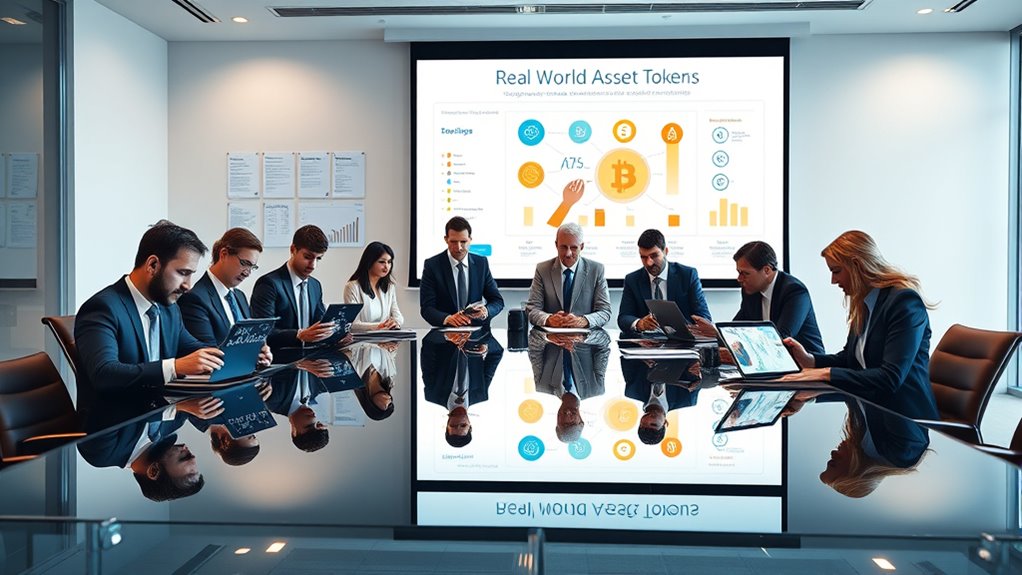
Managing the regulatory environment is essential when dealing with asset tokens, as laws and compliance standards vary across jurisdictions and can greatly impact your ability to tokenize and trade real-world assets. Regulatory hurdles can slow progress, introduce uncertainty, or even halt transactions. To succeed, you need robust compliance strategies that adapt to changing rules.
Consider these key points:
- Stay informed about local regulations to avoid costly mistakes.
- Develop flexible compliance strategies that can pivot with evolving laws.
- Engage legal experts to navigate complex requirements confidently.
- Prepare for increased transparency and reporting demands.
Case Studies of Successful Asset Tokenization

Have you ever wondered how asset tokenization transforms traditional markets? Successful cases demonstrate how tokenizing real assets improves property rights and boosts liquidity. For example, a real estate firm in Dubai tokenized a commercial property, enabling fractional ownership and easier transfer of rights. This increased market accessibility and attracted global investors. Similarly, a European art collector tokenized a valuable artwork, offering liquidity and broadening ownership opportunities. These examples show how tokenization bridges the gap between crypto and traditional finance.
| Asset Type | Key Benefit |
|---|---|
| Commercial real estate | Property rights security, liquidity enhancement |
| Fine art | Broader ownership, quicker transactions |
| Agricultural land | Enhanced liquidity, fractional rights |
| Luxury yachts | Easier transfer of ownership |
| Rare collectibles | Increased market access |
The Future of Finance With Asset Tokens

The future of finance is being reshaped by asset tokens, which promise to make markets more efficient, accessible, and transparent. With token liquidity, assets can be traded quickly and easily, opening opportunities previously out of reach. Fractional ownership allows you to invest small amounts in high-value assets, diversifying your portfolio. This revolution empowers you to participate in markets once reserved for institutional players.
Consider these game-changing impacts:
- Accessing liquidity for illiquid assets
- Lowering entry barriers through fractional ownership
- Increasing transparency across markets
- Enabling global, borderless investments
Frequently Asked Questions
How Do Real-World Asset Tokens Affect Traditional Banking Systems?
Real-world asset tokens impact traditional banking by promoting financial integration, making it easier for banks to connect with crypto markets. You might see faster transactions and new funding sources. However, regulatory challenges remain, as authorities work to adapt rules for these tokens. This could lead to more innovation but also increased compliance requirements, pushing banks to update their systems and strategies to stay competitive in this evolving landscape.
What Are the Tax Implications of Owning Asset Tokens?
In the age of digital renaissance, owning asset tokens could impact your taxes. You need to take into account tax reporting on any gains or losses from trading or holding these tokens. When you sell or exchange them, you might face capital gains taxes, depending on your jurisdiction. Keep detailed records of transactions to accurately calculate your gains, and consult a tax professional to ensure compliance with evolving regulations.
How Secure Are Asset Tokens Against Cyber Threats?
You’re generally safe with asset tokens, but cybersecurity risks and blockchain vulnerabilities exist. Hackers target exchanges, wallets, and smart contracts, so it’s vital to use strong security measures like two-factor authentication and secure wallets. Keep software updated and stay vigilant against phishing scams. While blockchain technology is secure, vulnerabilities can still be exploited, so understanding these risks helps protect your assets effectively.
Can Asset Tokens Be Used for International Trade?
Imagine you’re a modern-day trader, like a digital Marco Polo. Yes, asset tokens can be used for international trade. They facilitate cross-border compliance and streamline international settlement by providing a transparent, secure, and efficient way to transfer assets across borders. This reduces delays and costs, making global transactions smoother. Just make certain you’re aware of differing regulations in each jurisdiction to avoid any hiccups along the way.
What Are the Costs Involved in Issuing and Trading Asset Tokens?
When you issue and trade asset tokens, you’ll face costs like token issuance fees, which cover platform or blockchain transaction fees. Additionally, trading costs include network transaction fees, bid-ask spreads, and potential broker or exchange commissions. These expenses vary depending on the platform, token type, and transaction size, so it’s essential to take into account all these factors to understand the total costs involved in token issuance and trading.
Conclusion
As you explore the potential of real-world asset tokens, it’s clear they could reshape how you invest and manage assets. With blockchain bridging the gap between traditional finance and crypto, are you ready to embrace this innovative frontier? While challenges remain, the opportunity to uncover liquidity, transparency, and accessibility makes tokenization a game-changer. The question isn’t if you should adapt, but how quickly you can leverage this transformative technology for your advantage.