
As you consider Tesla's CEO Elon Musk's ambitions for OpenAI, it's clear that the interplay between AI development and social media interests is complex. Musk's desire to steer OpenAI back to its nonprofit origins raises questions about priorities. With OpenAI's leadership eyeing platforms like Twitter, the future could look quite different. What implications might this shift have for ethical AI and the tech landscape? The answers may surprise you.

Get smart everyday buys delivered free with Prime
- Fast, free delivery on millions of items
- Prime Video, Amazon Music and more included
- Member-only deals all year
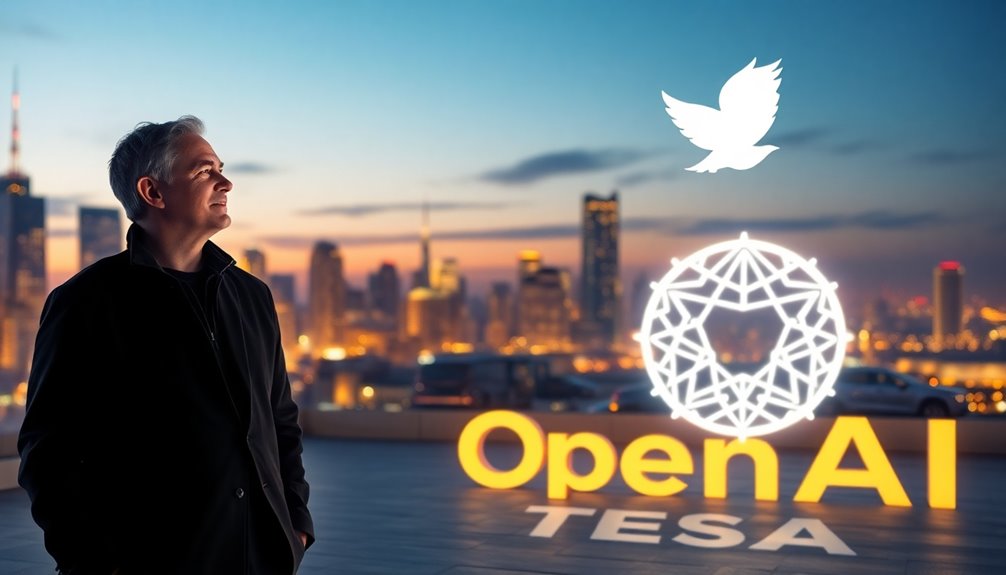
As Elon Musk pushes forward with a $97.4 billion bid to acquire OpenAI, the future of artificial intelligence hangs in the balance. You might recall that Musk co-founded OpenAI back in 2015, aiming to develop AI for the benefit of humanity. However, he stepped down from the board in 2018, leaving many to wonder about his long-term vision for the organization.
Now, with this massive bid, Musk seems intent on returning OpenAI to its nonprofit roots, which he believes will align its goals more closely with ethical AI development.
OpenAI's CEO, Sam Altman, didn't take the offer too seriously, even joking about buying Twitter instead. It's a cheeky remark, especially given Twitter's declining valuation since Musk's own $44 billion acquisition in 2022. While Altman's jest highlights OpenAI's current focus on AI rather than social media, it shows the competitive landscape that Musk is navigating.
OpenAI is in talks for a funding round valued at about $300 billion, which positions it alongside formidable players like xAI, Google's DeepMind, and Meta. This competitive environment underscores the significance of Musk's acquisition attempt as he seeks to reshape the organization's direction.
You have to wonder what the future holds for OpenAI amid these developments. Despite Altman's rejection, there's still a chance that OpenAI's board could reconsider if Musk ups his offer. The organization's aspirations to achieve artificial general intelligence (AGI) remain ambitious, and it continues to push forward with groundbreaking AI research.
This ongoing pursuit of AI advancement is crucial, especially as the market grows more competitive.
Musk's interests don't stop at OpenAI. His companies, Tesla and SpaceX, are also deeply invested in AI technologies. While Tesla's AI developments operate separately from OpenAI, you can see how Musk's vision influences both companies.
SpaceX employs AI in its operations too, but it's not directly tied to his OpenAI bid. Interestingly, Musk's own AI startup, xAI, is positioned as a competitor to OpenAI, suggesting he's not only interested in acquiring but also in shaping the AI landscape himself.
In this rapidly evolving environment, the dynamics of the AI sector will likely impact both Tesla and SpaceX's strategic directions.
As you watch these events unfold, keep an eye on how Musk's ambitions interplay with OpenAI's mission and the competitive forces at play. The decisions made now will shape the future of AI and its role in our lives, so you're definitely witnessing a pivotal moment in tech history.
Top picks for "openai tesla pursu"
As an affiliate, we earn on qualifying purchases.
Halloween Picks
halloween
As an affiliate, we earn on qualifying purchases.