

Personal finance books for beginners vary in how they teach budgeting, saving, debt, and investing. I’d choose Personal Finance 101 as the best overall starting point for its broad introduction, while I Will Teach You to Be Rich suits readers who want a structured action plan and The Infographic Guide to Personal Finance gives visual learners a more digestible format. The main tradeoff is between a broad reference book and a narrower guide that goes deeper on one stage of life or money goal. Age matters too: a teen learning to budget needs a different starting point from an adult managing debt and retirement accounts. Read on for the full comparison and recommendations by reader type.

Get smart everyday buys delivered free with Prime
- Fast, free delivery on millions of items
- Prime Video, Amazon Music and more included
- Member-only deals all year
Key Takeaways
- Personal Finance 101 is the broadest starting point in this lineup, while focused titles can be easier to apply when you already know your main money question.
- I Will Teach You to Be Rich is built around a six-week program, which makes it a stronger fit for readers seeking action steps than for readers who want a neutral reference.
- The teen and young-adult titles center on early habits such as budgeting and saving; readers already managing adult obligations may get more from Get a Financial Life or Personal Finance in Your 20s & 30s For Dummies.
- The Infographic Guide to Personal Finance emphasizes visual explanations, while the For Dummies titles offer reference-style coverage that readers can consult topic by topic.
- This comparison points to a practical choice: start broad if your money priorities are unclear, or choose a focused book when a specific need—such as budgeting or financial independence—is already driving your search.
| Money Skills for Teens: A Beginner’s Guide to Budgeting, Saving, and Investing |  | Best for Teen Beginners | Format: Book | Series: Life Skills for Tweens & Teens | Target audience: Teens | VIEW LATEST PRICE | See Our Full Breakdown |
| Personal Finance in Your 20s & 30s For Dummies |  | Best for Decade-Specific Guidance | Series: For Dummies | Target audience: Readers in their 20s and 30s | Topic: Personal finance | VIEW LATEST PRICE | See Our Full Breakdown |
| I Will Teach You to Be Rich: No Guilt. No Excuses. Just a 6-Week Program That Works (Second Edition) |  | Best for an Action Plan | Format: Book | Edition: Second Edition | Program length: 6 weeks | VIEW LATEST PRICE | See Our Full Breakdown |
| Financial Literacy for Young Adults Simplified: Discover How to Manage, Save, and Invest Money to Build a Secure & Independent Future |  | Best for Young Adult Fundamentals | Format: Book | Target audience: Young adults | Level: Beginner | VIEW LATEST PRICE | See Our Full Breakdown |
| Personal Finance for Teens and Young Adults: Learn Budgeting, Saving, and Investing |  | Best for a Teen-to-Adult Starting Point | Target audience: Teens and young adults | Topics: Budgeting, saving, and investing | Stated focus: Practical money skills and financial independence | VIEW LATEST PRICE | See Our Full Breakdown |
| Personal Finance For Dummies |  | Best Broad-Scope Starting Point | Format: Book | Series: For Dummies | Topics: Budgeting, saving, investing, and managing debt | VIEW LATEST PRICE | See Our Full Breakdown |
| Personal Finance 101: From Saving and Investing to Taxes and Loans, an Essential Primer on Personal Finance (Adams 101 Series) |  | Best for a Structured Fundamentals Primer | Series: Adams 101 | Topics: Saving, investing, taxes, and loans | Intended audience: Beginners | VIEW LATEST PRICE | See Our Full Breakdown |
| The Simple Path to Wealth: Your Road Map to Financial Independence and a Rich, Free Life |  | Best for a Financial Independence Goal | Format: Not specified in provided product data | Stated focus: Financial independence | Stated goal: A richer, freer life | VIEW LATEST PRICE | See Our Full Breakdown |
| The Infographic Guide to Personal Finance: A Visual Reference for Everything You Need to Know | 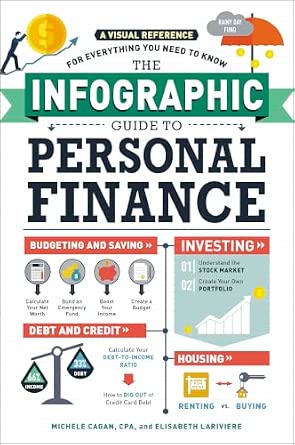 | Best Visual Reference | Series: Infographic Guide | Format: Visual reference guide | Subject: Personal finance | VIEW LATEST PRICE | See Our Full Breakdown |
| How to Adult: Personal Finance for the Real World |  | Best for Young Adults Starting Out | Format: Book | Intended audience: Young adults and beginners | Approach: Practical, real-world guidance | VIEW LATEST PRICE | See Our Full Breakdown |
| Financial Literacy Essentials For Dummies |  | Best for Building Core Money Vocabulary | Format: Book | Series: For Dummies | Subject: Financial literacy | VIEW LATEST PRICE | See Our Full Breakdown |
| Finance for Beginners: 101 Concepts | 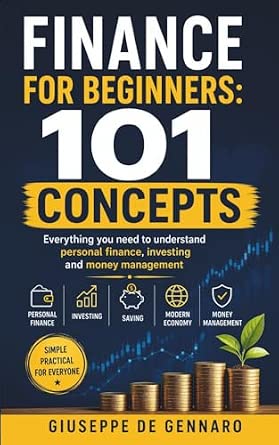 | Best for Bite-Sized Topic Exploration | Format: Not specified | Concept count: 101 | Audience: Beginners | VIEW LATEST PRICE | See Our Full Breakdown |
| Personal Finance QuickStart Guide: The Simplified Beginner’s Guide to Eliminating Financial Stress, Building Wealth, and Achieving Financial Freedom |  | Best for Action-Oriented Beginners | Format: Book | Audience: Beginners | Approach: Simplified, actionable guidance | VIEW LATEST PRICE | See Our Full Breakdown |
| Budgeting 101: Your Essential Guide to Budgeting |  | Best for Getting a Budget in Place | Format: Not specified | Series: Adams 101 Series | Subject: Budgeting | VIEW LATEST PRICE | See Our Full Breakdown |
| Get a Financial Life: Personal Finance in Your Twenties and Thirties |  | Best for Early-Career Adults | Format: Book | Audience: Readers in their twenties and thirties | Subject: Personal finance | VIEW LATEST PRICE | See Our Full Breakdown |
| personal finance books for beginner | Format | Topics | ASIN |
|---|---|---|---|
| Money Skills for Teens: A Begi | Book | Budgeting, saving, and investing | 1915833094 |
| Personal Finance in Your 20s & | Book | — | 1394350457 |
| I Will Teach You to Be Rich: N | Book | Earning, spending, automating finances, and investing | 1523505745 |
| Financial Literacy for Young A | Book | Managing, saving, and investing money | B0C9SHJZS9 |
| Personal Finance for Teens and | Book | Budgeting, saving, and investing | B0GRJ2Q36X |
| Personal Finance For Dummies | Book | Budgeting, saving, investing, and managing debt | 1394207549 |
| Personal Finance 101: From Sav | Not specified in provided product data | Saving, investing, taxes, and loans | 1507214359 |
| The Simple Path to Wealth: You | Not specified in provided product data | — | B0DQJMVM59 |
| The Infographic Guide to Perso | Visual reference guide | — | 1507204663 |
| How to Adult: Personal Finance | Book | Everyday money management, budgeting, and financial independence | B08ZVZKD2H |
| Financial Literacy Essentials | Book | — | — |
| Finance for Beginners: 101 Con | Not specified | Personal finance, investing, and money management | — |
| Personal Finance QuickStart Gu | Book | — | — |
| Budgeting 101: Your Essential | Not specified | Expense tracking, debt reduction, financial goals, and savings | — |
| Get a Financial Life: Personal | Book | Budgeting, saving, investing, and debt | — |
More Details on Our Top Picks
Money Skills for Teens: A Beginner’s Guide to Budgeting, Saving, and Investing
Teen-focused explanations give this book a distinct place among broader guides such as Personal Finance 101, which is framed as a general primer. Its stated coverage of budgeting, saving, and investing gives young readers a starting map of everyday money decisions, while the Life Skills for Tweens & Teens series places finance alongside other practical topics. That focus may make it easier for a teen to connect lessons to their stage of life. The tradeoff is that the available description does not establish how deeply it treats each subject or whether it includes exercises and examples. Adults who want a structured plan or detailed investing guidance may get more from I Will Teach You to Be Rich. I would choose this for age-appropriate orientation, with the expectation that readers may need another resource for depth.
Pros:- Written specifically for teen readers
- Covers budgeting, saving, and investing fundamentals
- Part of a broader life skills series
Cons:- Available product information does not establish the depth of its coverage
- No details are provided about exercises, examples, or teaching approach
Best for: Teenagers starting to learn budgeting, saving, and investing, especially readers who prefer material written for their age group.
Not ideal for: Adults seeking detailed financial planning, or readers who want a clearly documented curriculum with exercises and examples.
- Format:Book
- Series:Life Skills for Tweens & Teens
- Target audience:Teens
- Topics:Budgeting, saving, and investing
- Level:Beginner
- ASIN:1915833094
Our verdict“A teen-oriented starting point for core money topics, though readers seeking depth should pair it with a more fully documented guide.”
Personal Finance in Your 20s & 30s For Dummies
The title makes this an appealing match for readers whose money questions are tied to early adulthood: the twenties and thirties often bring first jobs, independent bills, and longer-term decisions. That life-stage framing is more specific than Personal Finance For Dummies, whose title suggests a broader audience, and could help readers focus on issues relevant to their age group. The available product information, however, gives no chapter list or confirmed topics, so I cannot judge how it handles budgeting, debt, saving, or investing. Compared with I Will Teach You to Be Rich, it also has no described six-week program or stated action sequence. I would treat it as a promising age-targeted choice when that framing matters, but readers wanting a documented plan should favor a book with more clearly specified contents.
Pros:- Explicitly targets readers in their twenties and thirties
- Life-stage framing may help focus beginner questions
- Part of the For Dummies personal finance book line
Cons:- No detailed description or chapter information was provided
- Specific coverage and teaching format cannot be confirmed
Best for: Readers in their twenties or thirties who want a finance guide explicitly framed around their life stage.
Not ideal for: Readers who need confirmed coverage of specific topics or a step-by-step program before choosing a book.
- Series:For Dummies
- Target audience:Readers in their 20s and 30s
- Topic:Personal finance
- Format:Book
- ASIN:1394350457
- Chapter details:Not provided
Our verdict“Choose it for its twenties-and-thirties focus, but look to a guide with documented contents if you need a defined learning path.”
I Will Teach You to Be Rich: No Guilt. No Excuses. Just a 6-Week Program That Works (Second Edition)
A six-week program gives this book the clearest action structure in this group. The description covers earning more, spending thoughtfully, automating finances, and investing for the long term, so it aims to move a beginner from concepts toward repeatable habits. That makes it more prescriptive than Personal Finance in Your 20s & 30s For Dummies, whose supplied details do not confirm a program or topic list. The practical, no-guilt framing may also suit readers who want to make changes without treating every purchase as a failure. The tradeoff is commitment: a staged program asks for follow-through, and some guidance is US-finance focused. Readers seeking a shorter, age-targeted introduction, such as Money Skills for Teens, may find its approach less suited to their needs.
Pros:- Organized around a six-week program
- Includes earning, spending, automation, and investing topics
- Practical, no-guilt approach to money habits
Cons:- The program requires sustained effort across multiple weeks
- Some guidance is focused on US financial systems
Best for: Beginners ready to spend several weeks organizing their finances and building habits around spending, automation, and investing.
Not ideal for: Readers looking for a brief overview, teen-specific instruction, or guidance that avoids US-focused financial details.
- Format:Book
- Edition:Second Edition
- Program length:6 weeks
- Topics:Earning, spending, automating finances, and investing
- Approach:Practical, no-guilt program
- Geographic focus:Some content is US-focused
- ASIN:1523505745
Our verdict“Pick this for a structured, hands-on start to money management if you can follow a multiweek plan and its US context fits.”
Financial Literacy for Young Adults Simplified: Discover How to Manage, Save, and Invest Money to Build a Secure & Independent Future
Young-adult focus and an explicitly beginner-oriented premise make this a natural fit for readers who want core money topics presented as part of building independence. Its stated coverage of managing, saving, and investing overlaps with Money Skills for Teens, but the target shifts toward young adults rather than teenagers. Compared with I Will Teach You to Be Rich, the description offers a broad foundation rather than a defined six-week program, which may suit readers who want an introduction before committing to a sequence of actions. The limitation is that the supplied details do not show the chapter structure, examples, or depth. Readers who need a tested-feeling curriculum on paper, with specific steps spelled out, should choose a guide with more documented contents.
Pros:- Explicitly aimed at young adults and beginners
- Covers managing, saving, and investing money
- Connects money skills with financial independence
Cons:- Available description does not establish how deeply topics are covered
- No chapter structure or learning exercises are specified
Best for: Young adults who are new to personal finance and want an introductory guide to managing, saving, and investing.
Not ideal for: Readers who need a detailed syllabus, practice exercises, or a confirmed step-by-step plan before selecting a guide.
- Format:Book
- Target audience:Young adults
- Level:Beginner
- Topics:Managing, saving, and investing money
- Stated aim:Building a secure and independent financial future
- Topic category:Personal finance / financial literacy
- ASIN:B0C9SHJZS9
Our verdict“A suitable young-adult introduction to core money topics if a broad overview matters more than a documented program.”
Personal Finance for Teens and Young Adults: Learn Budgeting, Saving, and Investing
This book spans teens and young adults, giving it a wider age range than Money Skills for Teens and making it a possible shared starting point for readers at different stages. Its stated focus on budgeting, saving, and investing addresses the same core ground as Financial Literacy for Young Adults Simplified, while the description also emphasizes everyday money skills that may be missing from school. That practical framing could help a beginner connect basic ideas to financial independence. The available information does not identify chapters, examples, or how the material adapts to teens versus adults, so the breadth may come at the cost of age-specific detail. Readers wanting a clearly described learning sequence should compare it with I Will Teach You to Be Rich, which specifies a six-week program.
Pros:- Targets both teens and young adults
- Covers budgeting, saving, and investing
- Emphasizes practical money skills for everyday life
Cons:- No detailed contents or teaching approach were provided
- The broad age range may offer less tailored guidance for each group
Best for: Older teens and young adults who want one introductory resource covering everyday budgeting, saving, and investing.
Not ideal for: Readers who need age-specific instruction, detailed chapter information, or a clearly defined course of study.
- Target audience:Teens and young adults
- Topics:Budgeting, saving, and investing
- Stated focus:Practical money skills and financial independence
- Format:Book
- Level:Beginner
- ASIN:B0GRJ2Q36X
Our verdict“A broad entry point for teens and young adults learning everyday money basics, though its level of detail is unclear.”
Personal Finance For Dummies
Personal Finance For Dummies suits beginners who want one accessible introduction across budgeting, saving, investing, and debt. Its broad scope gives readers a way to identify which money topics they need to learn next, while the plain-language approach may feel less intimidating than a specialist guide. Compared with Personal Finance 101, which is also a general primer, this book’s For Dummies branding makes its role as a wide-ranging reference especially clear; The Simple Path to Wealth has a narrower financial-independence focus. That breadth is also the tradeoff: the product information does not establish how deeply any topic is treated, so readers seeking a detailed plan for one specific goal may need another resource. I’d choose it for orientation, not as a substitute for individualized financial advice.
Pros:- Covers budgeting, saving, investing, and managing debt
- Designed for accessible reading by beginners
- Broad topic range can help readers identify areas for further learning
Cons:- Available product details do not show how thoroughly each topic is covered
- A broad introduction may not provide enough depth for a focused financial goal
Best for: First-time readers who want an approachable overview of several everyday money topics in one book
Not ideal for: Readers who already know the basics or want a detailed, specialized investing or debt-repayment plan
- Format:Book
- Series:For Dummies
- Topics:Budgeting, saving, investing, and managing debt
- Intended audience:Beginners
- Approach:Practical, accessible guidance
- ASIN:1394207549
Our verdict“Choose it for a readable first survey of core personal finance topics, especially if you want broader coverage than a financial-independence-focused book.”
Personal Finance 101: From Saving and Investing to Taxes and Loans, an Essential Primer on Personal Finance (Adams 101 Series)
Personal Finance 101 is a fit for readers who want a beginner-level survey that explicitly spans saving, investing, taxes, and loans. Naming taxes and loans alongside the familiar basics makes its scope useful for someone trying to understand the vocabulary behind everyday financial decisions. Like Personal Finance For Dummies, it offers broad introductory coverage, but the Adams 101 identity positions this as an essential primer rather than a practical guide framed around taking control of money. That can help a reader who prefers a fundamentals-first approach; it may be less useful to someone who wants a tailored sequence of actions for a current budget problem. The source description also warns that readers with existing financial knowledge may find it too basic. I’d place it below a more hands-on choice for readers ready to act.
Pros:- Includes taxes and loans alongside saving and investing
- Designed as an accessible primer for newcomers
- Its named 101 format signals a fundamentals-focused scope
Cons:- May be too basic for readers who already know personal finance fundamentals
- The available description does not indicate how detailed or actionable its guidance is
Best for: New learners who want introductory explanations of saving, investing, taxes, and loans in one primer
Not ideal for: Readers with prior personal finance knowledge or those looking for advanced guidance and a customized action plan
- Series:Adams 101
- Topics:Saving, investing, taxes, and loans
- Intended audience:Beginners
- Format:Not specified in provided product data
- Approach:Essential primer
- ASIN:1507214359
Our verdict“Pick this primer if you are new to money topics and want taxes and loans included alongside the usual basics.”
The Simple Path to Wealth: Your Road Map to Financial Independence and a Rich, Free Life
The Simple Path to Wealth is the most goal-focused option in this group: its title centers financial independence and greater freedom rather than a general survey of household money skills. That gives a beginner with a clear long-term wealth-building aim a different starting point from Personal Finance For Dummies, which covers budgeting, saving, investing, and debt more broadly. The tradeoff is equally clear from the available information: it does not establish whether this book covers everyday topics such as taxes, loans, or budgeting in enough detail for a reader who needs a full foundation. I’d treat it as a focused route into financial independence, not assume it covers every beginner question. Compared with the visual reference approach of The Infographic Guide to Personal Finance, this title promises a road map rather than a quick visual lookup.
Pros:- Has a clearly stated financial-independence focus
- Frames wealth building around the goal of greater freedom
- Its road-map positioning distinguishes it from general reference guides
Cons:- Provided product data does not describe specific topics or methods
- The narrow stated focus may leave everyday beginner questions unanswered
Best for: Beginners whose main money goal is learning about financial independence and building long-term freedom
Not ideal for: Readers who need a broad first guide to budgeting, debt, taxes, and other everyday money basics
- Format:Not specified in provided product data
- Stated focus:Financial independence
- Stated goal:A richer, freer life
- Approach:Road map
- Topic detail:Not provided
- ASIN:B0DQJMVM59
Our verdict“Choose it if financial independence is your main learning goal, and choose a broader primer if you need everyday money basics first.”
The Infographic Guide to Personal Finance: A Visual Reference for Everything You Need to Know
The Infographic Guide to Personal Finance is the clearest match for beginners who find visual references easier to scan than long explanations. Its format suggests a way to revisit money concepts and get a quick orientation, while a prose-led option such as Personal Finance 101 is more explicitly presented as a primer covering named subjects like taxes and loans. That difference matters: a visual layout may make information easier to browse, but the source description does not identify its specific topics or show how much explanation each graphic provides. I’d choose it as a visual entry point or reference companion, rather than assume it offers the step-by-step instruction a beginner may need to make a decision. Compared with Personal Finance For Dummies, its distinguishing promise is presentation, not confirmed breadth or depth.
Pros:- Uses a visual reference format
- Is positioned as a guide to personal finance
- Its infographic approach offers a distinct alternative to prose-led primers
Cons:- Provided product data does not identify the specific topics covered
- The description does not show whether visuals include enough detail for step-by-step learning
Best for: Visual learners who want a browsable introduction or reference for personal finance concepts
Not ideal for: Readers who need a clearly described, step-by-step guide to specific topics such as taxes, loans, or debt
- Series:Infographic Guide
- Format:Visual reference guide
- Subject:Personal finance
- Presentation:Infographic-based
- Specific topics:Not provided in product data
- ASIN:1507204663
Our verdict“Choose this if visual browsing suits your learning style, but favor a topic-specific primer when you need detailed explanations.”
How to Adult: Personal Finance for the Real World
How to Adult: Personal Finance for the Real World speaks directly to young adults who want money guidance tied to everyday adult life. Its practical framing and beginner-friendly positioning make it a more life-stage-specific pick than Personal Finance For Dummies, whose described scope is broader and includes investing and debt alongside budgeting and saving. The narrower audience can make this title feel more relevant to a young adult facing basic money-management decisions; the tradeoff is that the available description does not name specific lessons or confirm how deeply it addresses them. Personal Finance 101 offers a more explicit list of subjects, including taxes and loans, so it may be easier to assess against a particular learning need. I’d select this one for accessible real-world framing, while checking the contents if you need guidance on a specific topic.
Pros:- Designed around real-world personal finance
- Targets young adults and beginners
- Introduces budgeting and financial independence as everyday concerns
Cons:- Available product details do not specify the full set of topics
- The description does not establish how detailed or step-by-step its guidance is
Best for: Young adults seeking an accessible introduction to everyday money management and budgeting
Not ideal for: Readers outside the young-adult audience or buyers who need confirmed coverage of a particular topic such as taxes or investing
- Format:Book
- Intended audience:Young adults and beginners
- Approach:Practical, real-world guidance
- Topics:Everyday money management, budgeting, and financial independence
- Specific topic detail:Limited in provided product data
- ASIN:B08ZVZKD2H
Our verdict“Choose it for a young-adult-focused introduction to everyday money skills, and opt for a topic-explicit primer when you need confirmed coverage.”
Financial Literacy Essentials For Dummies
Financial Literacy Essentials For Dummies is the most natural pick here for readers who want a broad introduction to money concepts before focusing on one part of their finances. Its For Dummies branding signals an introductory approach, while the available product details confirm a focus on core financial literacy. Compared with Budgeting 101, which centers on expenses, debt, goals, and savings, this title appears better suited to readers who want a wider foundation than budgeting alone. The tradeoff is that the source information does not identify specific chapters, tools, or examples, so I can’t judge how practical or detailed its guidance is. Readers who want a clearly stated step-by-step plan may prefer the Personal Finance QuickStart Guide; this book makes more sense as a general starting point.
Pros:- Focuses on essential financial literacy topics
- Introductory positioning suits readers building foundational money knowledge
- For Dummies series branding may help readers identify it as a beginner-oriented guide
Cons:- Available product data does not specify its topics beyond core financial literacy
- No described exercises or step-by-step system to help readers apply concepts
Best for: First-time readers who want an introductory overview of financial literacy before choosing a specific money topic to study
Not ideal for: Readers seeking a detailed budgeting plan, investing strategy, or confirmed exercises, since the available information does not specify that level of guidance
- Format:Book
- Series:For Dummies
- Subject:Financial literacy
- Audience:Readers seeking core financial knowledge
- Focus:Fundamental personal finance concepts
- Product type:Guidebook
Our verdict“Choose this for a broad first introduction to money concepts, but pick Budgeting 101 if your immediate need is a focused budgeting guide.”
Finance for Beginners: 101 Concepts
Finance for Beginners: 101 Concepts organizes its introduction around a defined set of 101 concepts, making it the clearest fit for readers who prefer to approach finance one idea at a time. Its stated scope includes personal finance, investing, and money management, so it reaches beyond the budgeting focus of Budgeting 101. That breadth can help a newcomer see how different money topics relate, while the concept-based structure may make it easier to browse than a single continuous program. The tradeoff is that the available description does not say how deeply each concept is explained or whether the book includes a sequence of actions. Readers who want simplified, practical steps for reducing financial stress may find the Personal Finance QuickStart Guide more directly action-oriented.
Pros:- Covers personal finance, investing, and money management
- The 101-concept structure gives the book a clear organizing principle
- Beginner-focused scope introduces several areas of finance
Cons:- Available information does not show how much depth each concept receives
- No stated step-by-step program or practical exercises
Best for: Curious beginners who want to sample foundational concepts across money management and investing in a topic-by-topic format
Not ideal for: Readers who need a structured financial action plan or detailed explanations of each topic, since the available data does not establish depth or exercises
- Format:Not specified
- Concept count:101
- Audience:Beginners
- Subject:Finance
- Topics:Personal finance, investing, and money management
- Structure:Concept-based
Our verdict“Pick this if you want a broad, concept-by-concept introduction; choose the Personal Finance QuickStart Guide if you want more explicitly actionable guidance.”
Personal Finance QuickStart Guide: The Simplified Beginner’s Guide to Eliminating Financial Stress, Building Wealth, and Achieving Financial Freedom
Personal Finance QuickStart Guide stands out for readers who want accessible guidance framed as simple, actionable steps. Its stated aims—reducing financial stress, building wealth, and working toward financial freedom—give it a more practical, goal-led angle than Finance for Beginners: 101 Concepts, whose concept-based structure may suit browsing across subjects. The QuickStart approach could help a novice move from general interest to concrete money-management habits. The tradeoff is its deliberately simplified level: readers who already understand personal finance may find less new material here, and the available description does not identify specific tools, chapters, or investing methods. Compared with Financial Literacy Essentials For Dummies, its promise is more explicitly action-oriented, though the supplied details remain too limited to assess the depth of that guidance.
Pros:- Simplified approach is aimed at beginners
- Covers a broad range of personal finance topics
- Emphasizes practical, actionable guidance
- Connects money management with reducing stress and building wealth
Cons:- May be too basic for readers with existing financial knowledge
- Available description does not specify the steps, tools, or examples included
Best for: New money managers who feel financially stressed and want a simplified guide framed around practical steps and long-term goals
Not ideal for: Readers with existing personal finance knowledge or those seeking a detailed, advanced investing treatment
- Format:Book
- Audience:Beginners
- Approach:Simplified, actionable guidance
- Focus:Personal finance
- Stated goals:Reducing financial stress, building wealth, and working toward financial freedom
- Product type:Guide
Our verdict“Choose this if you are new to personal finance and want a practical, simplified starting point rather than a topic-by-topic reference.”
Budgeting 101: Your Essential Guide to Budgeting
Budgeting 101 is the most focused choice in this group: it addresses expense tracking, debt reduction, financial goals, and savings rather than trying to introduce every area of personal finance. That narrower scope makes it a practical fit for beginners whose immediate challenge is getting a handle on monthly money decisions. Compared with Financial Literacy Essentials For Dummies, it offers a more clearly defined subject and specific budgeting-related topics; compared with the Personal Finance QuickStart Guide, it gives up broad wealth-building ambitions in favor of a targeted budgeting focus. The tradeoff is just that focus: readers looking for an introduction to investing or wider financial literacy will need another resource. Its Adams 101 Series affiliation provides a clear series context, though no specific exercises or budgeting templates are described in the supplied data.
Pros:- Direct focus on budgeting gives beginners a defined starting point
- Covers expense tracking and debt reduction
- Includes guidance on financial goals and building savings
- Part of the Adams 101 Series
Cons:- Narrower than broad personal finance guides such as Personal Finance QuickStart Guide
- Available data does not specify templates, exercises, or a budgeting method
Best for: Beginners who want to track spending, set financial goals, build savings, or make a plan for reducing debt
Not ideal for: Readers primarily seeking an investing primer or a broad guide to all areas of personal finance
- Format:Not specified
- Series:Adams 101 Series
- Subject:Budgeting
- Topics:Expense tracking, debt reduction, financial goals, and savings
- Audience:Readers seeking budgeting guidance
- Product type:Guide
Our verdict“Choose this when budgeting, spending, debt, and savings are your immediate priorities; look to a broader guide for investing fundamentals.”
Get a Financial Life: Personal Finance in Your Twenties and Thirties
Get a Financial Life is aimed at a specific life stage: readers in their twenties and thirties who are beginning to manage budgets, savings, investing, and debt. That age-focused framing makes it more directly tailored to young adults than Financial Literacy Essentials For Dummies, whose available details describe a general financial literacy guide. Its listed topics also give it broader scope than Budgeting 101, which concentrates on budgeting, debt, goals, and savings. The tradeoff is that the supplied product information is sparse: it does not establish how current the advice is, how topics are taught, or whether the book includes practical exercises. Readers outside the stated age range may still find the subjects relevant, but those wanting a verified, highly structured beginner program have clearer signals in the QuickStart Guide’s description.
Pros:- Explicitly targets readers in their twenties and thirties
- Covers foundational subjects including budgeting, saving, investing, and debt
- Life-stage focus distinguishes it from general financial literacy introductions
Cons:- Available product details do not describe its teaching approach or chapter content
- No exercises or step-by-step program are specified in the supplied information
Best for: Readers in their twenties and thirties who are starting to manage debt, budgets, savings, and investing
Not ideal for: Readers seeking a clearly documented step-by-step curriculum or a guide tailored to another life stage
- Format:Book
- Audience:Readers in their twenties and thirties
- Subject:Personal finance
- Topics:Budgeting, saving, investing, and debt
- Product type:Guide
- Focus:Foundational money management
Our verdict“Choose this if you are in your twenties or thirties and want a broad introduction to the money topics that commonly arise in early adulthood.”

How We Picked
I compared these books by how well they orient a beginner, how clearly they explain everyday decisions, and whether their scope matches a distinct reader need. I also considered learning format, life-stage fit, and how readily a reader could turn the material into next steps. A useful beginner book should explain core concepts without assuming prior financial knowledge, while making its limits clear when it concentrates on one topic or audience.
The ranking gives priority to accessible coverage and practical usefulness across common beginner questions. Broad primers rank ahead of narrower guides when they serve more kinds of first-time readers; focused books earn a distinct place when their audience or method offers a clear advantage. A specialized title may be a better personal match than a higher-ranked general pick, so the roles below explain who should choose each book and who may want a different approach.
| personal finance books for beginner | Format |
|---|---|
| Money Skills for Teens: A Begi | Book |
| Personal Finance in Your 20s & | Book |
| I Will Teach You to Be Rich: N | Book |
| Financial Literacy for Young A | Book |
| Personal Finance for Teens and | Book |
| Personal Finance For Dummies | Book |
| Personal Finance 101: From Sav | Not specified in provided product data |
| The Simple Path to Wealth: You | Not specified in provided product data |
| The Infographic Guide to Perso | Visual reference guide |
| How to Adult: Personal Finance | Book |
| Financial Literacy Essentials | Book |
| Finance for Beginners: 101 Con | Not specified |
| Personal Finance QuickStart Gu | Book |
| Budgeting 101: Your Essential | Not specified |
| Get a Financial Life: Personal | Book |
Factors to Consider When Choosing Personal Finance Books For Beginners
Before choosing a title, I’d identify what I need the book to help me do next. A clear starting question can matter more than a book’s broad promise: learning a budget, understanding investing basics, or organizing adult money tasks each calls for a different approach.
Start With the Money Decision You Need to Make
Choose a book based on the next decision you want to handle, not only on the phrase “personal finance.” A broad primer can help when you are unsure whether to focus on spending, saving, borrowing, or investing. If you already have a specific need, a focused guide may give you more useful detail with less material to sift through. A common mistake is buying a book about wealth building when the immediate problem is inconsistent cash flow. Write down one question you want to answer before choosing. If the book’s main subject does not match that question, its broad coverage may not make it the right fit.
Match the Format to How You Learn
Some readers learn best from a visual overview, while others prefer a reference they can revisit or a program organized into steps. A compact, image-led presentation can make unfamiliar concepts easier to scan, though it may leave less room for detail. A reference-style book can answer questions over time, but its breadth may feel like a lot to work through from cover to cover. Step-based books give momentum, yet their pace may not suit someone who wants to explore topics in a different order. Think about whether you will read in short sessions, follow a sequence, or look up answers as situations arise. The most suitable format is the one you are likely to return to when a real money decision comes up.
Check the Life-Stage Fit
Money responsibilities change with age and circumstance, so a beginner label alone does not tell you whether a book will fit. Teen-focused material can make first budgets and saving goals approachable, but may not cover the concerns of someone handling insurance, loans, or retirement accounts. Guides for people in their twenties and thirties may speak more directly to those choices, though readers outside that stage might find some examples less relevant. Do not assume a young-adult title is only useful to young adults; compare its actual topics with your needs. Likewise, an all-ages primer may be accessible but less specific about a particular stage. Match the book’s examples to the decisions you face now.
Separate Core Concepts From Personal Recommendations
Beginner books can explain the same financial concepts while recommending different ways to act on them. I’d distinguish durable basics—such as tracking spending or understanding interest—from approaches tied to an author’s preferred system. A structured plan may help you move from reading to action, but it still needs to fit your income, obligations, and comfort with risk. A book centered on one investing or budgeting philosophy may give a clear path while giving less space to alternatives. Look for explanations that help you understand why a step matters, not just instructions to follow it. Treat examples as tools for thinking through your situation rather than as a personal financial plan.
Decide How Much Breadth You Need
A broad book can help connect budgeting, debt, saving, and investing, especially when you are starting from zero. Its tradeoff is that each subject may receive less detail than it would in a dedicated guide. Narrow books can provide more direction on one task but leave other beginner questions unanswered. Buying several overlapping introductions can create a pile of advice without a clear next step. Start with the book that covers your current gap, then add another only when a new question appears. This approach keeps the learning path manageable and makes it easier to tell what information you are still missing.
Think About What Will Make You Put the Book Into Practice
Information helps only when you can connect it to a decision or habit. Before choosing, ask whether you want explanations, worksheets or prompts, visual summaries, or a schedule that sets a pace. A reader who benefits from small assignments may prefer a guided program over an open-ended reference. Someone who already keeps a budget may want explanations of investing or credit instead of another introduction to tracking spending. Avoid judging a book only by how many subjects it names; the useful question is whether its teaching style will help you act on one of them. A small, completed action can be more valuable than reading a broader book without applying anything.
Frequently Asked Questions
Should I start with a broad personal finance book or one about budgeting?
If you cannot yet identify your main money challenge, a broad primer can give you a map of the subjects and help you choose a next step. If you already know that spending or saving is the issue, a budgeting-focused book may be easier to apply right away. You do not need to master every area before making progress on one. Start with the gap that affects your next decision, then use a broader reference later if questions remain. That keeps your first read connected to something you can act on.
Are books written for teens useful for an adult beginner?
They can be, particularly if you want a plain-language introduction to budgeting, saving, and investing basics. Their examples and level of detail may feel aimed at a younger reader, and they may not spend much time on adult concerns such as insurance or retirement planning. Check the topics and examples before choosing rather than relying on the title alone. If you need help with several adult financial decisions, a general primer or a young-adult guide may fit better. A simpler explanation can still be a useful starting point when the subject itself is new to you.
Is a step-by-step money program better than a reference book?
A program can help when you want a sequence of actions and a defined pace. A reference book may suit you better if you prefer to look up one issue at a time or return to topics as your circumstances change. The format does not guarantee that the advice will fit your situation, so check whether its methods match your goals and comfort level. Readers who feel stuck may appreciate structure; readers who already have a plan may want topic-by-topic explanations instead. Choose for the way you expect to use the book, not for the format that sounds most ambitious.
Can one beginner book cover budgeting, debt, and investing well?
A broad introduction can explain how those topics relate and give you a vocabulary for further learning. It may not provide the depth needed to make every decision, especially when your circumstances involve complex debt or investment choices. Look for a book that clearly signals when it is offering an overview. You can use it to identify what you need to learn next, then seek a focused resource for that subject. Expecting one book to answer every future question can make a useful starting point feel incomplete.
What should I do if a book’s money advice conflicts with another book?
First, separate the underlying principle from the specific method. Two books may agree that saving matters while recommending different ways to set a target or automate contributions. Check whether each author explains the reasoning, assumptions, and audience for the advice. If the disagreement concerns a consequential decision, use a qualified professional who can consider your circumstances instead of treating a general book as personal guidance. For routine learning, compare the approaches and choose the one you can understand and maintain.
Conclusion
For the broadest first read, I’d choose Personal Finance 101 as the best overall pick; readers who want a reference-style overview can compare it with Personal Finance For Dummies. For a best-value learning path, Finance for Beginners: 101 Concepts offers a concise starting point for readers who want core ideas before specializing. My best premium-style recommendation is The Simple Path to Wealth for someone ready to focus on financial independence and investing, though its narrower philosophy makes it a less complete first stop for general money questions. Newcomers who want a guided plan should look at I Will Teach You to Be Rich, while teens and young adults may prefer one of the books written for their stage. Choose Budgeting 101 for a focused budgeting need or The Infographic Guide to Personal Finance for visual learning; the right pick is the one that matches the money decision you want to make next.
Halloween Picks

HOPOCO Halloween Pumpkin Fog Machine with 12 LED Colors & 4 Light Modes

10.5 ft Lighted Pumpkin and Ghost Halloween Inflatable Archway

DomKom 6 ft Halloween Inflatable Ghosts Roasting Marshmallows
As an affiliate, we earn on qualifying purchases.