The best personal finance book for most adults is The Index Card, which boils money management down to a short set of memorable principles. For readers who want a structured plan, I Will Teach You to Be Rich offers a practical program, while The Psychology of Money focuses on the habits and emotions behind financial decisions. The main tradeoff is between a quick, approachable overview and detailed guidance on a specific goal such as budgeting, investing, or managing early-career finances. Some books teach through visuals or exercises, while others rely on narrative and broad principles. Read on for a comparison of all 15 options and help choosing the right fit.

Get smart everyday buys delivered free with Prime
- Fast, free delivery on millions of items
- Prime Video, Amazon Music and more included
- Member-only deals all year
Key Takeaways
- The Index Card is the clearest pick for readers who want a compact set of personal finance principles rather than a long course of instruction.
- I Will Teach You to Be Rich stands apart for its step-by-step program, while readers seeking a less prescriptive, behavior-first perspective may prefer The Psychology of Money.
- The beginner titles differ in format: visual guides suit readers who prefer graphics, while Personal Finance Workbook for Beginners is designed for learning by doing.
- Several books focus on young adults, but their age range and emphasis vary; readers in their twenties and thirties may find Get a Financial Life more relevant than a teen-oriented guide.
- The Simple Path to Wealth is the most focused choice for financial independence and investing, not a substitute for a broad guide to everyday money management.
| Personal Finance for Beginners: A Simple Guide to Taking Control of Your Finances |  | Best for First Steps | Format: Not specified | Audience: Personal finance beginners | Primary focus: Taking control of personal finances | VIEW LATEST PRICE | See Our Full Breakdown |
| Personal Finance for Your 20s: Master Money Management and Build Financial Confidence |  | Best for Readers in Their 20s | Format: Not specified | Audience: People in their 20s | Primary focus: Money management and financial confidence | VIEW LATEST PRICE | See Our Full Breakdown |
| Personal Finance 101: From Saving and Investing to Taxes and Loans |  | Best for Broad Topic Coverage | Format: Introductory primer | Series: Adams 101 Series | Saving: Covered | VIEW LATEST PRICE | See Our Full Breakdown |
| The Infographic Guide to Personal Finance: A Visual Reference | 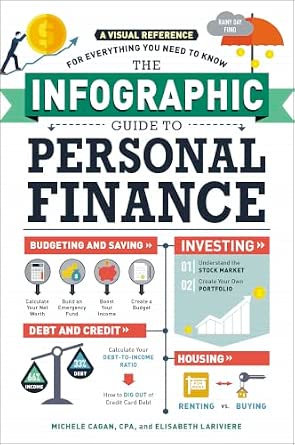 | Best Visual Reference | Format: Visual reference guide | Approach: Infographic format | Subject: Personal finance | VIEW LATEST PRICE | See Our Full Breakdown |
| How to Money: Your Ultimate Visual Guide to the Basics of Finance |  | Best Visual Basics Guide | Format: Visual guide | Audience: Readers seeking finance basics | Primary focus: Basics of finance | VIEW LATEST PRICE | See Our Full Breakdown |
| The Index Card: Why Personal Finance Doesn’t Have to Be Complicated |  | Best for a Simple, Focused Starting Point | ASIN: 0143130528 | Format: Book | Title: The Index Card: Why Personal Finance Doesn’t Have to Be Complicated | VIEW LATEST PRICE | See Our Full Breakdown |
| Budgeting For Dummies |  | Best for Building a Budget | ASIN: 1119985145 | Title: Budgeting For Dummies | Series: For Dummies | VIEW LATEST PRICE | See Our Full Breakdown |
| How to Adult: Personal Finance for the Real World |  | Best for Everyday Adult Money Decisions | ASIN: B08ZVZKD2H | Title: How to Adult: Personal Finance for the Real World | Subject: Personal finance | VIEW LATEST PRICE | See Our Full Breakdown |
| Personal Finance for Teens and Young Adults: Budgeting, Saving, and Investing |  | Best for Young Adults Building Money Basics | ASIN: B0GRJ2Q36X | Title: Personal Finance for Teens and Young Adults: Budgeting, Saving, and Investing | Audience: Teens and young adults | VIEW LATEST PRICE | See Our Full Breakdown |
| The Psychology of Money: Timeless Lessons on Wealth, Greed, and Happiness |  | Best for Understanding Money Behavior | ASIN: 0857197681 | Title: The Psychology of Money: Timeless Lessons on Wealth, Greed, and Happiness | Subject: Personal finance | VIEW LATEST PRICE | See Our Full Breakdown |
| Money Skills for Young Adults: A Beginner’s Guide to Smart Financial Habits |  | Best for Young Adults Starting from Scratch | Subject: Personal finance | Intended audience: Young adults | Experience level: Beginner | VIEW LATEST PRICE | See Our Full Breakdown |
| The Simple Path to Wealth: Your Road Map to Financial Independence and a Rich, Free Life |  | Best for Financial Independence | Subject: Personal finance | Stated focus: Financial independence | Stated aim: A richer, freer life | VIEW LATEST PRICE | See Our Full Breakdown |
| I Will Teach You to Be Rich: No Guilt, No Excuses, Just a 6-Week Program That Works (Second Edition) |  | Best for a Structured Money Reset | Subject: Personal finance | Format: Book | Edition: Second Edition | VIEW LATEST PRICE | See Our Full Breakdown |
| Personal Finance Workbook for Beginners: Practical Exercises for Smarter Money Management and Financial Empowerment |  | Best for Learning by Doing | Subject: Personal finance | Intended audience: Beginners | Positioning: Workbook | VIEW LATEST PRICE | See Our Full Breakdown |
| Get a Financial Life: Personal Finance in Your Twenties and Thirties |  | Best for Readers in Their Twenties and Thirties | Subject: Personal finance | Intended audience: People in their twenties and thirties | Age focus: Twenties and thirties | VIEW LATEST PRICE | See Our Full Breakdown |
| personal finance books for adult | ASIN | Subject | Format |
|---|---|---|---|
| Personal Finance for Beginners | B087Z1MDTN | — | Not specified |
| Personal Finance for Your 20s: | B0CN1P6NXH | — | Not specified |
| Personal Finance 101: From Sav | 1507214359 | — | Introductory primer |
| The Infographic Guide to Perso | 1507204663 | Personal finance | Visual reference guide |
| How to Money: Your Ultimate Vi | 1250791693 | — | Visual guide |
| The Index Card: Why Personal F | 0143130528 | Personal finance | Book |
| Budgeting For Dummies | 1119985145 | Business and personal finance | — |
| How to Adult: Personal Finance | B08ZVZKD2H | Personal finance | Not specified in the supplied product data |
| Personal Finance for Teens and | B0GRJ2Q36X | Personal finance | — |
| The Psychology of Money: Timel | 0857197681 | Personal finance | — |
| Money Skills for Young Adults: | — | Personal finance | Not specified in supplied product data |
| The Simple Path to Wealth: You | — | Personal finance | — |
| I Will Teach You to Be Rich: N | — | Personal finance | Book |
| Personal Finance Workbook for | — | Personal finance | — |
| Get a Financial Life: Personal | 1668095351 | Personal finance | Not specified in supplied product data |
More Details on Our Top Picks
Personal Finance for Beginners: A Simple Guide to Taking Control of Your Finances
This beginner-focused guide is aimed at adults who want an accessible introduction to managing money, with investing basics included alongside foundational money-management topics. That broad starting point gives it an advantage over Personal Finance for Your 20s for readers whose needs are not tied to a particular age group. Compared with Personal Finance 101, its title signals a direct focus on taking control of your finances rather than a primer organized around a list of subject areas. The tradeoff is that the available description does not identify specific lessons, exercises, or investing approaches, so readers seeking detailed instructions may need a more clearly scoped book. I’d choose it for a general adult beginner who wants a first orientation, not a specialist reference or a step-by-step plan.
Pros:- Covers foundational money-management topics
- Introduces investing basics for beginners
- Addresses taking control of personal finances
- Its general audience suits adults at different life stages
Cons:- The description does not specify the methods or topics covered in detail
- No stated exercises or step-by-step plan for applying the ideas
- Broad introductory scope may not meet the needs of readers seeking in-depth guidance
Best for: Adults new to budgeting and investing who want a broad, approachable introduction without an age-specific focus
Not ideal for: Readers who want detailed guidance on a particular topic, such as taxes, debt repayment, or a defined investing strategy
- Format:Not specified
- Audience:Personal finance beginners
- Primary focus:Taking control of personal finances
- Money management:Foundational topics
- Investing:Basics for beginners
- Series:Not specified
- ASIN:B087Z1MDTN
Our verdict“Choose this as a general first guide if you want an introduction to money management and investing rather than a narrowly focused manual.”
Personal Finance for Your 20s: Master Money Management and Build Financial Confidence
Its age-specific focus makes this the clearest fit here for adults in their twenties who want money guidance framed around their current life stage. The description promises money management and practical strategies for building financial confidence and wealth, while Personal Finance for Beginners is positioned for beginners of any age. That narrower audience can make this a more relevant starting point for younger adults, but the provided information does not name the strategies or explain which financial decisions receive attention. Compared with Get a Financial Life, which is also aimed at younger adults, the available description here offers less detail about its scope. I’d pick it for a reader who values a twenties-specific framing, but not for someone who needs to verify coverage of a particular subject before buying.
Pros:- Targets financial decisions for people in their 20s
- Covers money management
- Promises practical strategies for building financial confidence
- Includes building wealth as a stated aim
Cons:- The available description does not identify its specific strategies
- No detailed topic list is provided to help buyers judge coverage
- Its age-specific framing may be less relevant to older adult beginners
Best for: Adults in their 20s looking for an age-focused introduction to money management and building financial confidence
Not ideal for: Readers outside their 20s or buyers who need confirmed coverage of specific topics such as taxes, loans, or investing methods
- Format:Not specified
- Audience:People in their 20s
- Primary focus:Money management and financial confidence
- Stated aim:Building wealth
- Strategies:Described as practical; specific methods not provided
- Series:Not specified
- ASIN:B0CN1P6NXH
Our verdict“Pick this if you want a personal finance guide explicitly framed for your twenties and are comfortable with limited detail about its specific lessons.”
Personal Finance 101: From Saving and Investing to Taxes and Loans
Saving, investing, taxes, and loans give this introductory book a more explicit subject range than Personal Finance for Beginners, whose description stays broad. That makes this Adams 101 Series entry a useful choice for adults who want a primer spanning several common areas of personal finance, rather than a guide centered on a single life stage like Personal Finance for Your 20s. The format is described as introductory, though the available details do not reveal how deeply it treats each topic or how the material is organized. Its breadth is the main advantage and the main tradeoff: readers get a wider map of money topics, but those looking for a detailed plan in one area may want a more specialized resource. I’d favor it when topic coverage matters more than a narrowly tailored approach.
Pros:- Names four core personal finance areas in its scope
- Introductory primer format suits readers building basic knowledge
- Covers both investing and everyday financial topics such as loans
- Part of the Adams 101 Series
Cons:- The available description does not indicate how thoroughly each topic is covered
- No specific exercises or action plan are identified
- Its broad primer scope may not offer the depth a focused guide provides
Best for: Adult beginners who want one introductory reference covering saving, investing, taxes, and loans
Not ideal for: Readers seeking a detailed, personalized plan for one specific financial challenge or a guide tailored to their age group
- Format:Introductory primer
- Series:Adams 101 Series
- Saving:Covered
- Investing:Covered
- Taxes:Covered
- Loans:Covered
- ASIN:1507214359
Our verdict“Choose this primer if you want a named overview of saving, investing, taxes, and loans in one introductory book.”
The Infographic Guide to Personal Finance: A Visual Reference
A visual-reference format sets this book apart from text-led introductions such as Personal Finance 101. That difference may suit adults who prefer visual material when reviewing personal finance concepts, or who want a guide to consult rather than a book described primarily as an introductory primer. The product data confirms that it covers personal finance and belongs to the Infographic Guide series, but it does not name the subjects included or explain how the visual material is arranged. That leaves an important tradeoff: its format is clear, while its topic coverage is not. Compared with How to Money, another visually framed option in this roundup, this title is described specifically as a reference guide. I’d choose it for visual lookup, not when a buyer needs a confirmed curriculum or a detailed narrative explanation.
Pros:- Uses an infographic format for visual reference
- Covers personal finance
- Identified as part of the Infographic Guide series
- Reference positioning distinguishes it from primer-style options
Cons:- The available description does not specify which personal finance topics are included
- The organization and extent of the infographic content are not provided
- Visual reference positioning may not suit readers seeking detailed prose instruction
Best for: Adults who prefer visual reference material when reviewing personal finance information
Not ideal for: Readers who need a confirmed list of covered topics, detailed written instruction, or a step-by-step financial plan
- Format:Visual reference guide
- Approach:Infographic format
- Subject:Personal finance
- Series:Infographic Guide Series
- Specific topics:Not specified
- Content organization:Not specified
- ASIN:1507204663
Our verdict“Choose this if visual reference material is your priority and you do not need a fully specified topic list before buying.”
How to Money: Your Ultimate Visual Guide to the Basics of Finance
How to Money is positioned as a visual guide to finance basics, making it a natural option for adults who want an illustrated entry point rather than a conventional-sounding primer. Its description is less specific than The Infographic Guide to Personal Finance, which is explicitly presented as a visual reference; here, the product data does not explain the visual format or name the financial topics covered. That makes this a lighter-information pick: the title and description signal an accessible basics focus, but buyers cannot confirm whether it addresses their particular needs. Compared with Personal Finance 101, it offers a visual framing rather than a stated list of subjects such as taxes and loans. I’d shortlist it for readers drawn to visual learning, while treating its exact scope as uncertain.
Pros:- Presented as a guide to finance basics
- Uses a visual-guide positioning
- Aims at an introductory rather than advanced audience
- Offers a different approach from the topic-listed Personal Finance 101
Cons:- The available product information does not identify specific topics
- The visual format and organization are not described in detail
- Buyers cannot judge the guide’s depth from the supplied description
Best for: Adults seeking a visually framed introduction to finance basics who do not require a detailed topic list in advance
Not ideal for: Readers who want confirmed coverage of specific areas such as taxes, loans, or investing, or who prefer a clearly described text-based primer
- Format:Visual guide
- Audience:Readers seeking finance basics
- Primary focus:Basics of finance
- Specific topics:Not specified
- Visual approach:Described as visual; details not provided
- Series:Not specified
- ASIN:1250791693
Our verdict“Consider this for a visual introduction to finance basics, but choose a more fully described guide if you need specific topics confirmed.”
The Index Card: Why Personal Finance Doesn’t Have to Be Complicated
The Index Card is the clearest fit here for adults who want personal finance reduced to a manageable set of ideas rather than a broad tour of every money topic. Its emphasis on simplicity gives it a different job from Budgeting For Dummies, which is more specifically centered on building a budget. That focus can make this a useful first read when readers feel overwhelmed and need a framework before choosing detailed tactics. The tradeoff is that a deliberately simplified approach may leave less room for step-by-step instruction on particular situations, such as managing a complex budget. The available product details identify it as a book but do not specify format beyond that or describe its chapters, so readers seeking a workbook-style plan may prefer a more hands-on option.
Pros:- Centers on making personal finance easier to understand
- Offers a focused alternative to broad, multi-topic finance guides
- Can serve as an accessible starting point for readers overwhelmed by money advice
Cons:- The provided details do not specify practical exercises or step-by-step tools
- A simplicity-first approach may not cover every reader’s specific financial situation
Best for: Adults who want a concise-feeling framework for organizing their personal finance decisions before tackling specialized guides
Not ideal for: Readers looking for detailed budgeting exercises or a step-by-step workbook, since the available information does not establish that level of instruction
- ASIN:0143130528
- Format:Book
- Title:The Index Card: Why Personal Finance Doesn’t Have to Be Complicated
- Subject:Personal finance
- Focus:Making personal finance easier to understand
- Audience:Adults
Our verdict“Choose this if you want a straightforward personal finance framework, but pick a more detailed guide if you need structured budgeting instruction.”
Budgeting For Dummies
Budgeting For Dummies earns a distinct place for adults whose main money challenge is turning income and expenses into a workable budget. That narrow subject focus makes it a more direct choice than The Psychology of Money, which centers on how people think about wealth and financial decisions rather than budgeting itself. Readers who already know their general financial goals can use a budgeting-specific book to focus their effort on day-to-day money management. The tradeoff is that budgeting alone does not cover the broader mix of saving, investing, and financial behavior implied by other books in this roundup. The product information identifies its subject and series but does not provide details about methods, worksheets, or chapter structure, so buyers wanting a particular budgeting system should check whether the book’s approach matches their needs.
Pros:- Keeps its focus on budgeting, making it easier to match to a specific need
- Belongs to the For Dummies series
- Addresses business and personal finance as its listed subject area
Cons:- Its budgeting focus is narrower than books covering several personal finance topics
- The supplied product information does not identify specific tools or exercises
- May not address readers whose main concern is investing or financial behavior
Best for: Adults who want to focus on creating or improving a household budget rather than reading a broad personal finance overview
Not ideal for: Readers primarily seeking guidance on investing, money psychology, or a full financial-independence plan
- ASIN:1119985145
- Title:Budgeting For Dummies
- Series:For Dummies
- Subject:Business and personal finance
- Focus:Budgeting
- Audience:Adults
Our verdict“Pick this when budgeting is the skill you need to work on; choose a broader guide if you want coverage beyond spending plans.”
How to Adult: Personal Finance for the Real World
How to Adult: Personal Finance for the Real World is positioned for readers who want personal finance framed around everyday adult life, rather than one isolated skill. That makes it a broader match than Budgeting For Dummies, whose listed subject is budgeting. The practical, real-world framing may suit adults looking for a general guide to handling money as part of ordinary responsibilities. At the same time, the supplied information does not name specific topics, tools, or exercises, so I would not assume it offers detailed instruction in areas such as investing or debt management. Its everyday scope is appealing, but less clearly defined than the targeted focus of The Index Card. Readers who want a book they can match to a concrete need may prefer a title with a more explicit subject description.
Pros:- Addresses personal finance for everyday life
- Uses a real-world framing rather than presenting itself as a single-topic budgeting book
- May suit readers seeking a broad entry point into adult money management
Cons:- The supplied details do not specify which financial topics receive coverage
- No format, structure, or practical tools are identified in the product information
- Its broad positioning may be less useful than a targeted guide for a specific money problem
Best for: Adults looking for a general personal finance read framed around ordinary life decisions rather than a single money skill
Not ideal for: Readers who need a clearly specified budgeting method, investing guide, or set of practical exercises
- ASIN:B08ZVZKD2H
- Title:How to Adult: Personal Finance for the Real World
- Subject:Personal finance
- Focus:Personal finance for everyday life
- Audience:Adults
- Format:Not specified in the supplied product data
Our verdict“Choose this for a general everyday-life approach, but favor a focused title when you need instruction on one specific financial task.”
Personal Finance for Teens and Young Adults: Budgeting, Saving, and Investing
Personal Finance for Teens and Young Adults stands apart by naming three core skills—budgeting, saving, and investing—and aiming them at people building financial independence. That makes it a more age-specific choice than How to Adult: Personal Finance for the Real World, which is described broadly for everyday life. Its combination of foundational topics may help younger readers connect daily money habits with longer-term goals. The tradeoff is its explicit focus on teens and young adults: older readers seeking advice tailored to established households may find the audience positioning less relevant. The product details do not identify specific lessons, exercises, or investing depth, so readers should not assume it provides advanced guidance. It is best viewed as an introductory skills option, not a substitute for a specialized investing or budgeting reference.
Pros:- Explicitly covers budgeting, saving, and investing
- Names teens and young adults as its intended audience
- Connects foundational money skills with building financial independence
Cons:- Its stated audience may be a poor match for older adults with more complex finances
- The supplied description does not specify the depth of its investing coverage
- No format or practical exercise details are provided
Best for: Teens and young adults who want an introduction to budgeting, saving, and investing while building financial independence
Not ideal for: Older adults seeking advanced investment guidance or advice tailored to established family finances
- ASIN:B0GRJ2Q36X
- Title:Personal Finance for Teens and Young Adults: Budgeting, Saving, and Investing
- Audience:Teens and young adults
- Subject:Personal finance
- Topic:Budgeting
- Topic:Saving
- Topic:Investing
- Goal:Building financial independence
Our verdict“Choose this for a younger reader learning core money skills, but seek a more specialized guide for advanced or later-life financial questions.”
The Psychology of Money: Timeless Lessons on Wealth, Greed, and Happiness
The Psychology of Money is the behavior-focused choice in this group: it examines how people think about money and how wealth, greed, and happiness shape financial decisions. That gives it a different role from Budgeting For Dummies, which targets a concrete management task. Readers interested in the beliefs and emotions behind their choices may find this lens more useful than another list of budgeting steps. The tradeoff is that the description does not present it as a practical budgeting manual or a step-by-step investing plan. Adults who need immediate help organizing spending may get more direct instruction from The Index Card or a budgeting-specific book. This title makes the most sense when the reader wants to reflect on financial behavior, not when they need a procedural guide.
Pros:- Focuses on the psychology behind personal finance decisions
- Explores wealth, greed, and happiness as influences on money
- Offers a distinct complement to task-focused books such as Budgeting For Dummies
Cons:- The supplied description does not establish a practical budgeting system
- No specific exercises or step-by-step financial plan are listed
- May be less direct for readers facing an immediate money-management task
Best for: Adults who want to examine how their attitudes toward wealth, greed, and happiness influence financial choices
Not ideal for: Readers seeking a step-by-step budget, financial worksheet, or clearly specified investing instructions
- ASIN:0857197681
- Title:The Psychology of Money: Timeless Lessons on Wealth, Greed, and Happiness
- Subject:Personal finance
- Focus:How people think about money and make financial decisions
- Theme:Wealth
- Theme:Greed
- Theme:Happiness
Our verdict“Choose this to reflect on the behavior behind your money decisions, not as your main source for budgeting instructions.”
Money Skills for Young Adults: A Beginner’s Guide to Smart Financial Habits
Money Skills for Young Adults is aimed at readers who want a starting point for everyday money habits, connecting budgeting, saving, and investing with the broader goal of financial independence. That mix gives it a wider scope than a workbook such as Personal Finance Workbook for Beginners, which emphasizes exercises over a guided overview. Its young-adult focus may also feel more relevant to someone building financial routines for the first time than Get a Financial Life, which is framed around people in their twenties and thirties. The tradeoff is that the supplied details don’t identify particular methods, examples, or depth, so readers seeking a detailed investing reference may need another book alongside it. I’d choose it for an accessible overview, not as a substitute for specialized guidance.
Pros:- Addresses budgeting, saving, and investing in one beginner-focused guide.
- Explicitly targets young adults, making its intended audience easy to identify.
- Connects practical money habits with saving for goals.
- Frames financial skills around building an independent future.
Cons:- The supplied description gives no detail about its specific methods, examples, or level of coverage.
- Its broad beginner scope may not satisfy readers looking for advanced investment or financial planning material.
Best for: Young adults who want one beginner-oriented introduction to budgeting, saving toward goals, investing, and financial independence.
Not ideal for: Readers who already have established money routines or want detailed, specific investing strategies; the available description does not establish that level of depth.
- Subject:Personal finance
- Intended audience:Young adults
- Experience level:Beginner
- Topics:Budgeting, saving, investing, and financial independence
- Approach:Practical financial habits
- Format:Not specified in supplied product data
- Edition:Not specified in supplied product data
Our verdict“Choose this for a young adult’s broad first guide to everyday money habits, but look elsewhere for detailed investing instruction.”
The Simple Path to Wealth: Your Road Map to Financial Independence and a Rich, Free Life
The Simple Path to Wealth is the clearest fit here for readers whose main aim is financial independence, rather than a general introduction to managing day-to-day money. Its title promises a road map toward a freer life, giving it a distinct purpose next to I Will Teach You to Be Rich, which is organized around a six-week program. The supplied information, however, offers no account of the book’s specific recommendations, intended experience level, or treatment of budgeting and investing. That makes it harder to judge how much practical guidance a reader will get before choosing it. I’d rank it for the strength of its stated goal, while readers who need a clearly described beginner curriculum may prefer Money Skills for Young Adults or a structured program instead.
Pros:- Places financial independence at the center of its stated purpose.
- Signals a focus on building a freer life, not only managing routine expenses.
- Has a distinct goal-oriented role beside broader beginner guides.
- The title presents the book as a road map rather than a narrow reference.
Cons:- The supplied description does not specify its methods or financial topics.
- No audience level, format, or edition details are provided.
- Readers cannot determine from the available information how much practical, step-by-step instruction it offers.
Best for: Adults primarily interested in pursuing financial independence and looking for a book framed around that goal.
Not ideal for: Readers who need confirmed beginner-level explanations, a defined step-by-step program, or clear coverage of specific money topics before selecting a book.
- Subject:Personal finance
- Stated focus:Financial independence
- Stated aim:A richer, freer life
- Positioning:Road map to financial independence
- Specific topics:Not detailed in supplied product data
- Intended experience level:Not specified in supplied product data
- Format and edition:Not specified in supplied product data
Our verdict“Pick this when financial independence is your main goal, but choose a better-documented guide if you need a clear beginner curriculum.”
I Will Teach You to Be Rich: No Guilt, No Excuses, Just a 6-Week Program That Works (Second Edition)
The defining feature of I Will Teach You to Be Rich is its six-week program: a set time frame can help readers who want a sequence to follow instead of a general survey. That structure distinguishes it from The Simple Path to Wealth, whose supplied description emphasizes financial independence but gives no program length. The subtitle’s “no guilt” framing also signals a practical, action-oriented approach to personal finance. Still, the information available here does not spell out the program’s weekly topics, specific exercises, or format, so I can’t tell how much of the plan suits a reader’s particular needs. Compared with Personal Finance Workbook for Beginners, this is the more explicitly scheduled option; the workbook is the clearer pick for readers who want exercises as the central feature.
Pros:- Organizes the book around a defined six-week program.
- Offers a time-bounded structure for readers who prefer a sequence over an open-ended guide.
- Presents its approach as practical and free of guilt-based framing.
- Identifies itself as the second edition.
Cons:- The supplied product data does not list the program’s weekly topics or specific methods.
- The format and use of exercises are not specified.
- A fixed six-week structure may be less appealing to readers who prefer to work at their own pace without a set sequence.
Best for: Adults who are more likely to act on personal finance guidance when it is organized into a defined six-week program.
Not ideal for: Readers who want a workbook-led experience or need to know the program’s specific topics and weekly steps before committing.
- Subject:Personal finance
- Format:Book
- Edition:Second Edition
- Program length:6 weeks
- Approach:Practical personal finance program
- Stated framing:No guilt, no excuses
- Specific program topics:Not specified in supplied product data
Our verdict“Choose this if a six-week structure will help you follow through, but opt for the beginner workbook if hands-on exercises are your priority.”
Personal Finance Workbook for Beginners: Practical Exercises for Smarter Money Management and Financial Empowerment
Personal Finance Workbook for Beginners stands apart by putting practical exercises at the center, making it a natural choice for readers who learn by working through money skills rather than reading only explanations. That hands-on emphasis is more explicit than in Money Skills for Young Adults, which is described as a guide covering several core topics. It also differs from I Will Teach You to Be Rich: that book provides a six-week structure, while this workbook’s stated identity is practice-focused, with no schedule supplied. The limitation is that the available description does not name the exercises, topics, or format, so buyers cannot tell how extensive the activities are. I’d choose it for active practice, but not if you need a clearly mapped curriculum or detailed topic list.
Pros:- Makes practical exercises a central part of its beginner-oriented approach.
- Focuses on smarter money management and financial skills.
- Offers a hands-on alternative to general guides such as Money Skills for Young Adults.
- Its workbook positioning may suit readers who want an active learning format.
Cons:- The supplied description does not identify the exercises or skills covered in detail.
- No schedule or step-by-step sequence is specified.
- The supplied data does not confirm the book’s format beyond its workbook title and positioning.
Best for: Beginners who prefer to build money-management skills by completing practical exercises rather than reading a guide alone.
Not ideal for: Readers who want a specified lesson sequence, named topics, or confirmation of the workbook’s format and exercise content.
- Subject:Personal finance
- Intended audience:Beginners
- Positioning:Workbook
- Approach:Practical exercises
- Stated focus:Money management and financial empowerment
- Program length:Not specified in supplied product data
- Edition:Not specified in supplied product data
Our verdict“Pick this if doing exercises is how you learn best, but choose the six-week program if you want a stated schedule.”
Get a Financial Life: Personal Finance in Your Twenties and Thirties
Get a Financial Life earns its place through a clearly defined life-stage focus: personal finance in your twenties and thirties. That makes it a more age-specific choice than the broadly beginner-oriented Personal Finance Workbook for Beginners, whose description centers on exercises rather than a particular stage of adulthood. It may also suit readers who want a title geared to their current decade instead of the young-adult focus of Money Skills for Young Adults. The available description does not name its topics, methods, or format, though, so buyers cannot tell which financial decisions it covers or how much instruction it provides. I’d shortlist it for its audience fit, while choosing a more fully described book if you need confirmed guidance on budgeting, saving, or investing.
Pros:- Explicitly targets people in their twenties and thirties.
- Offers a life-stage-specific alternative to general beginner books.
- Has a clear audience focus in its title and description.
- Addresses personal finance rather than a single stated money skill.
Cons:- The supplied description does not specify which financial topics it covers.
- No format, edition, or teaching approach is provided.
- Readers cannot determine how its advice compares with their specific needs from the available product details.
Best for: Adults in their twenties or thirties who want a personal finance book explicitly framed around their age range.
Not ideal for: Readers outside those age groups or buyers who want a confirmed list of topics, methods, and format before choosing.
- Subject:Personal finance
- Intended audience:People in their twenties and thirties
- Age focus:Twenties and thirties
- Specific topics:Not specified in supplied product data
- Format:Not specified in supplied product data
- Edition:Not specified in supplied product data
- ASIN:1668095351
Our verdict“Choose this for an age-focused personal finance title in your twenties or thirties, but seek a more detailed listing if you need topic-specific guidance.”

How We Picked
I compared these books by the problems adult readers are trying to solve: building basic money habits, making a budget, handling common financial tasks, understanding investing, and changing money behavior. I also weighed how clearly each title explains its ideas, whether its format supports the intended reader, and how narrowly or broadly it applies. A book aimed at teens or people in their twenties can still be useful, but its audience fit matters for an adult choosing a guide.
The ranking favors books with a clear purpose and a useful balance of accessibility and practical direction. Broad guides rank ahead of specialized titles for readers who want one starting point; focused books rise when they serve a distinct need particularly well. I also considered tradeoffs such as a short principles-based approach versus a longer program, and passive reading versus workbook exercises. The list includes different formats and money philosophies so readers can choose by goal, not just title.
| personal finance books for adult | Subject |
|---|---|
| Personal Finance for Beginners | — |
| Personal Finance for Your 20s: | — |
| Personal Finance 101: From Sav | — |
| The Infographic Guide to Perso | Personal finance |
| How to Money: Your Ultimate Vi | — |
| The Index Card: Why Personal F | Personal finance |
| Budgeting For Dummies | Business and personal finance |
| How to Adult: Personal Finance | Personal finance |
| Personal Finance for Teens and | Personal finance |
| The Psychology of Money: Timel | Personal finance |
| Money Skills for Young Adults: | Personal finance |
| The Simple Path to Wealth: You | Personal finance |
| I Will Teach You to Be Rich: N | Personal finance |
| Personal Finance Workbook for | Personal finance |
| Get a Financial Life: Personal | Personal finance |
Factors to Consider When Choosing Personal Finance Books For Adults
Before choosing a personal finance book, match its scope and teaching style to the decision you need help making. A book can be useful without covering every financial topic; the better fit is the one whose advice you can apply to your situation.
Start With the Money Decision You Need to Make
Choose a book based on the next financial question you need to answer, not the broadest promise on the cover. Someone trying to organize spending may need a different resource from someone comparing investing approaches or developing a long-term plan. A common mistake is buying a book about wealth building before resolving immediate issues such as cash flow or debt payments. If several goals matter, begin with a broad guide and add a specialized title once you know where you need more depth. This keeps you from mistaking a focused investing book for a complete guide to adult finances. Write down one outcome you want from reading, such as setting up a budget or understanding investment basics, before choosing.
Choose a Teaching Style You Will Actually Use
Personal finance books teach through different formats: concise rules, narratives, step-by-step plans, visual explanations, or exercises. A visually oriented guide can make unfamiliar concepts easier to follow, while a workbook gives you a place to turn ideas into decisions. A detailed program may help readers who want instructions in sequence, but it can feel restrictive if they prefer to adapt advice at their own pace. Do not assume that a simpler-looking book will be shallow or that a longer one will be more useful. Think about whether you learn best by reading examples, following a checklist, or writing down your own numbers. Choosing a format that fits your habits can matter more than choosing the title with the widest scope.
Check How Well the Audience Matches Your Life
Age labels can signal the situations a book addresses, but they do not define who can benefit from it. A title for young adults may explain first jobs, starting a budget, or early financial choices, while an adult with more established responsibilities may need broader guidance. At the same time, a book aimed at readers in their twenties and thirties can still suit someone older who wants a practical refresher. Avoid buying solely because a title says “for beginners”; check whether the examples and topics reflect your actual needs. For couples, parents, freelancers, or people changing careers, look for relevant situations rather than assuming a general guide covers them. Audience fit helps prevent advice from feeling disconnected from your day-to-day decisions.
Separate Durable Principles From Time-Sensitive Details
Money habits and basic ideas can remain useful for years, but tax rules, account details, and financial products may change. A book centered on enduring behavior or simple principles may age differently from one with detailed procedural instructions. Before relying on a book for a current tax or account decision, check whether the information still applies and consult an up-to-date source when needed. A common mistake is treating a general personal finance book as a replacement for current rules or professional advice on a complex situation. For a first read, prioritize clarity and sound decision-making habits; use current references for details that depend on laws, institutions, or your circumstances. This distinction lets a timeless book stay useful without asking it to answer every current question.
Decide How Much Structure You Want
Some readers want a short set of rules they can adapt, while others want a defined sequence and concrete actions. More structure can help when you are building routines, but a rigid plan may not fit irregular income, shared finances, or competing priorities. A principles-first book leaves more room for judgment, though it may require you to create your own next steps. Before choosing, decide whether you want a framework, a plan to follow, or prompts that help you make your own plan. Do not confuse a highly specific approach with a universally suitable one. The best level of structure is the one that gives you direction without making your finances feel like someone else’s template.
Pay for Depth Only When You Need It
A broad introductory book can be enough for readers who need a foundation, while a specialized guide may be more useful for a defined goal such as financial independence. Paying more attention to detail is worthwhile only if the extra depth answers questions you actually have. A common buying mistake is collecting several introductory books that repeat similar basics rather than moving from learning to action. Start with one title that fits your current need, then add another when you can name a gap it will fill. A workbook may add value through practice, while a focused investing book may add value through a narrower road map. Think of the book as one part of your learning process, not a guarantee of a particular financial outcome.
Frequently Asked Questions
Which book should I choose if I want one starting point for general money management?
The Index Card is a strong starting point if you prefer a concise set of guiding principles rather than a detailed course. If you want a more structured sequence of actions, I Will Teach You to Be Rich is a better fit. Readers who want a broad overview of topics such as saving, investing, taxes, and loans may prefer Personal Finance 101. Choose based on whether you need principles, a program, or a survey of subjects. One book does not have to cover every money question you will face.
Are books written for teens or young adults useful for older adult beginners?
They can be useful when their subject matter matches what you need to learn, even if the intended reader is younger. A guide focused on foundational habits may explain budgeting and saving clearly, but its examples may not address later-career decisions or more complex responsibilities. Compare the topics and examples with your own situation rather than rejecting a book by age label alone. If you want guidance for adult life stages, a title such as Get a Financial Life may feel more directly relevant. A general beginner book is another option if you prefer material without a narrow age focus.
Should I pick a workbook or a regular personal finance book?
Choose a workbook if you learn by applying ideas to your own budget, goals, and financial choices as you read. A standard book may be a better first step if you need background or want to understand principles before filling in exercises. Workbooks can prompt action, but they may offer less context than a narrative or instructional guide. You can also pair formats: read a fundamentals book first, then use exercises to turn the concepts into a personal plan. The useful question is whether you need explanation, practice, or both.
Is an investing-focused book enough to manage my personal finances?
Usually not if you also need help with budgeting, debt, taxes, or everyday money routines. The Simple Path to Wealth is oriented toward investing and financial independence, so it makes the most sense when those are your main interests. A broad guide can cover more areas, though it may give less detail on any one subject. Start with the gaps that affect your decisions now, then add an investing title if you want more depth in that area. Treat any book as education, not individualized financial advice.
How can I tell whether a personal finance book is too basic or too advanced for me?
Look at the topics, sample sections, and intended audience, then ask whether the book assumes knowledge you do not have or repeats material you already understand. A visual or beginner-focused title can make first concepts more approachable, while a program or investing road map may suit readers ready to follow a defined plan. If you are unsure, choose a broad introductory book that explains key terms and use a specialized title later. Do not judge difficulty only by page count or an assertive title. The right level should make your next financial decision clearer without burying you in material you cannot yet use.
Conclusion
For the best overall starting point, I recommend The Index Card for its compact, easy-to-retain principles. Readers seeking best value through practical direction should look at Personal Finance 101 for a broad introduction, while I Will Teach You to Be Rich is my pick for a more structured program. Beginners who prefer visual explanations can choose How to Money or The Infographic Guide to Personal Finance; those who learn by doing should favor the workbook. For a premium-level deep focus on financial independence, choose The Simple Path to Wealth, and for a specific need around money behavior, pick The Psychology of Money. Match the book to the problem you want to solve next, rather than expecting one title to cover every part of adult finance.