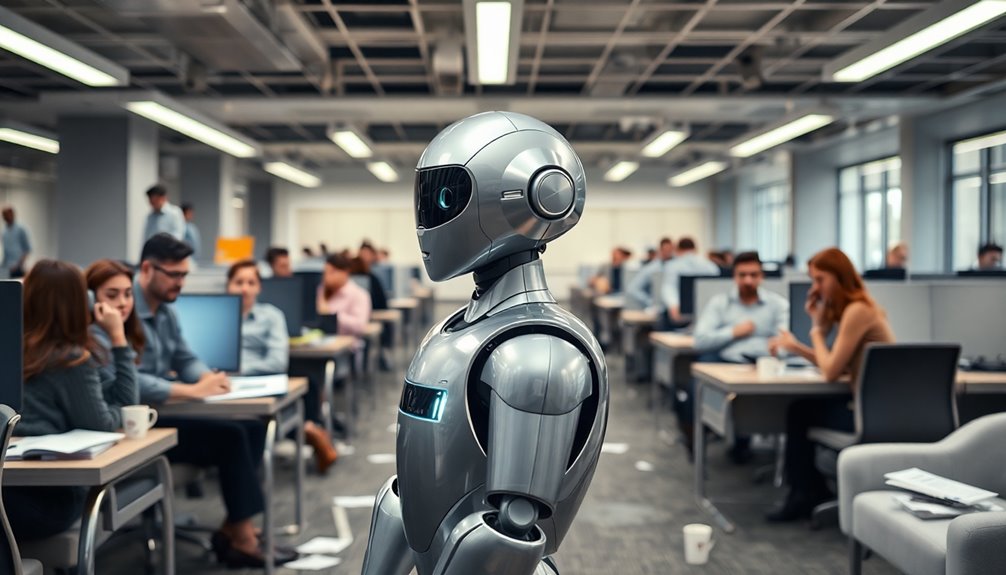

You might not notice it at first, but AI is quietly reshaping your workplace. Tasks you once handled are being automated, and roles that seemed secure are now under threat. With predictions suggesting a significant portion of jobs could vanish by 2030, it's crucial to consider what this means for your future. Are you prepared to adapt and thrive, or will you become a casualty of this technological shift? The answers may surprise you.

Get smart everyday buys delivered free — and shop member deals
- Fast, free delivery on millions of items
- Access to Prime Big Deal Days deals on October 6–7
- Prime Video, Amazon Music and more included

As companies increasingly integrate AI into their daily operations, you might notice a shift in how tasks are handled around the office. AI adoption is on the rise, enhancing efficiency and productivity in various functions. For instance, AI-powered receptionists are taking over routine tasks like scheduling appointments and answering calls, providing 24/7 availability. While this can streamline operations, it also raises concerns about job security, particularly for those in roles traditionally filled by humans.
With AI managing front desk duties, businesses can significantly cut labor costs. However, this cost-saving measure might come at a price for employees in those positions. The fear of job displacement is real; experts predict that by 2030, up to 30% of working hours in the U.S. could be automated. If you're in a role that involves repetitive tasks, you might find your position at risk, as companies increasingly rely on AI systems that can handle multiple tasks simultaneously.
Despite these concerns, it's essential to recognize that AI can enhance certain roles rather than outright replace them. By automating routine tasks, AI allows you to focus on more complex and creative work. This paradigm shift could lead to a new equilibrium where AI complements human effort. AI enhances employee creativity, allowing for more impactful work and problem-solving. Moreover, cultivating cultural intelligence (CQ) will be crucial as AI continues to reshape workplace dynamics, ensuring that teams can effectively navigate diverse cultural interactions. Rather than feeling threatened, consider how you might leverage AI to boost your productivity and creativity, particularly if you're in a higher-skilled position.
In various sectors, from healthcare to human resources, AI is making significant inroads. It analyzes patient records and streamlines medical processes, while in HR, it filters job applications, directing qualified candidates to human managers. This collaboration between AI and employees can enhance overall efficiency, but it also highlights the need for workers to adapt to this new landscape.
As the regulatory environment around AI evolves, public perception is also shifting. People are becoming more aware of AI's capabilities and implications, though opinions vary on its societal impact. The fact that AI is increasingly mentioned in legislative discussions underscores its significance in shaping the future of work.
Ultimately, while AI's quiet takeover of the office might spell risks for job security, it also presents opportunities for growth and innovation. Embracing this change and adapting to new technologies could very well be the key to thriving in an AI-augmented workplace.
As an affiliate, we earn on qualifying purchases.
automation tools for workplace productivity
As an affiliate, we earn on qualifying purchases.
As an affiliate, we earn on qualifying purchases.
As an affiliate, we earn on qualifying purchases.
AI collaboration tools for employees
As an affiliate, we earn on qualifying purchases.
As an affiliate, we earn on qualifying purchases.
Fall Picks
fall essentials
As an affiliate, we earn on qualifying purchases.