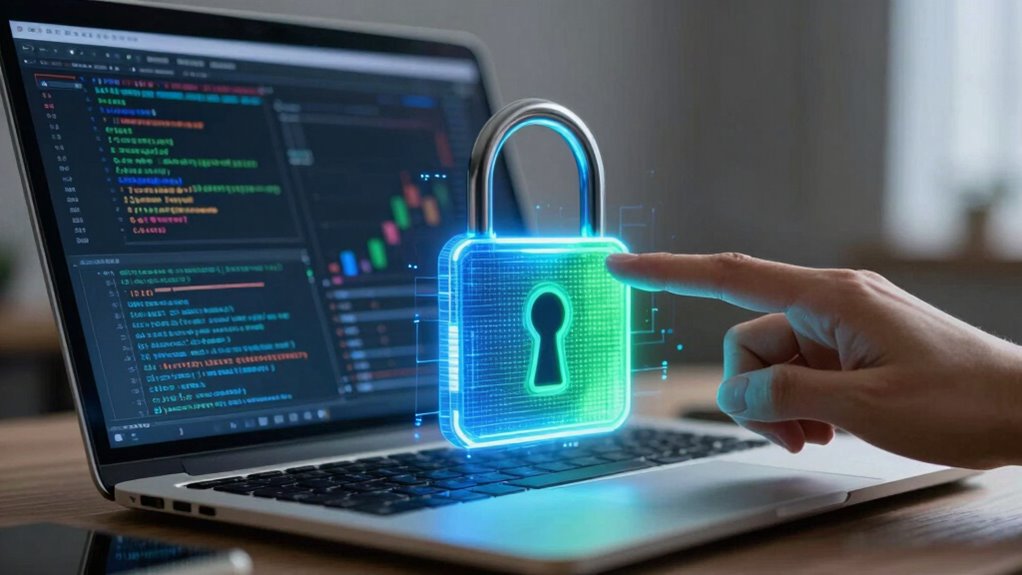

AI is revolutionizing your financial privacy by improving encryption methods and staying ahead of cyber threats. It helps develop quantum-resistant algorithms and adaptively tests security measures to keep your data safe from evolving attacks. AI-powered tools automate key management and detect vulnerabilities early, while blockchain integration adds extra tamper-proof protection. To learn how these innovations work together to guard your information, keep exploring how AI continues to strengthen digital security.

Get smart everyday buys delivered free with Prime
- Fast, free delivery on millions of items
- Prime Video, Amazon Music and more included
- Member-only deals all year
Key Takeaways
- AI accelerates development and testing of quantum-resistant encryption to safeguard financial data from future quantum attacks.
- Adaptive AI encryption tools dynamically analyze and adjust security measures to protect sensitive financial information.
- AI-powered key management systems securely generate, rotate, and store cryptographic keys, reducing compromise risks.
- Real-time AI monitoring detects suspicious activities in blockchain networks, ensuring transaction integrity and privacy.
- Continuous AI-driven innovation anticipates emerging cyber threats, strengthening data encryption for long-term financial privacy.

As artificial intelligence continues to evolve, it is increasingly transforming the way we protect sensitive information through data encryption. In today’s digital landscape, your financial privacy hinges on the strength of encryption methods, and AI plays a crucial role in enhancing these safeguards. One of the most pressing challenges is preparing for the advent of quantum computers, which threaten to break traditional encryption algorithms. To counter this, researchers are focusing on quantum-resistant encryption techniques that can withstand the power of quantum attacks. AI accelerates this process by analyzing complex algorithms, testing their resilience, and helping develop new methods that guarantee your data remains secure even in a future dominated by quantum computing. Additionally, security scanning tools powered by AI are now essential for identifying vulnerabilities before they can be exploited. These tools can adapt and improve over time, ensuring ongoing protection as cyber threats evolve. Moreover, leveraging threat intelligence can further enhance the ability of AI systems to anticipate and respond to emerging cyberattack techniques.
AI enhances data encryption by developing quantum-resistant methods to secure your financial privacy against future threats.
Blockchain integration is another frontier where AI is making a substantial impact on data security. Blockchain technology provides a decentralized and tamper-proof ledger, ideal for safeguarding financial transactions and personal data. When combined with AI, blockchain systems can become even more secure and efficient. AI algorithms can monitor blockchain networks for suspicious activity in real-time, identifying potential threats before they cause harm. This proactive approach minimizes risks like fraud and unauthorized access, giving you greater confidence in your financial transactions. Furthermore, AI can enhance the smart contract functionality on blockchains, automating verification processes and reducing human error. As a result, your financial privacy benefits from a more robust, transparent, and tamper-resistant infrastructure.
The integration of AI with data encryption also means that your sensitive information benefits from continuous, adaptive protection. AI-driven encryption tools can analyze patterns and adapt their security measures dynamically, making it much harder for cybercriminals to exploit vulnerabilities. This adaptive approach ensures that your data remains protected against evolving threats, including sophisticated hacking techniques and malware. Additionally, AI-powered key management systems streamline the encryption process, ensuring that your cryptographic keys are generated, stored, and rotated securely without manual intervention. This reduces the chances of key compromise, which is a common vulnerability in traditional encryption setups. As AI progresses, it will likely incorporate machine learning techniques to further anticipate and mitigate future cyber threats. Incorporating quantum-resistant algorithms is vital for future-proofing encryption, especially as quantum computing becomes more viable, ensuring your data remains secure against emerging computational threats.
In essence, your financial privacy is becoming increasingly resilient thanks to AI’s ability to incorporate quantum resistance and blockchain integration into encryption strategies. These advancements not only fortify your data against current threats but also future-proof your information against emerging ones. As AI continues to innovate, you can expect even more sophisticated, seamless protection mechanisms that keep your financial information private and secure. Staying informed about these developments helps you understand how technology is working tirelessly behind the scenes to safeguard your digital financial life. A deeper understanding of cybersecurity innovations helps users appreciate the ongoing efforts to enhance data protection.
Frequently Asked Questions
How Does AI Detect New Encryption Threats?
AI detects new encryption threats through threat detection algorithms that analyze vast data patterns in real time. It identifies anomalies by spotting unusual activities or deviations from normal encryption behaviors. When AI notices suspicious changes, it flags potential threats quickly, allowing you to respond promptly. This proactive approach helps you stay ahead of emerging threats, ensuring your financial data remains secure and protected against evolving cyber risks.
Can AI Decrypt Encrypted Financial Data?
AI can’t decrypt encrypted financial data directly because it’s like trying to open a sealed vault with a key you don’t possess. While AI advances in detecting threats like quantum hacking and biometric encryption, breaking actual encryption requires immense computational power and specialized algorithms. Think of AI as a vigilant guard, recognizing breaches, but the vault’s lock remains secure unless someone cracks the code with the right key.
What Are the Risks of Ai-Based Encryption Systems?
The risks of AI-based encryption systems include potential quantum vulnerabilities, where advanced quantum computers could break current encryption methods, exposing your data. Additionally, ethical considerations arise, like AI misuse or bias, which could compromise your financial privacy. You should stay aware of these risks, ensuring that encryption methods are regularly updated and ethically managed to protect your sensitive information from emerging threats.
How Often Should Encryption Algorithms Be Updated?
Think of your encryption algorithms like evolving locks on your digital safe; you should update them regularly, ideally every 6 to 12 months. This keeps your encryption key management sharp and guarantees you stay ahead of potential threats. Algorithm agility is key—adapting quickly when vulnerabilities are found. Regular updates protect your financial privacy by sealing gaps, much like changing locks after losing keys, keeping your data secure in a shifting digital landscape.
Is AI Regulation Necessary for Financial Data Security?
Yes, AI regulation is necessary for financial data security to address regulatory challenges and guarantee your financial privacy. Without proper oversight, AI systems might mishandle sensitive information or become targets for cyberattacks. Regulations help set standards, promote transparency, and prevent misuse of data. By supporting AI regulation, you help create a safer environment for your financial information, reducing risks and maintaining trust in the financial industry.
Conclusion
By leveraging AI and data encryption, you can substantially strengthen your financial privacy and safeguard your sensitive information. Did you know that over 80% of data breaches involve weak encryption? That’s a staggering statistic that highlights the importance of adopting advanced security measures. Stay proactive, embrace these technologies, and protect your financial future. Your privacy is worth the effort—don’t leave it vulnerable in today’s digital world.
Halloween Picks
halloween
As an affiliate, we earn on qualifying purchases.