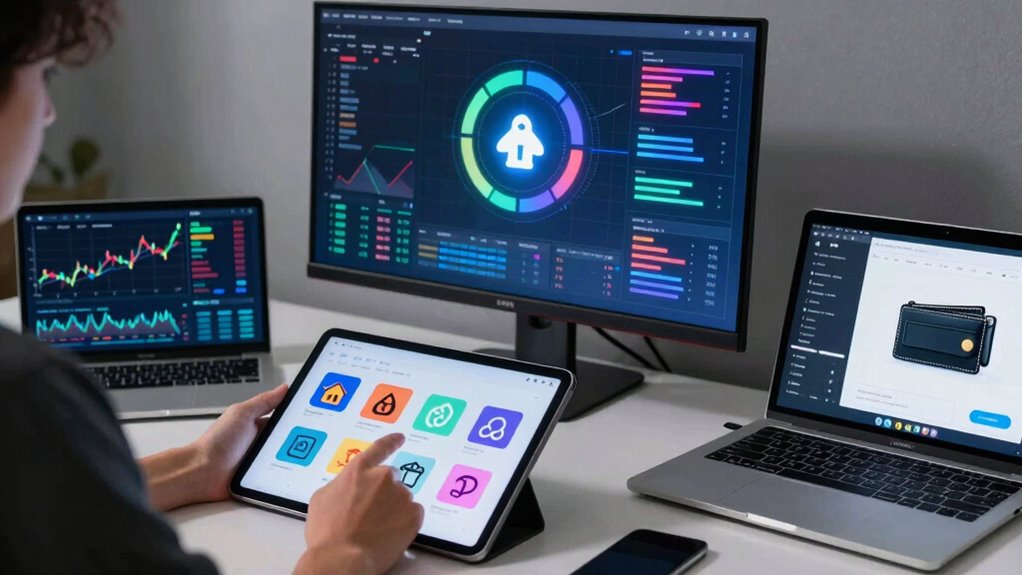

Decentralized finance platforms now let you access real-world assets like real estate, art, and commodities through blockchain tokenization. You can trade, invest, and even use these digital tokens as collateral, all without relying on traditional banks or intermediaries. Liquidity pools help facilitate smooth transactions and boost market efficiency. Thanks to blockchain’s transparency and security, your ownership stays protected. If you’re curious about how this innovative approach works, there’s plenty more to discover.
Key Takeaways
- DeFi platforms facilitate tokenization of real estate, art, commodities, and stocks for easier trading and liquidity.
- Many platforms enable direct investment in fractionalized physical assets via blockchain-based tokens.
- Liquidity pools on DeFi platforms support seamless trading and improve market efficiency for real-world asset tokens.
- Blockchain ensures secure, transparent ownership and transaction records for tokenized real-world assets.
- Integration with traditional finance allows collateralization and borrowing against physical assets within DeFi protocols.

Decentralized finance (DeFi) platforms are transforming the way you access and manage financial services by removing traditional intermediaries like banks. Instead of relying on centralized institutions, you can now leverage blockchain technology to engage directly with various assets, including real-world assets. One of the key innovations driving this shift is the tokenization process. Tokenization involves converting physical assets—such as real estate, art, commodities, or even stocks—into digital tokens on a blockchain. This process makes these assets more accessible, divisible, and tradable, opening up investment opportunities that were once limited to a select few. By turning tangible assets into digital tokens, DeFi platforms enable you to participate in markets that previously required significant capital or bureaucratic hurdles.
As you explore these platforms, you’ll notice that liquidity pools play an essential role in facilitating trading and liquidity. Liquidity pools are collections of tokens locked into smart contracts, allowing users to trade assets without the need for a traditional order book. When you contribute to a liquidity pool, you help create a more efficient and accessible marketplace for real-world assets, ensuring there’s enough liquidity for seamless transactions. In return, you earn a share of the transaction fees, providing an incentive to keep these pools well-funded. This system democratizes access to investment opportunities, letting you buy or sell fractionalized real-world assets quickly and with less friction. Additionally, the integration of blockchain technology enhances transparency and security, ensuring that each asset’s provenance and ownership history are easily verifiable. As the ecosystem grows, interoperability between different DeFi platforms will further streamline the use of tokenized assets across multiple environments.
Tokenization processes also simplify the process of collateralizing real-world assets in decentralized lending protocols. You can use tokenized assets as collateral to borrow funds or yield farm, expanding your options beyond traditional securities. This integration of real-world assets into DeFi ecosystems bridges the gap between traditional finance and decentralized markets, offering you new ways to diversify your portfolio and generate passive income. Additionally, because these assets are on the blockchain, you benefit from transparency and security—every transaction is recorded immutably, and your ownership is securely stored in a digital wallet.

D'CENT Hardware Wallet | Biometric Cold Storage, Bluetooth, Multi-Crypto
- Secure Element with Fingerprint: EAL5+ certified chip with biometric protection
- Supports 4,900+ Assets: Multi-cryptocurrency and NFT compatibility
- Bluetooth Mobile Management: Tap-to-sign via D'CENT app for easy control
As an affiliate, we earn on qualifying purchases.
As an affiliate, we earn on qualifying purchases.
Frequently Asked Questions
How Do Real-World Assets Get Tokenized on Defi Platforms?
You start the tokenization process by converting a real-world asset, like property or gold, into digital tokens on a DeFi platform. First, you verify the asset’s authenticity through thorough asset verification, ensuring its legitimacy. Then, you use smart contracts to represent the asset digitally, creating a secure, transparent link between the physical asset and its token. This method allows you to trade and manage real-world assets seamlessly within the DeFi ecosystem.
What Are the Risks of Investing in Real-World Assets on Defi?
Investing in real-world assets on DeFi is like walking a tightrope—you face liquidity challenges and valuation concerns. You risk losing value if assets aren’t easily tradable or if their worth fluctuates unexpectedly. Market volatility, regulatory uncertainties, and platform security also pose threats. Stay cautious, research thoroughly, and diversify your investments to minimize these risks, ensuring you don’t get caught off guard when conditions shift unexpectedly.
How Is Asset Custody Managed in Decentralized Finance?
In DeFi, you typically manage asset custody through decentralized custody solutions that utilize smart contracts. These solutions eliminate the need for a central authority, giving you control over your assets. Security protocols like encryption, multi-signature wallets, and regular audits guarantee your assets remain safe. However, it’s essential to choose platforms with robust custody solutions and strict security protocols, as these considerably lower the risk of theft or loss.
Can Traditional Finance Institutions Integrate With Defi Platforms?
Yes, traditional finance institutions can integrate with DeFi platforms, but they face regulatory challenges that slow adoption. To do so successfully, they need to navigate compliance, security, and transparency issues. By collaborating with regulators and adopting best practices, they can foster institutional adoption. This integration offers benefits like increased efficiency and access to new markets, making it a promising but complex path forward for traditional finance institutions.
What Legal Frameworks Support Real-World Asset Defi Platforms?
Legal frameworks act as the backbone of real-world asset DeFi platforms, guiding their operation. You need to navigate regulatory compliance and understand the legal jurisdiction where your platform resides. These laws guarantee transparency, security, and enforceability, much like a sturdy bridge connecting traditional finance to DeFi. By aligning your platform with existing legal standards, you foster trust and facilitate broader adoption in this rapidly evolving digital landscape.

The Small Investor's Guide to Real Estate Tokenization: Evaluating Platforms, Understanding Risks, and Avoiding Scams in the RWA Space (Crypto Mastery Series Book 7)
As an affiliate, we earn on qualifying purchases.
As an affiliate, we earn on qualifying purchases.
Conclusion
As you explore decentralized finance platforms offering real-world assets, remember they’re the keys revealing new financial horizons. These platforms serve as bridges between traditional markets and blockchain innovation, transforming how you access and manage assets. Embracing this shift is like opening a door to a financial garden blooming with opportunities—where trustless transactions flourish and your investments grow beyond borders. Stay curious, and let these platforms be your compass in the evolving landscape of decentralized finance.

3Pcs Ethereum Coins-Protective Collectible Gifts. | Blockchain Cryptocurrency | with Original Commemorative Tokens | Chase Coin
- Valuable Set of 3 Coins: Includes three gold-colored collectible coins
- Secure Packaging: Coins in plastic bags and acrylic boxes
- Premium Zinc Alloy Material: Coins made from durable zinc alloy
As an affiliate, we earn on qualifying purchases.
As an affiliate, we earn on qualifying purchases.

Decentralized Exchanges (DEX) & DeFi Mastery: MetaMask, Token Swaps, Liquidity Pools, Yield Farming, DeFi Risks & Web3 Security (“The Makola Crypto Academy Series” Book 6)
As an affiliate, we earn on qualifying purchases.
As an affiliate, we earn on qualifying purchases.