

Choosing between Gold IRAs and Silver IRAs depends on your goals and risk tolerance. Gold offers stability, steady growth, and easier liquidity, making it ideal if you want to protect your retirement from inflation. Silver is more affordable and volatile, which could lead to higher gains but also bigger swings. Consider your investment style and time horizon. To learn more about which option fits your needs best, keep exploring the details below.
Key Takeaways
- Gold IRAs offer greater stability, liquidity, and long-term growth potential, ideal for risk-averse investors.
- Silver IRAs are more affordable with higher volatility, suitable for investors seeking growth and short-term gains.
- Consider gold’s status as a safe-haven asset versus silver’s industrial demand-driven price fluctuations.
- Evaluate storage and security costs, which may differ between gold and silver due to their physical properties.
- Match your investment goals—stability versus growth—to choose the precious metal that aligns best with your financial strategy.
The Basics of Precious Metals IRAs
A Precious Metals IRA allows you to diversify your retirement portfolio by investing in physical assets like gold and silver instead of traditional stocks and bonds. These IRAs enable you to hold precious metals that meet specific standards of purity, guaranteeing your investment’s quality and value. When contributing to a Precious Metals IRA, there are limits on IRAs contribution amounts, similar to traditional IRAs, which you should keep in mind. The IRS requires that the metals stored in your IRA maintain a certain level of precious metal purity—typically around 99.5% for gold and silver—to qualify. This focus on purity helps protect your investment and ensures it complies with federal regulations. Understanding these basics helps you make informed decisions about adding precious metals to your retirement savings.
Historical Performance and Market Trends
When evaluating precious metals for your IRA, examining their historical performance and market trends can provide valuable insights. Gold has a long history of steady growth, often following market cycles of expansion and correction, with notable periods of resilience during economic downturns. Its historical returns tend to be more stable over time, making it a reliable hedge against inflation. Silver, on the other hand, typically experiences more pronounced fluctuations tied to industrial demand and market cycles. While its historical returns can be higher during bull markets, they also face sharper declines. Understanding these trends helps you anticipate potential growth and risks, ensuring your investment aligns with your long-term financial goals. Analyzing past performance gives you a clearer picture of each metal’s market behavior over time.
Risk Factors and Volatility Considerations
While historical performance offers valuable insights, understanding the risk factors and volatility of gold and silver is key to making an informed IRA decision. Gold tends to be more stable, but it’s not immune to market manipulation that can cause sudden price swings. Silver, on the other hand, is more volatile, which can lead to larger fluctuations in value. Liquidity concerns also play a role; gold’s high demand generally ensures easier buying and selling, while silver’s lower liquidity can make quick transactions more challenging. Both metals are subject to external influences like economic uncertainty and geopolitical events, which heighten volatility. Recognizing these risks helps you balance your risk tolerance with your investment goals, ensuring you choose the precious metal that best aligns with your IRA strategy.
Cost Implications and Investment Fees
Cost implications and investment fees substantially impact your overall returns when choosing between gold and silver for your IRA. Pricing strategies differ between the two metals, influencing how much you’ll pay upfront and over time. Gold often has higher premiums due to its market value and demand, while silver’s lower prices may mean lower initial costs but potentially higher transaction fees relative to its value. Market liquidity also plays a role; gold’s higher liquidity typically leads to narrower spreads and lower trading costs, whereas silver’s lower liquidity can result in wider spreads and increased fees. Carefully compare fee structures from different providers and consider how pricing strategies and market liquidity will affect your long-term investment costs and potential gains.
Storage and Security Requirements

When considering storage options, you need to evaluate secure facilities that protect your assets from theft and damage. Implementing robust security measures, like surveillance and access controls, is essential to safeguard your holdings. Additionally, check if your storage provider offers insurance and risk coverage to minimize potential losses.
Storage Facility Options
Choosing the right storage facility is crucial to guarantee your gold or silver stays safe and secure. You should evaluate options that prioritize vault security, ensuring your assets are protected against theft and damage. Secure vaults with advanced security measures, such as surveillance, alarms, and restricted access, offer peace of mind. Consider the storage costs involved; some facilities charge premium rates for enhanced security features, which may impact your overall investment. It’s important to balance affordability with security needs to find a solution that fits your budget while safeguarding your precious metals. Look into different providers’ offerings, including segregated versus pooled storage, to determine which best aligns with your preferences for safety and cost-effectiveness.
Security Measures Implemented
To guarantee your precious metals are well protected, it’s essential to evaluate the security measures that storage facilities have in place. Look for robust access control systems, such as biometric scans, security badges, and restricted entry points, which limit access to authorized personnel only. Ensure the facility follows strict security protocols, including 24/7 surveillance, alarm systems, and regular security audits. These measures help prevent theft and unauthorized handling of your assets. Additionally, inquire about how access is monitored and logged, providing accountability and transparency. Clear security protocols demonstrate a commitment to safeguarding your investment. By understanding and verifying these security measures, you can confidently choose a storage facility that prioritizes the safety and integrity of your precious metals.
Insurance and Risk Coverage
Ensuring your precious metals are adequately protected requires carefully reviewing the insurance and risk coverage policies of storage providers. First, check if their insurance policies include sufficient liability coverage to protect against theft, damage, or loss. Second, verify whether the policies cover both gold and silver, as their values vary markedly. Third, ask about the provider’s process for filing claims and handling damages. It’s essential to understand the extent of liability coverage offered, especially in high-value IRAs. Additionally, confirm if the storage facility maintains proper security measures to reduce risks. By thoroughly evaluating these aspects, you ensure your investment stays protected under comprehensive insurance policies, giving you peace of mind and safeguarding your assets against unforeseen events.
Tax Benefits and Regulations
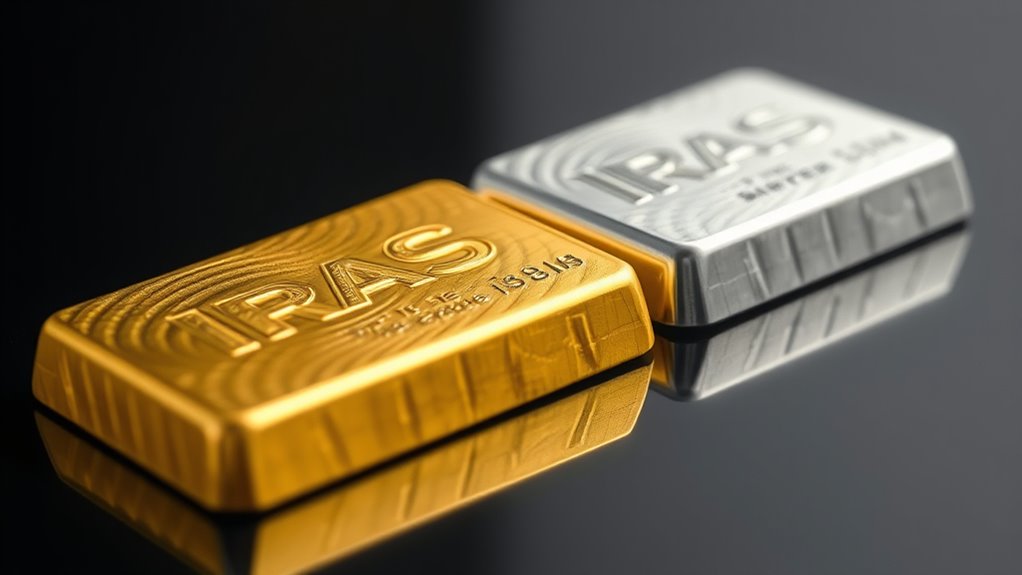
When it comes to tax benefits and regulations, understanding how gold and silver are treated can substantially impact your investment strategy. Gold IRAs often offer tax advantages, such as tax-deferred growth, and may qualify for special exemptions, depending on your jurisdiction. Silver IRAs also provide tax benefits, but regulations around purity and storage can be stricter, affecting regulatory compliance. You need to guarantee your assets meet specific standards to avoid penalties or disqualification. Additionally, taxes on withdrawals and capital gains vary between gold and silver investments. Staying informed about these rules helps you maximize your returns while remaining compliant with IRS regulations. Proper planning ensures your precious metal IRA investments are both legally sound and financially advantageous.
Suitability Based on Investment Goals

Choosing between gold and silver for your IRA depends largely on your specific investment goals. If you prioritize stability, you’ll find gold’s market liquidity and long-term value appealing. Conversely, if you seek growth and affordability, silver’s lower price point may suit you better. Consider these factors:
Choose gold for stability or silver for growth in your IRA based on your financial goals.
- Market Liquidity: Gold generally has higher liquidity, making it easier to buy and sell quickly.
- Investor Preferences: Your comfort with price fluctuations influences your choice—gold tends to be less volatile.
- Growth Potential: Silver’s lower cost can lead to larger percentage gains, aligning with aggressive investment goals.
Aligning your goals with these aspects guarantees your IRA investment supports your financial strategy effectively.
Making an Informed Decision: Gold or Silver

When deciding between gold and silver, consider their growth potential and how their prices can fluctuate. Gold often offers steadier gains, while silver can be more volatile and influenced by different market factors. Understanding these differences helps you make a choice that aligns with your investment goals and risk tolerance.
Investment Growth Potential
Gold often outpaces silver in growth potential because its scarcity and status as a safe haven attract long-term investors seeking stability and appreciation. Its market liquidity ensures you can buy or sell with minimal delays, supporting steady growth. Additionally, gold’s role as a core asset enhances your portfolio’s diversification, reducing risk. Silver, while more affordable and with higher volatility, offers rapid growth during market booms. Consider these points:
- Gold’s scarcity drives long-term appreciation.
- Its high market liquidity facilitates ease of transactions.
- Asset diversification with gold can stabilize your investments.
Ultimately, if you’re seeking consistent growth and stability, gold presents a stronger potential for wealth accumulation. Silver may deliver short-term gains but comes with higher risk.
Price Volatility Factors
Price volatility is a key factor to contemplate because it directly affects the stability of your investments. Gold tends to be more stable, thanks to higher market liquidity and less susceptibility to price manipulation. Silver, however, experiences sharper swings due to lower liquidity and market influences. These fluctuations can impact your IRAs considerably. Understanding these factors helps you decide which metal aligns with your risk tolerance.
| Metal | Market Liquidity | Price Manipulation Risk |
|---|---|---|
| Gold | High | Low |
| Silver | Moderate | Higher |
| Both | Varies | Always Present |
Informed choices depend on recognizing how liquidity and manipulation can cause volatility, shaping your long-term strategy.
Frequently Asked Questions
How Does Liquidity Differ Between Gold and Silver IRAS?
You’ll find gold IRAs generally offer higher liquidity because gold’s market volatility is lower, leading to more stable prices. Silver IRAs tend to be less liquid due to higher market volatility and wider price swings, making it harder to sell quickly without affecting the price. If quick access to funds is essential, gold might be the better choice, while silver’s price stability can be more unpredictable during market fluctuations.
Are There Specific IRS Rules for Storing Silver Versus Gold?
You need to follow specific IRS compliance and storage regulations for both silver and gold IRAs. The IRS requires that these precious metals be stored in an approved depository, not at your home. Gold and silver must meet purity standards, typically 99.5% for gold and 99.9% for silver. Always select a secure, IRS-approved storage facility to guarantee your IRA remains compliant and protected.
Which Metal Offers Better Long-Term Growth Potential?
Gold generally offers better long-term growth potential, acting as a steady ship amid market volatility. Its historical performance shows resilience during economic downturns, making it a safer haven. Silver, however, can be more volatile but has higher upside potential during bull markets. You might find gold’s stability appealing for consistent growth, while silver’s fluctuations could offer opportunities for greater gains if you’re willing to weather the storm.
How Do Market Liquidity and Trading Volume Compare?
You’ll find that gold IRAs generally have higher market liquidity and trading volume, making them easier to buy and sell quickly. Silver IRAs experience greater market volatility, which can lead to wider price swings, but this also means more trading opportunities. Gold offers greater price stability due to its established market, while silver’s lower liquidity can cause challenges during rapid market shifts. Consider your risk tolerance when choosing between them.
What Are the Environmental Impacts of Mining Gold Versus Silver?
Mining gold dramatically impacts the environment, producing immense mining waste and releasing toxic chemicals that can devastate ecosystems. Silver mining, while less destructive, still generates significant environmental impact through waste and energy use. You might find that gold extraction causes more severe habitat destruction and pollution, whereas silver’s impact, although serious, is comparatively less overwhelming. Both require careful consideration of their environmental footprint before you decide which metal to pursue.
Conclusion
Ultimately, choosing between a gold or silver IRA is like selecting the perfect piece of jewelry—you want something that complements your style and future plans. By weighing the subtle nuances of each, you can gently guide your investment journey toward a treasure that feels just right. Remember, patience and a clear vision can turn your precious metal choice into a harmonious addition to your financial ensemble. Trust yourself, and enjoy the journey to a brighter, shimmering future.