Gold mainly serves as a safe-haven asset during economic and geopolitical uncertainties, rising in value when confidence drops. Silver, on the other hand, is heavily driven by its industrial demand in electronics, solar panels, and medical fields, making its price more volatile and tied to technological growth. If you want to understand how these factors influence their market movements and future prospects, exploring the full picture can help you make smarter investment choices.
Key Takeaways
- Silver’s demand is primarily driven by industrial use in electronics, solar, and medical fields, affecting its price fluctuations.
- Gold’s value is mainly based on its role as a safe-haven asset and store of wealth during economic and geopolitical uncertainties.
- Industrial demand for silver can lead to price increases during technological growth, whereas gold remains stable for preservation.
- Gold’s price is less affected by industrial factors and more influenced by market sentiment, currency movements, and global stability.
- Investors often choose gold for long-term wealth preservation, while silver offers growth potential through industrial demand.
The Industrial Uses of Silver and Their Impact on Prices
Because silver has numerous industrial applications, its demand often directly influences its price. In electronics manufacturing, silver’s excellent conductivity makes it essential for circuits, switches, and connectors, driving consistent demand. You’ll also find silver playing a vital role in photovoltaic applications, where it boosts the efficiency of solar panels. As the push for renewable energy grows, so does the need for silver in solar technology, impacting its market value. These industrial uses create a steady, underlying demand that can cause prices to fluctuate based on technological advancements and industry growth. Unlike gold, which mainly serves as a store of value, silver’s price is closely tied to its practical applications. This connection makes its value more sensitive to shifts in tech trends and industrial production levels.
Gold’s Role as a Safe-Haven Asset in Economic Uncertainty
While silver’s industrial demand can cause its prices to fluctuate with technological shifts, gold often behaves differently during times of economic uncertainty. You see, gold is widely regarded as a safe-haven asset, especially when geopolitical risks rise or central banks alter their reserves. During crises, investors flock to gold for stability, boosting its value. This behavior isn’t driven by industrial needs but by its status as a store of value. As shown below, gold’s appeal increases when confidence in government or economic stability wanes:
| Scenario | Gold’s Response |
|---|---|
| Geopolitical tensions | Price rises |
| Central bank reserve shifts | Increased buying |
| Economic downturns | Safe-haven demand spikes |
| Currency devaluations | Gold outperforms fiat currencies |
Price Drivers: Supply, Demand, and Market Sentiment for Both Metals
The prices of gold and silver are primarily driven by shifts in supply and demand, but market sentiment also plays a crucial role in shaping their values. Mining innovations can increase supply, sometimes causing prices to drop if demand doesn’t keep pace. Conversely, strong industrial demand for silver boosts prices, especially during periods of technological growth. Currency fluctuations also influence metal prices; a weaker dollar typically raises gold and silver values, as investors seek safe assets. Market sentiment, driven by economic outlooks or geopolitical events, can lead to rapid price swings regardless of underlying fundamentals. Understanding these factors helps you anticipate price movements and recognize how external influences like innovations and currency shifts impact both metals’ market dynamics.
Investment Strategies: When to Favor Gold or Silver
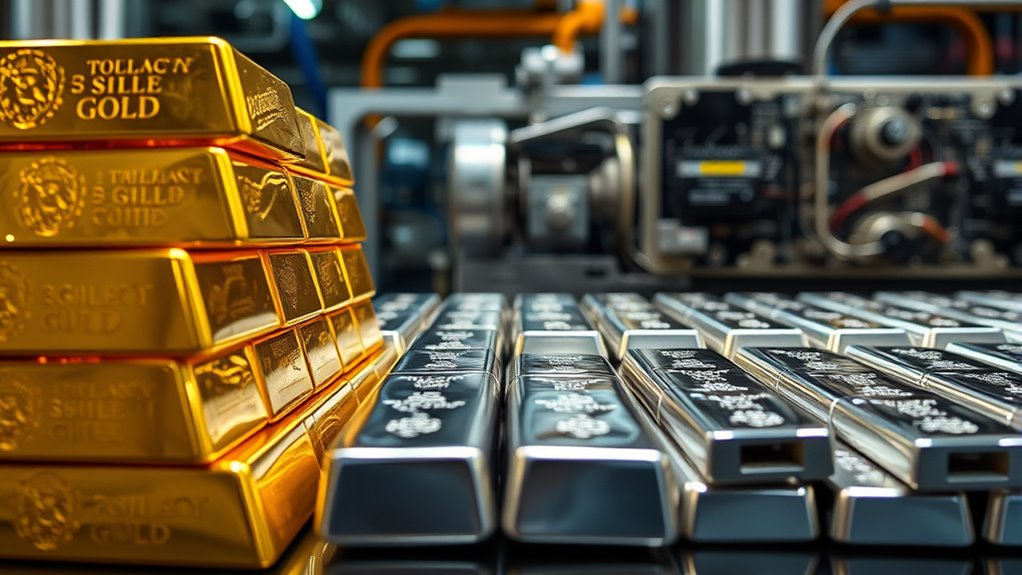
Deciding whether to favor gold or silver in your investment portfolio depends on your financial goals and market conditions. Gold’s historical performance shows stability during economic downturns, making it ideal for preservation of wealth. Silver, however, tends to be more volatile, offering higher growth potential when market volatility increases. Consider these strategies:
- Favor gold during times of economic uncertainty for its status as a safe haven.
- Invest in silver when industrial demand surges and market volatility rises.
- Use gold for long-term wealth preservation and stability.
- Allocate silver for short-term gains amid fluctuating markets.
Your choice hinges on balancing risk and reward, with gold providing stability and silver offering growth opportunities during market upheavals. Understanding these dynamics helps you optimize your investment strategy accordingly.
Future Outlook: How Global Trends Influence Metal Valuations
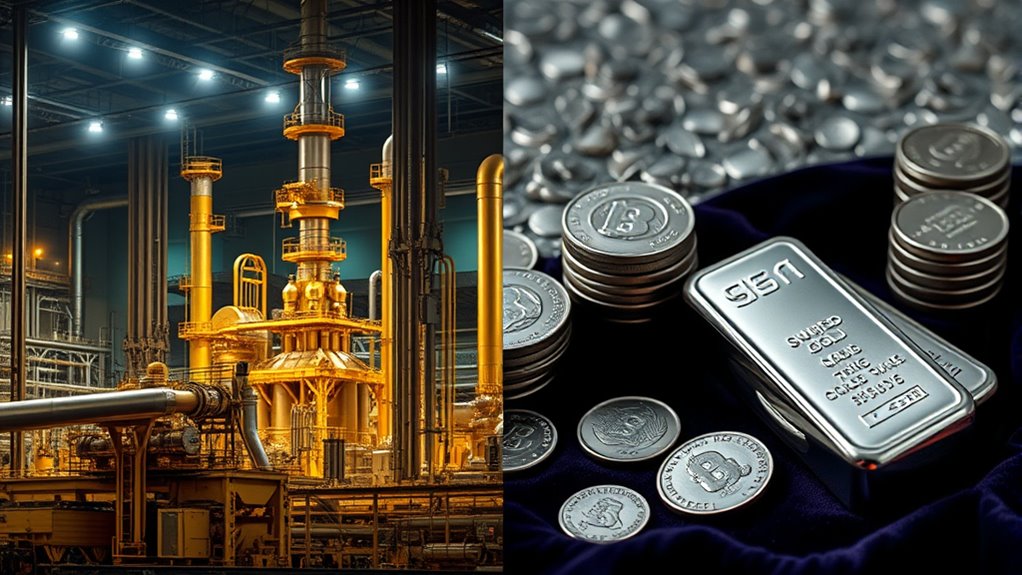
Global trends such as economic growth, technological advances, and geopolitical tensions profoundly influence the valuations of gold and silver. Technological innovation drives demand for silver in electronics, renewable energy, and medical applications, potentially increasing its value. Conversely, gold often benefits during periods of geopolitical instability, as it’s seen as a safe haven. When geopolitical stability is uncertain, investors flock to gold, boosting its price. However, rapid technological progress can shift market dynamics, affecting silver’s industrial demand and prices. These global trends create a complex landscape where both metals respond differently based on current events. Staying aware of these influences helps you anticipate shifts in metal valuations, guiding smarter investment decisions in a fluctuating market. Ultimately, understanding these factors helps you navigate future opportunities and risks effectively.
Frequently Asked Questions
How Does Technological Innovation Affect Silver and Gold Valuations Long-Term?
Technological disruption markedly impacts silver and gold valuations over the long term. Innovation-driven valuation increases when new technologies boost demand for silver in electronics and renewable energy, while gold remains a stable store of value during uncertain times. You’ll find that advancements can either elevate silver’s industrial use or reinforce gold’s role as a safe haven, shaping their prices based on how innovations influence supply, demand, and overall market confidence.
What Are the Environmental Impacts of Mining Gold Versus Silver?
Imagine mining as digging a massive, messy garden. Gold mining’s environmental footprint is larger, involving more land disruption and water use, while silver’s footprint is somewhat smaller but still significant. Recycling challenges for both metals make it harder to reduce environmental impact. You should know that responsible mining and recycling can lessen these effects, but current practices still pose substantial environmental costs for both metals.
How Do Geopolitical Events Specifically Influence Silver and Gold Prices?
When geopolitical tensions rise or currency devaluations occur, you’ll see gold and silver prices often spike as investors seek safe havens. Gold usually reacts more strongly because it’s widely regarded as a global store of value. Silver’s price also increases, but its dual role in industry means it can sometimes lag behind. In uncertain times, both metals become attractive, but gold’s stability makes it the preferred choice.
Which Metal Has a Higher Potential for Price Volatility?
You might think gold is less volatile, but actually, silver has a higher potential for price fluctuation. Its smaller market size and stronger ties to industrial demand cause more market instability, leading to sharper price swings. While gold offers stability, silver’s market reacts more dramatically to economic shifts, making it riskier but potentially more rewarding if you’re willing to navigate the ups and downs.
How Do Central Bank Policies Impact Silver and Gold Markets Differently?
Central bank policies influence gold and silver markets differently because gold is a key reserve asset, making it more sensitive to changes in central bank reserves and monetary policy impacts. When policies tighten, gold prices often rise as a safe haven. Silver, however, is more affected by industrial demand, so its market reacts less directly to monetary policy shifts and more to economic growth or downturns.
Conclusion
Remember, in investing, patience is a virtue. While silver’s industrial demand can boost prices, gold’s status as a safe haven offers stability during turbulent times. Both metals have their roles, but understanding market drivers helps you make smarter choices. As the saying goes, “Don’t put all your eggs in one basket.” By balancing your investments, you can navigate the shifting sands of gold and silver markets with confidence.