TL;DR
Choose food storage containers for leftovers based on what you store: glass resists stains and odors, plastic is light, stainless steel cannot go in the microwave, and silicone is flexible. Use shallow containers, refrigerate perishable food within two hours, keep your refrigerator at 40°F (4°C) or below, and eat cooked leftovers within three to four days or freeze them.
The lid clicks shut, but the clock is still ticking: a sealed container does not make dinner safe to leave on the counter. Your leftover rice, roast vegetables, or takeout curry needs prompt chilling as well as a container that fits the job.

Get smart everyday buys delivered free with Prime
- Fast, free delivery on millions of items
- Prime Video, Amazon Music and more included
- Member-only deals all year
This guide helps you choose among glass, plastic, stainless steel, and silicone, then shows you how to cool, label, and reheat leftovers with less guesswork. You’ll get practical container tips, basic time and temperature guidance, and a simple way to make older food easier to spot before it gets forgotten behind the milk.
Think of food storage containers as useful tools, like sturdy shelves in a pantry: they help organize and protect food, but they can’t do every job on their own. Follow the product label and local food-safety guidance, since materials and recommendations vary.
Choose glass for stain and odor resistance, light plastic for easy carrying, stainless steel for storage without microwave reheating, and silicone for flexible…
Pick a few shallow, medium, and large containers that stack and have easy-to-match lids.
Refrigerate perishable food within two hours, or within one hour above 90°F (32°C), and keep the fridge at 40°F (4°C) or below.
Eat promptly chilled cooked leftovers within three to four days, or freeze them if you will not use them in time.
Reheat leftovers to 165°F (74°C); use only microwave-safe containers and stir food to distribute heat.
Pick a container material that suits the food you save
Food storage containers for leftovers work best when their material matches how you plan to store and reheat the food. Glass resists stains and odors better than some plastics, plastic is lightweight, stainless steel is durable but not microwave-safe, and silicone bends for compact storage. Check each product’s label for temperature and care instructions.
That choice matters on an ordinary Tuesday. If you pack tomato sauce in a light plastic tub, it’s easy to carry, but it may pick up orange stains or garlic smells over time. A glass dish can handle many such foods without holding the aroma as readily, though it weighs more and can break if it slips from your hands.
Glass is often suitable for microwave or oven use when the manufacturer says so. Plastic should be food-grade and labeled for the intended use; don’t heat it in a microwave unless the label permits it. Stainless steel can suit a packed lunch or fridge storage, but keep it out of the microwave. Silicone works well for bags, lids, and collapsible containers, provided you follow its care and temperature directions.
A container’s material does not tell you everything about how it performs. Claims such as “BPA-free,” “airtight,” or “leakproof” apply to specific features or materials; they do not prove that a container keeps every food fresh for a set time. Check what the maker says about freezer, microwave, dishwasher, and oven use before you buy or heat it. [2]
As an affiliate, we earn on qualifying purchases.Products Worth Considering

Apple Mac mini Desktop Computer with M6 Chip (2026)

FLEXISPOT Electric Adjustable Workbench, 48 x 30 in, Maple

Logitech MX Master 4 for Mac Wireless Ergonomic Mouse, White Silver
Build a small container set that handles real meals
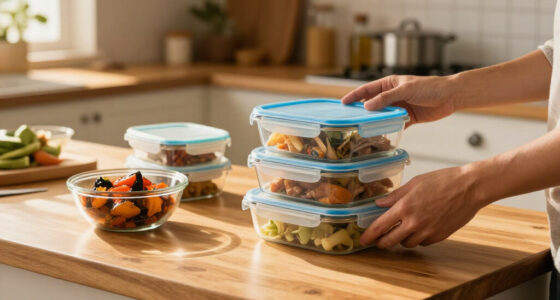
Food storage containers for leftovers are easiest to use when you have a few sizes, stackable shapes, and lids you can match without a scavenger hunt. For most households, shallow small containers, medium meal-sized ones, and a larger option for shared dishes cover more needs than a cupboard full of one size.
Picture Sunday dinner: a shallow container holds roast chicken pieces, a medium one fits a lunch portion of rice and vegetables, and a larger one stores the remaining soup. The shallow shape helps divide food into smaller portions for cooling, while clear sides let you see what you have. That can make good leftover storage less like archaeology and more like choosing lunch.
Think about the foods that actually make it into your fridge. Sauces and soups need secure, well-fitting lids and enough headroom to avoid spills. A broad, shallow tub can suit casseroles or cooked grains better than a tall, narrow jar. A set with consistent shapes stacks neatly; replacement lids or parts can also help extend a product’s useful life when a lid disappears or cracks.
When shopping, compare the whole container, not just the base. Does the lid seal comfortably? Can you clean its corners and gasket? Does the maker permit freezer storage if you plan to freeze portions? A reliable lid can reduce spills and odors, but it cannot keep food safe without proper chilling. A practical set earns its shelf space by matching your meals and making them easy to use again.
Use lids and seals to cut leaks without trusting them too much
A close-fitting lid helps contain moisture, limit exposure to air, and keep sauces from leaking, but no lid makes leftovers shelf-stable. Food still needs prompt refrigeration. Treat the seal like a raincoat: useful protection from everyday mess, not a reason to stand in a storm all night.
For a lunch bag with curry, fill the container below the rim, close the lid evenly, and carry it upright if you can. Overfilling or catching a bit of rice in the seal can turn a promising lunch into a turmeric-colored cleanup. A short test over the sink can help you spot a poor fit before you pack it, though it does not guarantee every food or position will stay leak-free.
Clean the lid as carefully as the base. Food can lodge in grooves or around a removable gasket, where a quick rinse might miss it. If an old plastic tub still smells like onion soup after washing, try a soak or baking soda; some plastics can retain odors or stains. Replace a lid or container if damage prevents it from closing or cleaning properly.
Follow the care label for the dishwasher and freezer. Not every lid can take the same heat as its base, and a sudden temperature change can damage some glass. Leave room for food to expand when freezing, and avoid using a takeout container repeatedly for heating if its instructions don’t clearly cover that use. A good seal manages mess; careful handling and temperature control manage safety. [2]
Cool leftovers safely with shallow containers and a quick move
Refrigerate perishable leftovers within two hours, or within one hour when the surrounding temperature is above 90°F (32°C), according to the FDA’s general guidance. Divide a large batch into shallow containers so it cools faster, rather than leaving a deep pot on the counter to cool completely. [1]
Here’s a familiar scenario: dinner ends, and a stockpot of chili still steams on the stove. Instead of waiting for the whole pot to reach room temperature, split it between a few shallow food-grade containers and move them into the refrigerator promptly. Smaller portions cool faster and are easier to serve later. Avoid crowding containers so tightly that cold air cannot circulate around them.
Keep your refrigerator at 40°F (4°C) or below and your freezer at 0°F (-18°C). A small appliance thermometer can tell you whether the dial setting matches the actual temperature, especially if the fridge is packed or frequently opened. Good cooling practices help protect food; the container is only one part of that routine. [1]
Once chilled, label the food and date with a removable label or marker intended for the container. Put older leftovers where you’ll notice them first. A clear tub marked “lentil soup, Tuesday” is much easier to use than an opaque container with a mystery smell at the back of the shelf. These are general recommendations; follow any more specific local guidance for the food you’re storing.
Know when to refrigerate, freeze, and reheat your leftovers
Cooked leftovers generally keep in the refrigerator for three to four days when chilled promptly and held at 40°F (4°C) or below; freeze them if you will not eat them within that window. Reheat leftovers to 165°F (74°C), checking with a food thermometer when possible. These are general guidelines, not a promise that every dish will stay at its best for the full period. [1]
Suppose you make a big pan of baked pasta on Sunday. Put the portions you expect to eat soon in the refrigerator, then freeze the rest in freezer-safe containers with a little room for expansion. A date label helps you find the right portion later. Freezing can preserve safety longer, though the pasta’s texture or flavor may decline; the thawed sauce might look less glossy than it did on day one.
For microwave reheating, use only a container labeled microwave-safe. Cover the food and vent the lid as directed, then stir or rotate it and allow standing time so heat spreads through the dish. A thermometer can catch a cold center hidden under steaming edges, especially in dense foods such as casseroles. Remove metal parts and keep stainless steel out of the microwave.
Ask yourself a practical question before packing: will this food be eaten within a few days? If not, freezing it early gives you a better chance of using it later rather than discovering it after the refrigerator window. Containers support the routine, but time, temperature, and even heating are what guide safer handling. Check current local food-safety advice if you need instructions for a particular food or situation.
Compare the tradeoffs before you buy another set
Food storage containers for leftovers do not have one perfect material; the right choice depends on how you carry, chill, heat, and clean your food. Glass offers stain and odor resistance but is heavier and breakable. Plastic weighs less, stainless steel is sturdy but cannot go in a microwave, and silicone flexes for compact storage. Product instructions still decide what each individual container can safely do.
| Material | Useful for | Tradeoff |
|---|---|---|
| Glass | Fridge storage and reheating when labeled for it | Heavy; can break; sudden temperature changes may damage some glass |
| Plastic | Lightweight packing and everyday portions | Check food-grade, microwave, freezer, and dishwasher labels; may stain or retain odors |
| Stainless steel | Durable storage or packed meals | Cannot go in the microwave |
| Silicone | Flexible bags, lids, or collapsible storage | Temperature and cleaning directions vary by product |
Imagine packing soup for a commute, then reheating it at work. Lightweight plastic might be easier to carry if it is labeled for the way you plan to use it; a glass container could suit fridge storage if you value its resistance to odors and stains. If you need a microwave at work, stainless steel is not a fit for that reheating step.
Compare lids, too: a secure fit, easy-to-clean edges, and the right size for your portions can matter as much as the base. Don’t take a label like “leakproof” as proof that a container suits every liquid, position, or temperature. Choose for your routine, then follow the specific manufacturer instructions rather than assuming every item in a set works the same way. [2]
Frequently Asked Questions
How long can cooked leftovers stay in the refrigerator?
A general guideline is three to four days when leftovers were chilled promptly and the refrigerator stays at 40°F (4°C) or below. Label the food with its storage date so you can keep track, and follow more specific local guidance where it applies. [1]
Can I put hot food straight into the refrigerator?
Don’t leave a large pot on the counter waiting to cool completely. Divide it into shallow containers and refrigerate promptly; perishable leftovers generally should be chilled within two hours, or one hour when the room is above 90°F (32°C). [1]
Are glass containers better than plastic?
It depends on your routine. Glass resists stains and odors and may be microwave- or oven-safe when labeled for it, while plastic is lighter and often easier to carry. Check the instructions for the specific container, especially before heating or freezing.
Can I microwave leftovers in their storage container?
Only if the container is labeled microwave-safe. Follow instructions for venting or removing the lid, keep metal out of the microwave, and stir or rotate food so it heats more evenly. Reheat leftovers to 165°F (74°C), checking with a food thermometer when possible. [1]
How do I stop food storage containers from leaking or smelling?
Use a well-fitting lid, avoid filling past the rim, and clean the container’s grooves and seals thoroughly. Some plastics can retain stains or odors, so a soak or baking soda may help. Replace containers or lids that no longer close properly, and remember that even a good seal does not replace prompt refrigeration.
When should I freeze leftovers?
Freeze portions you do not expect to eat within the general three-to-four-day refrigerator window. Use freezer-safe containers and leave room for food to expand. Freezing preserves safety longer, though texture and flavor can change over time. [1]
Conclusion
Choose containers that suit the food and the way you’ll use it, then make prompt chilling part of the same routine. Divide large meals into shallow portions, label them, and move older leftovers where you can see them.
A clear date on a well-sealed container can be the difference between an easy lunch and a forgotten tub at the back of the fridge. Let the label tell you what’s waiting.