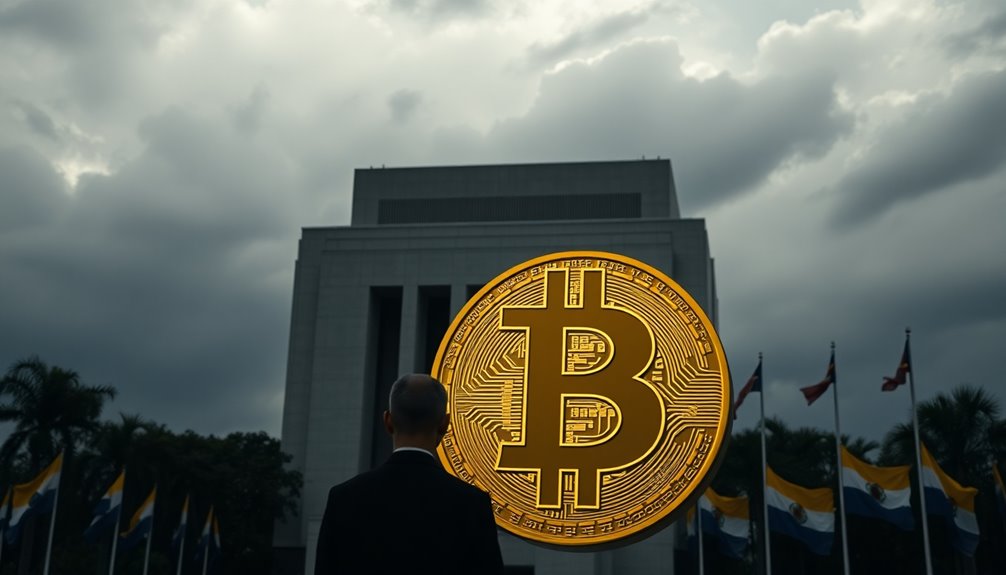

El Salvador's bold move to embrace Bitcoin is now under the microscope of the IMF, which has imposed significant regulations. You've likely seen how the country aimed to revolutionize its economy, but now, with a $1.4 billion deal at stake, strict policy reforms are in play. The IMF's concerns about financial risks are reshaping this strategy. What does this mean for El Salvador's future in the cryptocurrency world?

Get smart everyday buys delivered free with Prime
- Fast, free delivery on millions of items
- Prime Video, Amazon Music and more included
- Member-only deals all year
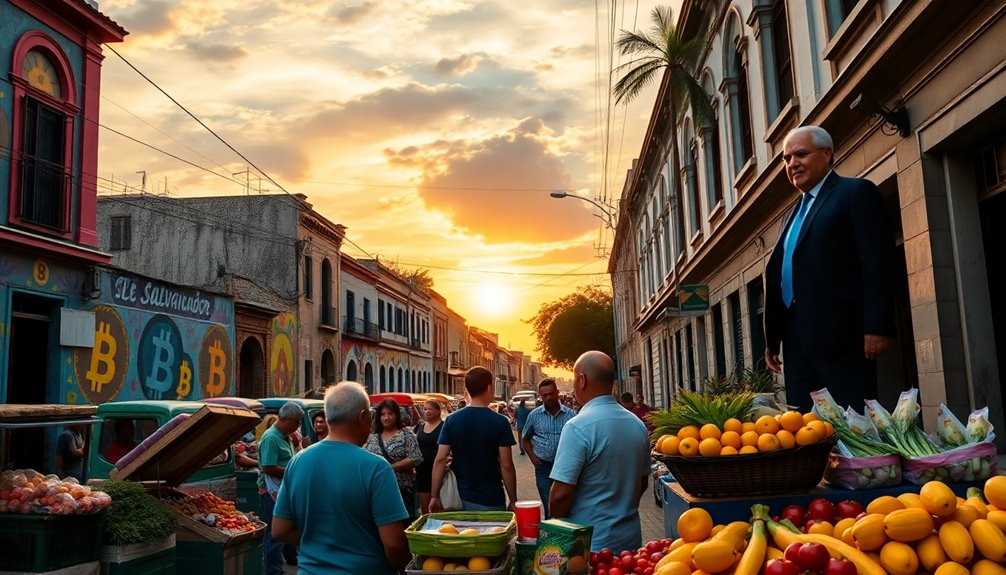
As El Salvador boldly embraces Bitcoin as legal tender, it sets a precedent that could reshape the financial landscape of a nation heavily reliant on remittances. By adopting Bitcoin in September 2021, you witness the first country making such a daring move. The government's investments in Bitcoin, purchasing over 6,100 BTC, reflect a commitment to utilizing cryptocurrency to enhance financial innovation and attract foreign investment.
This strategy aims to streamline remittance processes, making them cheaper and faster, which is crucial for a country where such funds constitute a significant portion of the economy.
However, the road hasn't been without its bumps. The volatility of Bitcoin presents a serious risk to financial stability. You know firsthand that its price can swing wildly, leading to unpredictable fiscal revenues. While the government hopes to leverage Bitcoin's potential long-term appreciation, these fluctuations can make economic planning challenging.
The need to balance innovation with economic stability is more pressing than ever. The International Monetary Fund (IMF) has taken notice, securing a $1.4 billion deal with El Salvador, but this comes with restrictions on Bitcoin use. Recent amendments to the Bitcoin law remove mandatory acceptance and tax payments in Bitcoin, which indicates a shift towards regulatory caution. The agreement also emphasizes significant policy reforms that will reshape the nation's approach to cryptocurrency.
The agreement also limits government involvement in Bitcoin transactions, forcing a rethink of the original strategy. You might wonder how this will impact El Salvador's financial future, especially considering the potential loss of up to $3.5 billion in IMF funding if Bitcoin activities continue unchecked.
Despite the optimism surrounding Bitcoin's potential to attract foreign investment and boost tourism, the IMF has raised concerns about the financial and legal risks associated with its adoption. While some predicted challenges haven't fully materialized, the IMF's warnings highlight the need for careful risk management.
The erratic nature of Bitcoin could lead to economic instability, complicating efforts to create a more resilient financial framework. As you observe El Salvador's bold experiment with Bitcoin, it becomes clear that navigating these complex dynamics will be crucial.
The government's "buying the dip" strategy may offer some advantages, yet the overarching need for regulatory alignment with international standards can't be overlooked. Balancing the excitement of financial innovation with the realities of economic risk will ultimately determine the success of this groundbreaking strategy.
As an affiliate, we earn on qualifying purchases.
As an affiliate, we earn on qualifying purchases.
As an affiliate, we earn on qualifying purchases.
As an affiliate, we earn on qualifying purchases.
Halloween Picks
halloween
As an affiliate, we earn on qualifying purchases.