
Tokenization plays a pivotal role in retirement by converting real-world assets like property and art into digital tokens on a blockchain. This process makes your investments more accessible, liquid, and secure, enabling quicker transactions and fractional ownership. It also helps improve estate planning and diversifies your portfolio. With increased transparency and security, tokenization transforms how you can grow and protect your retirement savings—discover how these innovations can work for you going forward.
Key Takeaways
- Tokenization transforms high-value assets into digital tokens, increasing access, liquidity, and diversification opportunities for retirement portfolios.
- Real-world assets like real estate and art become tradable and fractionalized, enhancing estate planning and asset transfer efficiency.
- Blockchain’s transparency and security mitigate fraud risks, ensuring trustworthy ownership records for retirement asset management.
- Smart contracts automate transactions, reducing intermediaries and lowering costs in managing retirement investments.
- Tokenization promotes financial inclusion by enabling broader access to high-value assets, supporting more diversified retirement strategies.
Understanding Tokenization and Its Fundamentals

Tokenization transforms real-world assets into digital tokens on a blockchain, making them easier to buy, sell, and manage. This process enhances security through digital identity verification, ensuring you control access and ownership rights. Smart contracts automate transactions, reducing the need for intermediaries and increasing efficiency. These self-executing agreements verify conditions automatically, providing transparency and trust. With tokenization, your assets become more liquid, enabling quicker transfers and fractional ownership. It simplifies complex transactions by embedding rules directly into the blockchain, ensuring they’re executed exactly as intended. As a result, you gain greater control over your assets while benefiting from increased security, transparency, and efficiency. This foundation of tokenization sets the stage for transforming how assets are managed and traded in your financial landscape.
Types of Real-World Assets Suitable for Tokenization
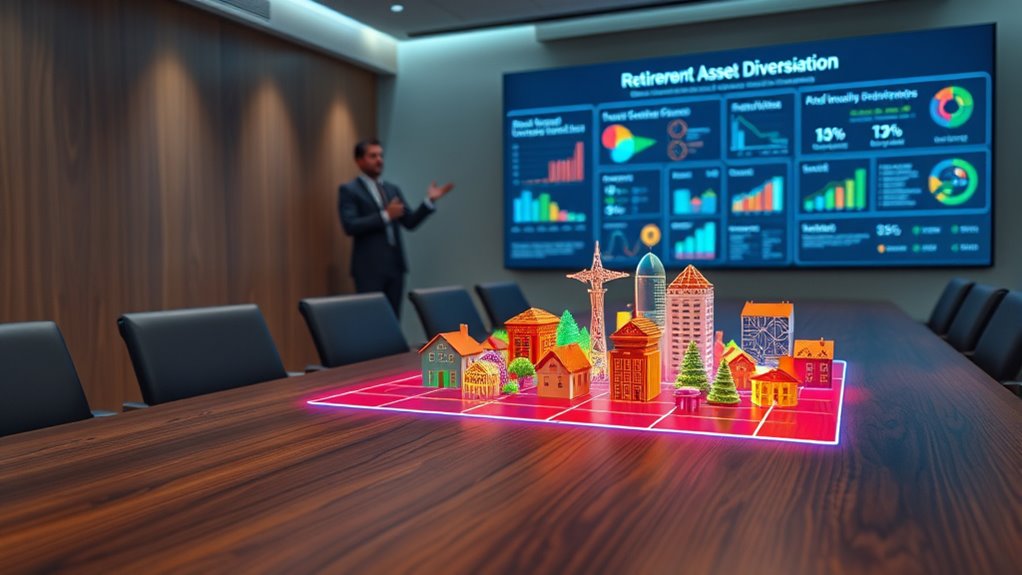
A wide range of real-world assets can be effectively transformed into digital tokens, unblocking new opportunities for ownership and liquidity. Luxury real estate is a prime candidate, allowing you to own fractional shares of high-value properties, making it easier to buy, sell, or leverage your investments. Fine art investments also lend themselves well to tokenization, enabling you to diversify your portfolio without dealing with physical asset management. These assets, traditionally illiquid or costly to transfer, become more accessible and tradable through tokenization. By converting luxury real estate and fine art into digital tokens, you open up new avenues for investment, liquidity, and portfolio diversification that weren’t possible with conventional methods. This approach democratizes access to high-value assets, empowering you in your retirement planning.
Advantages of Digital Assets in Retirement Planning

Digital assets offer several compelling advantages for your retirement planning by increasing access, liquidity, and flexibility. They enable digital diversification, allowing you to broaden your investment portfolio beyond traditional assets. This diversification helps reduce risk and improves overall portfolio stability. Additionally, digital assets can be easily traded or adjusted, providing rapid liquidity and greater control over your investments. Their transparency and programmable features allow for seamless portfolio enhancement, aligning your investments with your financial goals. Unlike conventional assets, digital assets are accessible 24/7, giving you more opportunities to respond to market changes. Overall, integrating digital assets into your retirement plan offers a modern approach that combines improved diversification, liquidity, and adaptability for a more resilient and optimized retirement strategy.
How Blockchain Technology Ensures Security and Transparency

Blockchain technology enhances the security and transparency of digital assets by providing a decentralized and tamper-proof record of transactions. This setup makes it difficult for malicious actors to manipulate data, helping prevent cryptocurrency scams and ensuring the integrity of your investments. Because the ledger is transparent, you can verify transactions in real-time, increasing trust and accountability. Moreover, blockchain employs advanced cryptography that safeguards data privacy, so your personal information remains protected. Unlike traditional systems, where a central authority controls data, blockchain distributes control across multiple nodes, reducing the risk of single points of failure or corruption. This combination of decentralization, cryptography, and transparent record-keeping creates a robust environment where your assets are secure, and the process remains open for verification at any time.
Regulatory Considerations and Legal Frameworks

Understanding regulatory considerations is vital as tokenization develops, especially around compliance standards and enforcement. Clarifying legal ownership of assets guarantees you know who holds rights and responsibilities. Additionally, steering cross-border regulations can be complex, so being aware of international legal frameworks is essential for seamless asset management.
Compliance Standards Enforcement
Regulatory considerations play a crucial role in ensuring that tokenization of real-world assets in retirement accounts complies with legal standards. You must prioritize rigorous KYC compliance to verify investor identities and prevent fraud. Implementing strong anti-fraud measures helps detect suspicious activities early, safeguarding both the assets and participants. Regulatory bodies enforce these standards through audits and monitoring, ensuring platforms maintain transparency and accountability. Staying compliant also involves adhering to reporting requirements and maintaining accurate records. By actively enforcing these standards, you reduce risks of legal penalties and protect the integrity of the retirement ecosystem. Ultimately, strict compliance fosters trust among investors and regulators, ensuring that tokenized assets operate within a secure and lawful framework.
Legal Ownership Clarities
Clarifying legal ownership is essential to guarantee disputes are minimized and confidence in tokenized real-world assets within retirement accounts is maintained. Without clear ownership rights, you risk facing ownership disputes and uncertain title verification, which can jeopardize your investments. Establishing a robust legal framework ensures that ownership transfers are transparent and enforceable, reducing ambiguity. To evoke confidence, consider this:
| Issue | Impact |
|---|---|
| Ownership disputes | Delay and loss of assets |
| Title verification | Ensures rightful ownership |
| Clear legal frameworks | Protects investors |
| Dispute resolution | Restores trust |
Cross-Border Regulations
Guiding cross-border regulations is crucial when dealing with tokenized real-world assets in retirement accounts, as different jurisdictions often have varied legal standards and compliance requirements. You must understand how cross border regulations impact international compliance, especially since assets may span multiple legal systems. Steering these complexities requires awareness of jurisdiction-specific rules for ownership, taxation, and reporting. Failure to adhere to international compliance standards can lead to legal disputes, penalties, or loss of asset rights. It’s essential to evaluate how regulations intersect across borders to guarantee your tokenized assets remain compliant. By understanding the nuances of cross-border regulations, you can better manage risks and guarantee your retirement investments meet all legal and regulatory requirements in each relevant jurisdiction.
Impact on Liquidity and Market Accessibility

Tokenization of real-world assets can substantially enhance liquidity in retirement markets by enabling faster and more efficient trading. This process reduces traditional barriers, allowing investors to buy and sell fractional assets easily, which leads to liquidity enhancement. As a result, assets that previously required long holding periods become more accessible for quick transactions. Additionally, tokenization promotes market democratization by lowering entry barriers, making investment opportunities available to a broader range of participants. You no longer need large capital to access high-value assets; fractional ownership offers a more inclusive approach. Increased liquidity and accessibility encourage more active trading, improve price discovery, and attract diverse investors, ultimately creating a more dynamic and resilient retirement investment landscape.
Challenges and Risks Associated With Tokenized Assets

Despite its potential benefits, tokenized assets introduce several challenges and risks that investors must carefully consider. Cybersecurity threats pose significant concerns, as digital tokens and blockchain platforms can be targeted by hackers, risking theft or data breaches. Market volatility also remains a major risk; values of tokenized assets can fluctuate rapidly, making it difficult to predict long-term performance. Additionally, regulatory uncertainty adds complexity, as laws surrounding tokenization are still evolving. Limited liquidity in some tokenized markets can hinder quick sales or conversions to cash. These risks demand thorough due diligence and risk management strategies. While tokenization offers exciting opportunities, understanding and mitigating these challenges is essential to avoid unexpected losses and ensure a secure investment journey.
Case Studies of Successful Tokenization Projects for Retirement

Several projects have demonstrated the practical benefits of tokenization in enhancing retirement planning. For example, some platforms now enable you to tokenize real estate assets, simplifying estate planning by providing clear ownership records and transfer processes. These tokenized assets can also facilitate digital inheritance, allowing your heirs to access and manage assets seamlessly upon your passing. A notable project involved tokenizing a historic property, giving investors and future beneficiaries transparent ownership rights. This approach reduces legal complexities and speeds up estate settlement. Such projects showcase how tokenization can improve asset liquidity, streamline inheritance procedures, and ensure your retirement assets are protected and easily transferable. These successful cases highlight the potential of real-world asset tokenization to make estate planning more efficient and secure for retirees.
Future Trends and Opportunities in Asset Tokenization

Looking ahead, the future of asset tokenization presents numerous opportunities to revolutionize how you manage and grow your retirement wealth. Advances in digital identity will simplify verification processes, making it easier to access and trade tokenized assets securely. Fractional ownership will enable you to invest in high-value assets like real estate or art with smaller amounts, diversifying your portfolio and reducing risk. As platforms evolve, transparency and liquidity will improve, giving you more control and flexibility. These trends will also foster broader inclusion, allowing more people to participate in asset markets previously out of reach. Overall, ongoing innovations in digital identity and fractional ownership will make asset tokenization a cornerstone of smarter, more accessible retirement planning.
Frequently Asked Questions
How Do Tokenized Assets Influence Traditional Retirement Account Structures?
Tokenized assets influence your traditional retirement accounts by introducing digital ownership, making it easier to manage and transfer investments. They also enhance liquidity, allowing you to buy or sell assets more quickly compared to conventional options. This shift can diversify your portfolio and improve access to a broader range of investments, ultimately providing greater flexibility and efficiency in your retirement planning.
What Are the Tax Implications of Investing in Tokenized Real-World Assets?
Like steering through a maze, investing in tokenized real-world assets affects your taxes. You’ll need to report gains and losses for tax purposes, similar to traditional investments. Capital gains taxes may apply when you sell tokens at a profit, and tax reporting must be precise to avoid penalties. While tokenization offers flexibility, it’s essential to stay informed on evolving regulations and consult a tax professional to keep your retirement plans on track.
Can Tokenization Help Reduce Retirement Portfolio Volatility?
Tokenization can help reduce your retirement portfolio volatility by enhancing liquidity and offering diversification benefits. With tokenized assets, you can access a broader range of investments and quickly rebalance your portfolio when market conditions shift. This increased liquidity allows you to respond faster to market changes, smoothing out fluctuations. As a result, your retirement investments become more stable, giving you greater confidence and control over your long-term financial growth.
How Accessible Are Tokenized Assets for Individual Retirement Investors?
Tokenized assets are becoming increasingly accessible for individual retirement investors through digital wallets, allowing you to easily buy, hold, and manage diverse assets. However, regulatory hurdles still exist, which can limit access or create uncertainty around compliance and security. As the industry evolves, expect more streamlined processes and clearer regulations, making it easier for you to incorporate tokenized assets into your retirement plan safely and conveniently.
What Are the Potential Risks of Market Manipulation in Tokenized Assets?
Market manipulation is a real concern with tokenized assets, as it can lead to unfair price swings and loss of trust. You should be aware of regulatory challenges that aim to curb such activities but may not fully eliminate them. Stay cautious, research thoroughly, and consider the transparency of the platform, because unscrupulous actors could exploit gaps in regulation to manipulate markets and impact your investments.
Conclusion
Embracing tokenization and real-world assets can subtly enhance your retirement strategy, offering newfound flexibility and access. While the landscape continues to evolve with promising opportunities, it’s wise to approach these innovations with thoughtful caution. By staying informed and cautious, you can navigate this sophisticated terrain, gradually revealing potential benefits. In doing so, you gently position yourself to enjoy a more resilient and diversified retirement portfolio, quietly embracing the future of asset management.