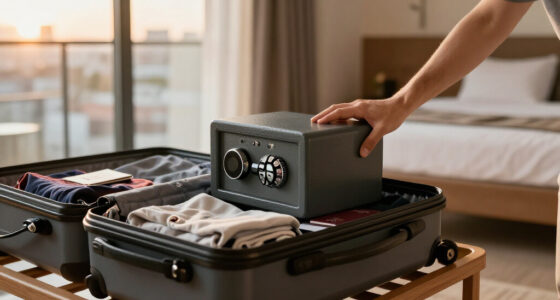
This checklist is for households that want a clear home filing routine for financial records, from papers that need secure storage to documents you may want to digitize. Use it to think through how records move from your mailbox or desk into a lasting, easy-to-find system.

Get smart everyday buys delivered free with Prime
- Fast, free delivery on millions of items
- Prime Video, Amazon Music and more included
- Member-only deals all year
The sections follow practical storage roles: protect important originals, organize records you keep nearby, scan documents, dispose of sensitive paperwork, back up digital files, and sort papers that need action. Each pick is a starting point for comparing features against your space and habits.
Before choosing, consider what you actually store, who needs access, and how often you retrieve it. Check product dimensions and compatibility details against your home setup, then choose a consistent naming and filing routine so documents are easier to locate later.
Fireproof Document Box
A dedicated box gives important paper records a consistent home when they are not in everyday use. This slot can suit documents you want grouped together, such as household financial paperwork, but the right choice depends on the amount and format of what you plan to store. The listed pick is the TIGERKING Fireproof Safe Box with Drawer, 3.47 Cu Ft.
A common buying mistake is choosing by the word “fireproof” alone. Review the product’s stated protection details and limitations, and consider whether the box’s capacity and drawer layout fit your records. Check the exterior dimensions against the planned storage spot, and think about whether you can comfortably access and move it when needed. Keep a simple inventory of what goes inside so important papers do not disappear into a catch-all container.
Consider how the box fits with your broader filing setup: papers you consult often may be easier to keep elsewhere, while this box can serve as a defined storage location. Look at how the lid, drawer, and locking features work for your routine, and make sure everyone who needs access understands where it is kept.
What to look for:
- Capacity that suits the papers and folders you plan to store
- Dimensions that fit the intended location
- Protection details and stated limitations
- Drawer and lid access that works for your routine
- A locking method and access plan that household members can follow
TIGERKING Fireproof Safe Box with Drawer, 3.47 Cu Ft

A 3.47 cubic foot fireproof and waterproof safe for home or office use, laboratory certified to UL 72 Standard to withstand 1200°F/650°C for 30 minutes. Constructed of thickened steel with four 1-inch live-lock bolts, external double hinges, and a fireproof plaster insulating layer for anti-theft and flame protection.
Pros:
- Certified fire resistance up to 1200°F for 30 minutes
- Large 3.47 cu ft capacity fits legal-size documents
- Digital keypad plus emergency keys prevent lockouts
- Sturdy anti-theft design with four 1-inch locking bolts and double hinges
Cons:
- Heavy at 86.5 lbs, making it difficult to move or install
- Water resistance details not fully specified
Best for: Households creating a dedicated place for important originals.
Not ideal for: Anyone who needs frequent access to every stored document.
Bottom line: Choose it if its capacity, dimensions, and stated protection details match your records and storage plan.
Locking File Cabinet
A locking cabinet can make everyday paper records easier to organize and retrieve while giving them a defined storage location. The listed pick is the FireKing Turtle Vertical 2 Drawer Fire Rated File Cabinet, Arctic Whit. Its two-drawer format may fit a filing routine built around separate categories, provided the cabinet’s dimensions and file configuration work for your space.
One frequent mistake is assuming any cabinet will accommodate the folders you already own. Check drawer dimensions, supported file orientation, and clearance for opening drawers where you plan to place it. Confirm the locking arrangement and how keys or other access methods will be managed. The name includes “Fire Rated”; review the product’s stated rating and limitations rather than relying on the label alone.
Before buying, decide which records belong in a cabinet you use regularly and which can be stored elsewhere. Create a small set of labels before filing so categories stay consistent as papers accumulate. Consider whether the cabinet’s footprint, finish, and drawer access suit the room, and avoid placing it where open drawers would block a walkway. A cabinet works best when each drawer has a clear purpose and you return documents to the same place after use.
What to look for:
- Drawer dimensions and supported file orientation
- Overall footprint and clearance for open drawers
- Locking method and a practical key or access plan
- Stated fire rating and its limitations
- Drawer layout that supports clear filing categories
FireKing Turtle Vertical 2 Drawer Fire Rated File Cabinet, Arctic White
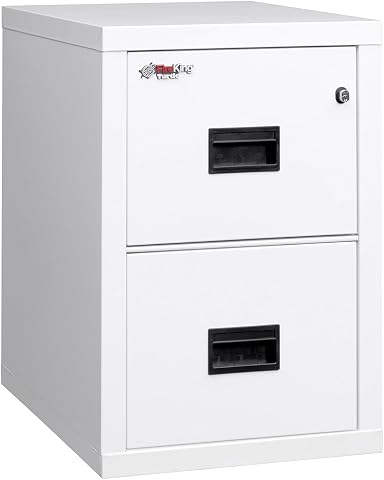
This fire-rated filing cabinet provides one-hour fire protection, keeping documents safe in extreme conditions. Made of high-quality steel, it features two easy-slide drawers for legal and letter-sized files, a secure lock system, and a sleek, scratch-resistant finish, ideal for small offices or home use.
Pros:
- Provides fire protection for up to 1 hour
- Secure lock system for anti-theft protection
- Sleek, scratch-resistant finish
Cons:
- Heavy to move (251 pounds)
- Limited to two drawers
- Made in the USA, which may affect availability
Best for: People who retrieve household records and want them sorted in drawers.
Not ideal for: Homes without room for a vertical cabinet and drawer clearance.
Bottom line: Match the cabinet’s dimensions, file format, and stated rating to your room and records.
Portable Document Scanner
A scanner can help turn paper records into digital files that are easier to search and organize. The listed pick is the Epson DS-530X Duplex Desktop Document Scanner. This slot matters when you want a repeatable way to capture documents, but the useful fit depends on the kinds of pages you scan and the software or devices you plan to use.
A common buying mistake is focusing on the scanner name without checking workflow compatibility. Review supported operating systems, included or compatible software, connection options, and the page sizes or media types it handles. Duplex scanning can be relevant if you regularly process pages with information on both sides; verify how that function works for your intended use. Consider the scanner’s footprint and where it will sit, including room to feed and collect pages.
Plan a file naming routine before building a digital archive: consistent dates and categories make later retrieval easier. Decide where scanned files will be stored and who needs access. Also consider how you will handle originals after scanning; not every paper needs the same treatment. A scanner supports an organized process, but clear folders and a regular review habit are what keep files useful over time.
What to look for:
- Compatibility with your computer and operating system
- Software and connection options for your workflow
- Supported page sizes and media types
- Duplex capability that suits the pages you scan
- A footprint with enough room for feeding and collecting pages
Epson DS-530X Duplex Desktop Document Scanner

The Epson DS-530X scans up to 45 pages per minute with single-pass duplex scanning and holds up to 100 sheets in its automatic document feeder. It connects via USB, includes TWAIN and ISIS drivers, and supports varied media with features such as ultrasonic double-feed detection and blank-page removal.
Pros:
- Fast scanning with single-pass duplex capability
- Large 100-sheet automatic document feeder
- Includes TWAIN and ISIS drivers for broad software compatibility
- Handles varied documents and helps prevent double feeds
Cons:
- USB connectivity only is listed
- No wireless connectivity is mentioned
Best for: Households that regularly scan and organize paper records.
Not ideal for: Anyone who rarely scans or lacks a place for a desktop device.
Bottom line: Confirm compatibility, media support, and workspace before adding it to your filing routine.
Cross Cut Paper Shredder
A shredder gives sensitive paper a clear disposal step when records are no longer needed. The listed pick is the 4005 Cross Cut Commercial Office Paper Shredder with Automatic Oiler. Consider whether its stated capacity, feed opening, and operating requirements fit your household’s volume and the location where you plan to use it.
A common mistake is buying a larger or more complex machine without checking day-to-day fit. Review the types of material it accepts, its operating and maintenance instructions, bin access, and the space needed around it. The product name mentions an automatic oiler; check what maintenance remains necessary and which supplies or procedures the manufacturer specifies. Also consider how easy it is to position the shredder near the place where papers are reviewed, while keeping the area clear and accessible.
Build a simple disposal habit: identify records that are ready to discard, check that they do not need to be retained, and then shred them. Do not let a shredder become a substitute for sorting; an organized queue helps avoid feeding papers you meant to keep. If you expect occasional use, consider whether the machine’s size and care requirements make sense for your space. Match the device to your actual volume and maintenance routine.
What to look for:
- Accepted paper and other material types
- Feed opening and capacity suited to your typical volume
- Bin access and space for positioning the machine
- Operating and maintenance instructions
- Oiling requirements and compatible supplies
4005 Cross Cut Commercial Office Paper Shredder with Automatic Oiler, Continuous

This heavy-duty cross-cut shredder is designed for commercial use, handling 37-39 sheets at a time with a large 44-gallon bin. It features automatic oiling, jam prevention, and continuous operation, making it suitable for offices with 20-25 users.
Pros:
- High capacity shredder suitable for large office environments
- Automatic oiler and jam prevention features enhance usability
- Continuous operation allows for efficient shredding
Cons:
- Very heavy and bulky, may require sturdy setup space
- Requires 20AMP power outlet, limiting placement options
- No price information available
Best for: Households that regularly sort and shred unneeded sensitive paperwork.
Not ideal for: Anyone with little shredding volume or limited room for a large device.
Bottom line: Check accepted materials, capacity, footprint, and care requirements against your disposal routine.
Encrypted USB Drive
A hardware-encrypted drive can be one part of a digital backup routine for scanned household records. The listed pick is the Apricorn Aegis Padlock 2TB Hardware-Encrypted Portable External Hard D. Before choosing, consider how much data you expect to store, which devices you will connect it to, and how you will protect access credentials.
A common buying mistake is treating a drive’s capacity or encryption label as a complete backup plan. Verify the exact model name and specifications, connection type, supported systems, and the manufacturer’s instructions for setting up and recovering access. Decide how credentials will be stored safely and who needs them. A drive that cannot be accessed when needed is not useful, so understand the recovery process before saving important files.
Plan where the drive will be stored and how often you will update it. Keep a consistent folder structure that mirrors your paper categories, and make sure the files you care about are actually copied. Consider whether the drive’s physical size and connector suit your devices and storage location. Use the device as one part of a broader recordkeeping routine, with a known update schedule and a clear way to locate the files.
What to look for:
- Exact model and verified storage capacity
- Connection type and compatibility with your devices
- Setup, access, and recovery instructions
- A safe method for storing access credentials
- A storage location and update schedule you can maintain
Apricorn Aegis Padlock 2TB Hardware-Encrypted Portable External Hard Drive

This portable 2TB drive uses 256-bit AES XTS hardware encryption and an integrated keypad for PIN-based access. It connects over USB 3.0, requires no software or administrator rights, and supports up to five user PINs plus an administrator PIN.
Pros:
- Hardware encryption with keypad-based PIN access
- Works without software installation or administrator rights
- Compatible with PC, Mac, and USB-enabled operating systems
- Rugged design with epoxy coating and brute-force self-destruct feature
Cons:
- Uses a rotating 5400 rpm hard drive
- Requires PIN entry through the integrated keypad
Best for: People who want a portable drive for scanned household files.
Not ideal for: Anyone who will not maintain access credentials or update backups.
Bottom line: Confirm device compatibility and recovery steps, then build a regular backup habit.
Expanding File Folder
An expanding folder can give incoming paperwork a simple sorting system before it reaches long-term storage. The listed pick is the Expanding Hanging File Folders for Filing Cabinet, 7 Accordion Pockets. Its pocket count offers a starting point for organizing a small set of categories, but check how it fits your filing cabinet and the papers you handle.
A common mistake is assigning too many categories before you know what you receive. Start with a few practical labels, such as “to review” and “to file,” then adjust based on your routine. Verify folder dimensions, hanging hardware, and compatibility with the cabinet rails you use. Check how the folder expands when filled and whether its material and tabs suit your expected handling. A folder that does not hang securely or fit the cabinet can make papers harder to access.
Use the pockets as temporary waypoints, not indefinite storage. Set a regular time to review each category, move records to their longer-term location, and clear out papers that no longer belong. Make labels easy to read and keep the same terms across your paper and digital systems. This pick can help manage the flow of documents, especially when paired with a clear routine for what happens after each paper is sorted.
What to look for:
- Dimensions and hanging hardware compatible with your cabinet
- Pocket count that fits the categories you actually use
- Expansion capacity for your expected paper volume
- Tabs that are easy to label and read
- Material suited to frequent handling
Expanding Hanging File Folders for Filing Cabinet, 7 Accordion Pockets, 1.2” Ex
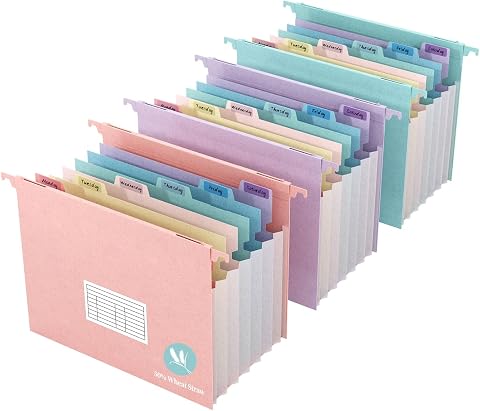
These expanding hanging file folders feature seven accordion pockets with 1.2-inch capacity, ideal for organizing letter-sized documents. Made from eco-friendly wheat straw material, they include multi-color tabs for easy categorization and are suitable for home, school, or office use.
Pros:
- Ample storage with 7 expandable pockets
- Eco-friendly and durable wheat straw material
- Multi-color tabs for easy organization
- Suitable for various settings including home and office
Cons:
- May not fit non-standard filing cabinets
- Limited to letter-sized documents only
Best for: People who want a temporary place to sort papers into categories.
Not ideal for: Anyone seeking a permanent filing cabinet or long-term archive.
Bottom line: Check cabinet compatibility and use a regular review routine to keep pockets from becoming backlog.
Build the system in a budget-first order: start with labels and an expanding folder, then add the storage or scanning tools that address a real gap in your routine. Prioritize a secure place for originals if that is your main concern, or a scanner and drive if digitizing is the goal. Match each purchase to the records you have and the space available.
You do not need a perfect archive to begin. Pick one category, give it a consistent home, and decide when you will review it. A manageable routine makes financial paperwork easier to find and helps your recordkeeping system grow with your household.