For families seeking budgeting games for kids, SimplyFun BankIt! is my best overall pick because its banking and money decisions suit children ready for more than basic coin practice. Learning Advantage Budgeting Game is a standout for direct budget lessons, while Money Bags makes early money math approachable through hands-on play. The main tradeoff is between focused practice—such as allowance, bank accounts, or budgeting—and broader games that make money feel like part of a story or competition. Age fit, reading demands, player count, and how closely a game mirrors real choices can matter as much as its topic. Continue reading for my full breakdown and guidance on choosing the right game for your child.

Get smart everyday buys delivered free with Prime
- Fast, free delivery on millions of items
- Prime Video, Amazon Music and more included
- Member-only deals all year
Key Takeaways
- BankIt! stands out as the best overall fit for families wanting financial decisions and banking concepts rather than a game limited to identifying coins.
- The Learning Advantage titles are more targeted than interchangeable: its Budgeting Game focuses on spending plans, while its Bank Account game puts the emphasis on account-related concepts.
- Money Bags and the supermarket-themed Fidget Game suit different early-learning needs: one centers on money math, while the other connects spending to pretend shopping.
- Allowance-focused choices split between practice and play: Lakeshore Allowance Game and Managing My Allowance put regular money decisions in the foreground, unlike broader financial literacy games.
- Card games and board games offer different household fits: Finance Go Fish and Don’t Break the Budget can suit shorter card play, while Pay Day and the other board games support a more extended shared activity.
| Finance Go Fish: 3-in-1 Financial Literacy Card Game |  | Best for Financial Vocabulary | Age range: 10–16 years | Games: Go Fish, Memory Match, Old Maid | Financial terms: 28 | VIEW LATEST PRICE | See Our Full Breakdown |
| Winning Moves Pay Day Board Game |  | Best for Everyday Money Decisions | Brand: Winning Moves | Players: 2–4 | Recommended age: 8 and up | VIEW LATEST PRICE | See Our Full Breakdown |
| My First Little Business Financial Literacy Board Game for Kids |  | Best for Young Entrepreneurs | Brand: Clever Fox Play | Players: 2–4 | Recommended age: 8 years and up | VIEW LATEST PRICE | See Our Full Breakdown |
| Lakeshore Allowance Game |  | Best for Younger Money Learners | Brand: Lakeshore | Players: 2–4 | Recommended age: 5–11 years | VIEW LATEST PRICE | See Our Full Breakdown |
| Learning Advantage Budgeting Game for Kids, Grades 5+ |  | Best for Hands-On Budget Practice | Brand: Learning Advantage | Players: 2–4 | Recommended age: 9+ | VIEW LATEST PRICE | See Our Full Breakdown |
| The Fidget Game Supermarket Squishy Spree Money Game for Kids Ages 5–8 |  | Best for Early Money Practice | Players: 2 to 5 | Recommended age: 5 to 8 years | Recommended grade: K–2 | VIEW LATEST PRICE | See Our Full Breakdown |
| Don’t Break the Budget Financial Literacy Card Game |  | Best for Teen Budget Priorities | Players: 2–4 | Playing time: About 20 minutes | Age range: Teen (13+) | VIEW LATEST PRICE | See Our Full Breakdown |
| BeFree for Kids – Fun Money & Financial Literacy Board Game |  | Best for Broad Family Money Skills | Brand: BeFree | Number of players: Up to 6 | Recommended age: 7+ | VIEW LATEST PRICE | See Our Full Breakdown |
| Learning Advantage Bank Account Financial Literacy Game for Kids, Grades 5+ | 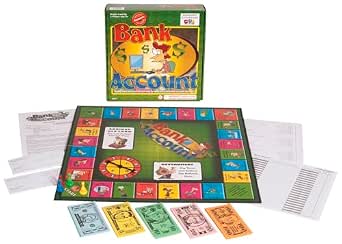 | Best for Practicing Everyday Banking | Brand: Learning Advantage | Recommended age: 10–18 years | Grade level: 5 and up | VIEW LATEST PRICE | See Our Full Breakdown |
| Learning Resources Money Bags Math Game |  | Best for Hands-On Money Math | Brand: Learning Resources | Players: 2–4 | Recommended age: 7 years and up | VIEW LATEST PRICE | See Our Full Breakdown |
| SimplyFun BankIt! Financial Literacy Board Game for Kids, Ages 8+, 1–4 Players |  | Best for Everyday Money Decisions | Brand: SimplyFun | Recommended age: 8 years and up | Players: 1–4 | VIEW LATEST PRICE | See Our Full Breakdown |
| Learning Advantage Managing My Allowance Money Game |  | Best for Allowance and Making-Change Practice | Brand: Learning Advantage | Age range: 8 years and up | Minimum age: 96 months | VIEW LATEST PRICE | See Our Full Breakdown |
| Didax Kidz Funance Adventures Financial Literacy Board Game for Ages 6+ |  | Best for Younger and Larger Groups | Brand: Didax | Age range: 6 years and up | Players: 2–6 | VIEW LATEST PRICE | See Our Full Breakdown |
| budgeting games for kid | Players | Brand | Included components | Recommended age |
|---|---|---|---|---|
| Finance Go Fish: 3-in-1 Financ | 1–4 | — | 56 term cards, 1 Old Maid card, 3 rule cards, card holder, digital coloring book | — |
| Winning Moves Pay Day Board Ga | 2–4 | Winning Moves | — | 8 and up |
| My First Little Business Finan | 2–4 | Clever Fox Play | Game board, business cards, market cards, event cards, 4 character pieces, play money, and 1 die | 8 years and up |
| Lakeshore Allowance Game | 2–4 | Lakeshore | — | 5–11 years |
| Learning Advantage Budgeting G | 2–4 | Learning Advantage | Game board, instructions, study guide, option cards, financial record, currency, 4 pawns | 9+ |
| The Fidget Game Supermarket Sq | 2 to 5 | — | — | 5 to 8 years |
| Don’t Break the Budget Financi | 2–4 | — | Cards, rule booklet, plastic case | — |
| BeFree for Kids | — | BeFree | — | 7+ |
| Learning Advantage Bank Accoun | 2–4 players plus a banker | Learning Advantage | Game board, instructions, checks, deposit slips, checkbook register, currency, 4 pawns | 10–18 years |
| Learning Resources Money Bags | 2–4 | Learning Resources | Game board with built-in spinner, 100 plastic coins, play bills, 4 markers, and a die | 7 years and up |
| SimplyFun BankIt! Financial Li | 1–4 | SimplyFun | Game board | 8 years and up |
| Learning Advantage Managing My | 2–4 | Learning Advantage | Game board with spinner, instructions, financial record, bills, coins, and 4 pawns | — |
| Didax Kidz Funance Adventures | 2–6 | Didax | Dice, game pieces, game board, game cards, and play money | — |
More Details on Our Top Picks
Finance Go Fish: 3-in-1 Financial Literacy Card Game
Three familiar card games give this set more replay variety than a single-format activity, while its 28 financial terms make it a better fit for vocabulary practice than the chore-and-change focus of the Lakeshore Allowance Game. Go Fish, Memory Match, and Old Maid can help keep short sessions moving, and the included coloring book offers an extra activity outside the card games. Its main limitation is the level of the material: intermediate and advanced terms are aimed at ages 10–16, so younger children may need an adult to explain the language. Compared with Pay Day, this is a compact way to discuss financial concepts, but it does not simulate bills, loans, or day-to-day budgeting decisions. I’d choose it for older kids who enjoy card games and are ready to build financial vocabulary.
Pros:- Offers Go Fish, Memory Match, and Old Maid in one set.
- Introduces 28 financial terms through play and discussion.
- Short estimated playing time suits quick learning sessions.
- Includes a card holder and downloadable coloring book.
Cons:- Intermediate and advanced terms may be difficult for younger players.
- The card games focus on recognizing terms rather than practicing a full budget.
- Limited to four players.
Best for: Families with children ages 10–16 who want short card games that introduce and reinforce financial vocabulary.
Not ideal for: Parents of younger children or buyers seeking hands-on practice with allowances, bills, or budgeting choices; the terms may be challenging and the gameplay is not a detailed money simulation.
- Age range:10–16 years
- Games:Go Fish, Memory Match, Old Maid
- Financial terms:28
- Players:1–4
- Estimated playing time:15 minutes
- Material:Cardstock
- Included components:56 term cards, 1 Old Maid card, 3 rule cards, card holder, digital coloring book
Our verdict“Choose Finance Go Fish for older children who want varied, quick card games built around financial vocabulary rather than detailed budgeting practice.”
Winning Moves Pay Day Board Game
Pay Day turns a month of money choices into a board-game path: players move through a 31-day calendar, earn money, handle bills, make deals, and manage loans. That gives it a more everyday cash-flow feel than My First Little Business, which centers on entrepreneurship, and makes it a natural pick for families who want to discuss spending and obligations as they play. Its 2–4 player format supports family sessions, and the familiar board-game structure keeps the financial theme approachable. The tradeoff is that the lessons come through the game’s situations rather than detailed instruction, so children may need a parent to connect a move to a real budgeting habit. Unlike the vocabulary focus of Finance Go Fish, Pay Day offers money-management scenarios, but it has fewer options for solo or larger-group play.
Pros:- Uses a 31-day calendar to model recurring money decisions.
- Includes bills, deals, and loans alongside earning and spending.
- Encourages family discussion without electronics.
- Provides a range of game components, including deal and mail cards, money, and a loan record.
Cons:- Supports only 2–4 players.
- Financial concepts are presented through gameplay rather than detailed teaching materials.
- Players may need adult guidance to connect game events with real-life budgeting.
Best for: Families with children ages 8 and up who want to talk through bills, spending, deals, and borrowing during a shared board game.
Not ideal for: Households with more than four players or buyers looking for step-by-step budgeting instruction and structured lessons.
- Brand:Winning Moves
- Players:2–4
- Recommended age:8 and up
- Game structure:Move through a 31-day calendar
- Components:Gameboard, 4 tokens, 17 deal cards, 35 mail cards, money, die, loan record, pad, and rules
- Material:Plastic
- Warranty:1 year from purchase
Our verdict“Pick Pay Day for family play that introduces everyday earning, bills, spending, and borrowing, provided you’re comfortable adding discussion as you go.”
My First Little Business Financial Literacy Board Game for Kids
Entrepreneurship is the organizing idea here: children play at building small businesses while making choices about earning, spending, saving, and investing. That gives it a different angle from Pay Day, where the focus is a month of bills and money events, and from the Lakeshore Allowance Game, which connects chores with earning and saving. The business, market, and event cards give players prompts for planning and decision-making, so the game suits children who enjoy strategy more than simple money-recognition practice. It is designed for ages 8 and up and supports two to four players. The tradeoff is that the business theme may be less directly relatable than allowance or household budgeting, and the set includes small parts. Buyers should also check the component list, since the product description notes inconsistent component details.
Pros:- Covers earning, spending, saving, investing, and decision-making.
- Business and market cards support planning and strategic play.
- Includes a board, play money, cards, character pieces, and a die.
- Designed for two to four players.
Cons:- The entrepreneurship theme may feel less immediate than chores, allowance, or household bills.
- Contains small parts that pose a choking hazard.
- Component descriptions differ on the product page.
Best for: Families with children ages 8 and up who enjoy strategy games and want to explore saving, investing, and business decisions together.
Not ideal for: Families seeking a simple first money game for younger children, or households where small game pieces are unsuitable.
- Brand:Clever Fox Play
- Players:2–4
- Recommended age:8 years and up
- Language:English
- Game type:Educational strategy board game
- Educational focus:Financial literacy and entrepreneurship
- Dimensions:10.3 × 8.2 × 0.1 inches
- Material:Cardstock
- Included components:Game board, business cards, market cards, event cards, 4 character pieces, play money, and 1 die
Our verdict“Choose My First Little Business for school-age kids drawn to strategy and entrepreneurship, not for families seeking the simplest route into everyday budgeting.”
Lakeshore Allowance Game
Chores, allowance, and basic arithmetic make this the most direct starting point in the group for younger children. Players earn money as they move around the board, then decide whether to save or spend it; money values, making change, addition, and subtraction all connect to those turns. Compared with Finance Go Fish, which asks older kids to learn financial terms, Lakeshore puts coins and simple transactions at the center. It is also more age-targeted than Pay Day, whose calendar, bills, deals, and loans suit a broader money-management conversation. The tradeoff is a narrower scope: this game practices foundational allowance choices rather than budgets, investing, or more advanced decisions. Its 18-inch board also calls for some play space, and small parts mean it is not a good fit where young children might mouth pieces.
Pros:- Connects chores and earning allowance with choices to save or spend.
- Practices money values and making change through play.
- Builds basic addition and subtraction skills.
- Covers a younger age range than vocabulary-focused Finance Go Fish.
Cons:- Focuses on basic money skills rather than broader budgeting or investing.
- Contains small parts that may pose a choking hazard.
- The 18-inch board requires a suitable play surface.
Best for: Families with children ages 5–11 who are learning money values, making change, and how chores can connect to earning and saving.
Not ideal for: Older children ready for budgets, investing, or more advanced financial decisions, and households that need a compact game or must avoid small pieces.
- Brand:Lakeshore
- Players:2–4
- Recommended age:5–11 years
- Board dimensions:18 inches
- Item weight:2 pounds
- Material:Cardboard
- Educational objectives:Money management, financial literacy, and basic math
Our verdict“Choose the Lakeshore Allowance Game as a hands-on introduction to earning, saving, spending, and basic money math for younger children.”
Learning Advantage Budgeting Game for Kids, Grades 5+
Budgeting itself is the central skill in this game: players weigh wants against needs and make choices around expenses, savings, and investments. That gives it a closer match to a budgeting-focused roundup than My First Little Business, which approaches money through running a business, or Pay Day, which moves players through calendar-based money events. A study guide, financial record sheet, option cards, and play currency support a more deliberate, hands-on learning session. The record keeping is also the main tradeoff: players must track their finances during play, which may suit grade-schoolers ready for structured tasks but slow down children who want a lighter game. It is intended for ages 9 and up and groups of two to four, so it is less suited to younger beginners or large family gatherings.
Pros:- Directly practices budgeting and choices between wants and needs.
- Includes financial record sheets and play currency for hands-on planning.
- Covers expenses, savings, and investments.
- Study guide supports a more structured learning session.
Cons:- Keeping financial records during play adds work and may interrupt the game’s pace.
- Designed for ages 9 and up, so it may be too demanding for younger beginners.
- Supports only two to four players.
Best for: Families or educators with children in grade 5 and up who want structured practice balancing needs, wants, expenses, savings, and investments.
Not ideal for: Younger children who are still learning basic money recognition, players who dislike tracking figures, or groups larger than four.
- Brand:Learning Advantage
- Players:2–4
- Recommended age:9+
- Grade level:5+
- Genre:Educational
- Included components:Game board, instructions, study guide, option cards, financial record, currency, 4 pawns
- Model number:4373
Our verdict“Choose this game when you want children in grade 5 and up to practice recording and balancing financial choices, rather than just encounter money-themed scenarios.”
The Fidget Game Supermarket Squishy Spree Money Game for Kids Ages 5–8
For younger children who need a concrete first step into budgeting, Supermarket Squishy Spree connects coin recognition and counting with familiar shopping choices. Its tactile pieces and clear visuals give kids something to handle as they decide what they can spend, rather than asking them to start with abstract financial scenarios. At 15–20 minutes, it also suits shorter play sessions. Compared with Money Bags, which emphasizes counting, sorting, and exchanging money, this game puts those skills into a supermarket spending context and is aimed at a younger age group. The tradeoff is a narrower scope: it is designed for ages 5–8, and its 2–5-player format requires a playmate. I’d choose it for guided early practice, not for older kids ready to explore broader financial decisions.
Pros:- Pairs coin recognition and counting with everyday supermarket spending decisions.
- Tactile pieces and clear visuals support hands-on learning.
- Short 15–20-minute sessions fit younger players’ attention spans.
- Designed for home, classroom, and small-group play.
Cons:- The age focus may limit replay appeal for older children.
- Requires 2–5 players, so it is not a solo learning activity.
Best for: Families and K–2 educators seeking a hands-on introduction to coin values and spending choices for children ages 5–8.
Not ideal for: Older children seeking more advanced financial scenarios, or a child who needs a game they can play alone.
- Players:2 to 5
- Recommended age:5 to 8 years
- Recommended grade:K–2
- Play time:15 to 20 minutes
- Product dimensions:10.63 x 10.24 x 3.15 inches
- Item weight:3.03 pounds
- Manufacturer:The Fidget Game
Our verdict“Choose Supermarket Squishy Spree for young children learning to connect coin values with simple shopping choices.”
Don’t Break the Budget Financial Literacy Card Game
Don’t Break the Budget is the most direct fit here for teens ready to weigh financial priorities against surprises. Its card-based challenges bring unexpected expenses into the game, while the zero-based budgeting approach asks players to account for their available money rather than treating a budget as a vague goal. That makes it a more focused choice for teens than BeFree for Kids, which covers a wider range of ideas, including earning, saving, and investing. The compact 54-card format and roughly 20-minute playtime keep the activity fairly contained, but the subject matter is intended for ages 13 and up. It also stops at four players, so it’s less suitable for a large family or classroom group. I’d pick it for discussion-led practice, not for younger children learning coin basics.
Pros:- Centers play on financial priorities and zero-based budgeting.
- Unexpected expenses give players a chance to practice adjusting a budget.
- About 20 minutes per game makes it easy to fit into a short activity.
- Plastic case keeps the 54 cards and rule booklet together.
Cons:- The teen age recommendation makes it a poor fit for younger children.
- Supports no more than four players.
- Card-based play offers less hands-on money handling than Money Bags or BeFree for Kids.
Best for: Families, educators, or youth groups looking for a short budgeting activity for teens ages 13 and up.
Not ideal for: Children under 13, large groups of more than four, or players who want a board game with physical money and multiple financial topics.
- Players:2–4
- Playing time:About 20 minutes
- Age range:Teen (13+)
- Cards:54
- Included components:Cards, rule booklet, plastic case
- Language:English
- Material:Cardboard, paper, plastic
- Educational objective:Financial literacy
Our verdict“Choose this card game for teens who are ready to practice assigning money to priorities and responding to surprise expenses.”
BeFree for Kids – Fun Money & Financial Literacy Board Game
BeFree for Kids earns its place for families who want one game to introduce several money concepts, rather than focusing on a single skill. Players encounter earning, saving, spending, and investing, with play money and cards giving those ideas a hands-on board-game format. Compared with Don’t Break the Budget, which narrows the challenge to budgeting and unexpected costs for teens, BeFree covers a wider financial-learning range and is listed for ages 7 and up. Its 30-minute playtime creates room for more varied decisions, and it supports up to six players. That breadth has a tradeoff: the additional concepts may be too much for younger children, and families wanting a quick, tightly focused budgeting lesson may prefer Don’t Break the Budget. I’d choose BeFree for mixed-topic family learning, not for a first introduction to money counting.
Pros:- Covers earning, saving, spending, investing, and budgeting in one game.
- Play money and cards support hands-on financial decision-making.
- Allows up to six players, more than the four-player limit of Don’t Break the Budget.
- Suitable for family, classroom, and homeschool play.
Cons:- Its range of concepts may be challenging for younger players.
- A 30-minute session is longer than the playtime listed for Don’t Break the Budget.
- The six-player limit may not accommodate larger groups.
Best for: Families, homeschoolers, and educators seeking a shared board game that introduces several money concepts to children ages 7 and up.
Not ideal for: Children below the recommended age, families seeking a short session, or buyers who want a game focused only on budgeting basics.
- Brand:BeFree
- Number of players:Up to 6
- Recommended age:7+
- Playing time:30 minutes
- Components:Game board, cards, die, instruction brochure, play money
- Language:English
- Item dimensions:12.6 inches L x 2.36 inches W
- Item weight:1.17 kg
Our verdict“Choose BeFree for Kids when you want a longer family game that introduces a wider set of money skills than budgeting alone.”
Learning Advantage Bank Account Financial Literacy Game for Kids, Grades 5+
For older children who are ready to move beyond coins and spending choices, the Learning Advantage Bank Account Game makes account management its central lesson. Players work with checks, deposit slips, a checkbook register, and realistic financial scenarios while aiming for a $5,000 goal. Those materials turn record keeping and reconciliation into actions children can practice, rather than concepts they only hear about. Compared with Money Bags, which builds foundational counting and exchanging skills, this game is better suited to grade 5 and up and focuses on how money moves through an account. The tradeoff is that it needs a banker in addition to the 2–4 players, so it takes more coordination than a straightforward family board game. I’d select it for structured learning, not for younger children who still need basic money-counting practice.
Pros:- Provides practice with checks, deposits, and a checkbook register.
- Uses realistic account-management scenarios and a clear savings goal.
- Supports addition, subtraction, and financial decision-making.
- Offers a practical next step beyond the counting focus of Money Bags.
Cons:- Requires a banker in addition to the players.
- The grade 5+ focus may be too advanced for younger children.
- Its account-management focus is narrower than a game that covers earning, spending, and investing.
Best for: Families and educators teaching children in grade 5 and up how deposits, checks, account records, and reconciliation work.
Not ideal for: Younger children learning coin values, or groups without an extra person available to act as banker.
- Brand:Learning Advantage
- Recommended age:10–18 years
- Grade level:5 and up
- Players:2–4 players plus a banker
- Model number:4377
- Included components:Game board, instructions, checks, deposit slips, checkbook register, currency, 4 pawns
- Goal:$5,000
Our verdict“Choose this game for older children who need practice managing an account, rather than another round of basic coin counting.”
Learning Resources Money Bags Math Game
Money Bags is the clearest pick in this group for practicing the mechanics behind everyday money amounts: counting coins, sorting denominations, combining values, and making exchanges. Its plastic coins and play bills give children tangible materials to work with, while the spinner, die, and race to finish with the most money add structure to the math practice. Compared with Supermarket Squishy Spree, which ties money skills to shopping choices for ages 5–8, Money Bags is recommended from age 7 and puts more emphasis on number sense and exchanging money. It also differs from BeFree for Kids, whose broader financial topics include saving and investing. The limitation is scope: children who already know basic money math may want more nuanced budgeting decisions. I’d choose it for foundational practice, not advanced financial planning.
Pros:- Practices counting, sorting, combining, and exchanging money.
- Includes 100 plastic coins and play bills for tangible math practice.
- Spinner, die, and finish-first objective give the activity a clear game structure.
- Works for home, classroom, and homeschool groups of 2–4.
Cons:- Its early math focus may offer limited challenge for older or more financially experienced children.
- The listed playtime of about 30 minutes is longer than Supermarket Squishy Spree.
- It focuses on money operations more than broader budgeting topics such as investing.
Best for: Families and educators seeking a reusable, hands-on game for children ages 7 and up to practice counting, combining, and exchanging money.
Not ideal for: Older children seeking realistic budgeting or banking scenarios, or children who already have strong skills in basic money math.
- Brand:Learning Resources
- Players:2–4
- Recommended age:7 years and up
- Recommended grade:Grade 2 and up
- Estimated playing time:30 minutes
- Included components:Game board with built-in spinner, 100 plastic coins, play bills, 4 markers, and a die
- Board dimensions:12 x 17 inches
- Model number:LER5057
Our verdict“Choose Money Bags when the main goal is helping children build confidence counting and exchanging play money through repeated turns.”
SimplyFun BankIt! Financial Literacy Board Game for Kids, Ages 8+, 1–4 Players
BankIt! is a good fit for families who want budgeting practice to include more than counting coins. Players weigh choices about earning, spending, saving, donating, and investing while working toward a bike, giving money goals a concrete purpose. Compared with Learning Advantage Managing My Allowance, which emphasizes allowance, making change, and keeping financial records, BankIt! offers a broader mix of money decisions without a record-keeping task listed in its components. That can make it easier to bring into a family game night, though the other game may suit children who need direct practice handling bills and coins. BankIt! supports solo play as well as groups of up to four, but its age-eight-and-up guidance and small parts make it a poor choice for younger children. Its stated 30-minute playing time also calls for more attention than a quick card game.
Pros:- Covers earning, spending, saving, donating, and investing rather than focusing on only one money skill
- Relatable scenarios, including saving toward a bike, connect choices to a clear goal
- Supports 1–4 players, including solo play
- Listed playing time of 30 minutes fits a planned family game session
Cons:- Recommended only for ages 8 and up, limiting use with younger siblings
- Small parts present a choking hazard
- The listed components specify a game board but do not detail the other play materials
Best for: Families with children ages 8 and up who want to talk through saving goals and everyday financial choices during a shared game.
Not ideal for: Families with children under 8, or buyers seeking a game centered on hands-on coin counting and making change.
- Brand:SimplyFun
- Recommended age:8 years and up
- Players:1–4
- Playing time:30 minutes
- Genre:Educational
- Language:English
- Included components:Game board
- Batteries:Not required
Our verdict“Choose BankIt! for school-age kids who are ready to discuss several kinds of money decisions, not just count change.”
Learning Advantage Managing My Allowance Money Game
Managing My Allowance is the most direct choice here for children learning to handle pocket money: its play covers making change, comparing needs and wants, and saving, with bills, coins, a spinner, and a financial record included. That makes the money-handling practice more tangible than BankIt!, whose description centers on a wider range of financial decisions and a bike-saving goal. The tradeoff is that players must keep track of their financial records, so this game asks for more attention to bookkeeping than a casual family activity may suit. Two gameplay variations provide a way to match play to different budgeting skill levels, while the 2–4 player limit rules out solo practice. Compared with Didax Kidz Funance Adventures, which is listed for ages 6 and up and supports more players, this allowance-focused pick is narrower and aimed at older elementary-age children.
Pros:- Includes bills and coins for hands-on money and change practice
- Addresses allowance, needs versus wants, and saving goals
- Two gameplay variations accommodate different budgeting skill levels
- Financial record supports tracking decisions across play
Cons:- Players need to keep financial records, which adds a bookkeeping task
- Limited to 2–4 players, with no solo-play option listed
- Its focus on basic allowance skills may offer less breadth for children ready for more varied financial scenarios
Best for: Families or educators working with children ages 8 and up who need concrete practice making change, sorting needs from wants, and tracking money decisions.
Not ideal for: Younger children, solo players, or families who want a low-record-keeping game with broader group play.
- Brand:Learning Advantage
- Age range:8 years and up
- Minimum age:96 months
- Players:2–4
- Genre:Educational
- Edition:Standard Edition
- Included components:Game board with spinner, instructions, financial record, bills, coins, and 4 pawns
- Model number:4608
Our verdict“Pick this game when allowance management and making change are the main skills your elementary-age child needs to practice.”
Didax Kidz Funance Adventures Financial Literacy Board Game for Ages 6+
Kidz Funance Adventures stands out for its age-six-and-up guidance and capacity for up to six players, making it the most accessible group option among these three for younger children and larger tables. Dice, game pieces, cards, a board, and play money give the activities several ways to involve kids in earning, saving, spending, and investing. Compared with BankIt!, which is aimed at ages 8 and up and supports no more than four players, Didax can suit a broader family or classroom group; Managing My Allowance is a closer fit when the priority is making change and keeping financial records. The wider age reach comes with a tradeoff: the supplied description emphasizes interactive challenges and decision-making, but gives less detail about specific budgeting scenarios than either competitor. Small parts also call for care around young children.
Pros:- Age guidance starts at 6 years and up, younger than the two other games reviewed here
- Supports groups of 2–6, including larger family or classroom play
- Play money, cards, dice, pieces, and a board support varied activities
- Connects money choices with planning, communication, and critical thinking
Cons:- Small parts present a choking hazard
- The supplied description gives fewer details about specific budgeting scenarios than Managing My Allowance
- The listed dimensions include a 0.1-inch measurement that may not clearly describe the product’s full size
Best for: Families, homeschoolers, and teachers who want children ages 6 and up to explore money choices together in groups of up to six.
Not ideal for: Buyers seeking detailed allowance tracking or clearly described practice with making change, or households where small game pieces are a concern.
- Brand:Didax
- Age range:6 years and up
- Players:2–6
- Genre:Math
- Included components:Dice, game pieces, game board, game cards, and play money
- Item dimensions:16 × 10.5 × 0.1 inches
- Materials:Cardstock and plastic
- Number of items:50
Our verdict“Choose Kidz Funance Adventures for younger children or groups of up to six, but look elsewhere for more explicit allowance-recording practice.”

How We Picked
I compared these games by how directly they help children practice budgeting-related decisions, including planning spending, handling allowance, making purchases, saving, and learning about accounts. I also weighed age guidance, the likely reading and math demands, how easy a family or classroom can explain the game, and whether the play format suits short sessions or longer group play. A game with a clear budgeting focus ranks ahead of one that mainly introduces money through a broader theme, unless the broader format offers a particularly accessible starting point.
The ranking reflects usefulness for the specific search for budgeting games for kids, not a claim that every child needs the same lesson. Focused learning tools such as Learning Advantage Budgeting Game and Managing My Allowance are stronger matches for targeted practice; Money Bags and the supermarket game offer approachable entry points; and titles such as BankIt! and Pay Day bring money decisions into broader gameplay. Since age suitability, household play style, and learning goals vary, I also call out tradeoffs so readers can choose beyond rank alone.
Factors to Consider When Choosing Budgeting Games For Kids
Before choosing a game, I would match its learning task to the money decisions a child is ready to practice. A game can teach coin values without teaching budgeting, or cover financial ideas in ways that are too abstract for a younger player. These factors help separate a fun money-themed activity from a useful fit for a particular child, family, or classroom.
Choose the Skill You Want to Practice
Start with one concrete goal: making change, planning spending, managing allowance, saving toward a goal, or understanding a bank account. These skills overlap, but a game that focuses on one may not teach the others in depth. A common mistake is to buy any game labeled financial literacy and expect it to cover a full budgeting routine. For a child who already recognizes coins, prioritize decisions about limited funds rather than more coin naming. For a child just starting out, money math and familiar shopping situations can build confidence before abstract planning. I would treat each game as a way to start a conversation, not as a complete personal-finance course.
Match the Rules to Reading and Math Readiness
Age labels are a starting point, not a guarantee that a child will follow the rules independently. Check whether play depends on reading cards, adding amounts, comparing totals, or keeping track of several choices at once. A younger child may enjoy a supermarket setting but still need an adult to handle calculations or explain decisions. Older elementary players may find a simple coin exercise repetitive if they already manage small purchases. When children in a household have different skill levels, choose a game where adults can simplify the math without changing the whole activity. The best fit is one that lets the child make meaningful choices without making the rules the main challenge.
Decide Whether You Want a Quick Round or a Longer Session
Card games often suit brief play and are easier to bring out for a short practice session, while board games can make money decisions part of a longer shared activity. Neither format teaches budgeting better by default; the better choice is the one your family will actually play. If attention spans are short or schedules are busy, a game with a simple setup can get more repeat use than a lengthy rules explanation. For a classroom, think about how many children can participate at once and whether turns leave players waiting. For family game night, a more involved format may create room to talk through choices. Check the listed player guidance and session expectations rather than assuming all money games fit the same group.
Look for Choices, Not Just Money Vocabulary
Recognizing terms such as allowance or bank account is different from deciding how to use a limited amount of money. When budgeting is the goal, look for play that asks children to choose, compare, save, spend, or adjust a plan after a change. A themed game can be engaging, but a money theme alone does not prove that players practice planning. Conversely, a focused learning game may provide clearer instruction but feel less like open-ended play. Ask what the child will actually do on a turn: name a value, complete a calculation, or make a tradeoff. That small distinction helps prevent buying a game that teaches money facts when the family wants budgeting practice.
Think About Replayability and Adult Involvement
Some games rely on repeated practice of a specific skill, while others keep interest through varied turns, themes, or group interaction. Consider whether your child enjoys replaying a familiar format or needs new situations to stay engaged. A highly targeted game can be a better learning tool even if its scope is narrow, but it may work best alongside everyday conversations about spending and saving. Also think about who will explain the rules: a game that requires steady adult coaching may be a poor match for independent play, yet a parent or teacher can use that involvement to ask useful questions. Avoid judging replay value only by the number of components or concepts. The key is whether the play invites another round and another thoughtful money decision.
Choose for the Setting and Group
A game that works well one-on-one may not suit a classroom table or a family with several children. Consider the player count, whether turns keep everyone involved, and whether the activity can be paused or restarted without losing the learning thread. For a classroom, clear rules and a focused skill can make it easier to connect play to a lesson; for home use, a familiar allowance or shopping theme may invite conversation. A compact card format can be convenient, but it may offer less room for a sustained board-game experience. Avoid buying solely for a group size listed on the box without thinking about how children of different ages will participate. The most useful choice fits the real setting where the game will be played.
Frequently Asked Questions
Which kind of game is best if my child already knows coin values?
Move beyond games centered mainly on recognizing or counting coins and look for choices involving a limited budget, allowance, saving, or accounts. Learning Advantage Budgeting Game is the most direct match in this lineup for practicing a budget as a distinct skill, while BankIt! adds banking and broader money decisions. The right step depends on what your child can already do: recognizing values does not always mean they can compare spending choices. Ask them to explain why they would save or spend in a sample situation before choosing a more advanced game. If they need help with the reasoning, choose a game that gives room for discussion rather than focusing only on speed or calculations.
Can one game teach budgeting, saving, and banking equally well?
Usually, a game that treats several money topics will give some of them less depth than a title built around one skill. In this lineup, the Learning Advantage Budgeting Game and its Bank Account game have distinct learning focuses, while BankIt! offers a broader route through financial decisions. A family does not need a separate game for every topic, but it helps to identify the most important gap first. If a child needs to plan spending, choose budgeting practice; if account concepts are unfamiliar, a bank-focused game is a closer fit. Use real-life conversations to connect the game’s narrower lesson to the other skills.
What should I choose for a child who loses interest in games with long rules?
Prioritize a format with a familiar premise and a short explanation, then check the actual rules and player guidance before buying. Finance Go Fish and Don’t Break the Budget use card-game formats, while the supermarket-themed Fidget Game connects money play to shopping. Those formats may feel more approachable than a longer board-game session, but the title alone does not tell you how much reading or adult help is needed. If the child is very young, plan to play alongside them at first and keep the goal to one money idea per round. A simple game that gets repeated can be more useful than a detailed game that stays on the shelf.
Are allowance games useful if my child does not receive an allowance?
They can still offer a way to discuss choices about money, but the examples may feel less immediate if they depend on a regular allowance routine. Lakeshore Allowance Game and Learning Advantage Managing My Allowance are the most directly connected to allowance practice in this group. You can connect the activity to another limited resource, such as gift money or a savings goal, if that better matches your household. Avoid presenting game money as a substitute for a real family policy; use it to discuss priorities and consequences instead. If you want a broader introduction, a general money or budgeting game may feel more relevant.
Should I choose a classroom-focused game or a family board game for home learning?
Choose based on how the child will play, not just where the game is marketed. A structured learning game can work at home when an adult wants to reinforce a specific skill, while a family board game can make money choices part of shared play. For classroom use, consider whether the game’s player guidance and turn structure will keep a small group participating, and whether the learning goal is easy to explain. At home, think about session length, reading support, and whether other family members will join in. If the intended group varies, a focused game plus occasional adult-guided discussion may be more flexible than relying on one game to serve every setting.
Conclusion
For the best overall mix of banking and broader money decisions, I recommend SimplyFun BankIt! For a direct budgeting lesson, choose Learning Advantage Budgeting Game; for a hands-on early money-math starting point, Learning Resources Money Bags is my best beginner pick. Families seeking an allowance-centered activity can compare Lakeshore Allowance Game with Managing My Allowance, while Learning Advantage Bank Account best fits a specific interest in account concepts. I would treat Pay Day, Finance Go Fish, and the other broad or themed games as better fits when shared play and approachability matter more than focused budget instruction. Match the game to the skill your child needs next, then use play to talk through the choices behind each move.
Fall Picks
fall essentials
As an affiliate, we earn on qualifying purchases.