

For a first personal finance book, I’d start with The Psychology of Money for its approachable lessons on how behavior shapes financial choices. I Will Teach You to Be Rich is a stronger fit if you want a structured action plan, while The Infographic Guide to Personal Finance suits readers who learn visually. The main tradeoff is between a broad overview and a focused guide to one need, such as budgeting, debt, or investing. Age and reading style matter too: some books are aimed at young adults, while others assume adult financial decisions. Continue reading for the full breakdown and a guide to choosing a book you’re likely to use.
Key Takeaways
- The Psychology of Money leads for an accessible introduction to financial behavior, while I Will Teach You to Be Rich better serves readers who want a step-by-step program.
- The Infographic Guide to Personal Finance offers a visual route through multiple topics; its format favors quick reference over extended explanation.
- Books aimed at teens and young adults—including Money Skills for Young Adults and Personal Finance for Teens and Young Adults—fit readers building foundational habits, not every adult seeking advanced guidance.
- The lineup splits between broad primers such as Personal Finance 101 and Personal Finance For Dummies, and focused choices such as Budgeting 101 or The Simple Path to Wealth.
- A book’s method matters as much as its topic: readers who prefer a firm debt-focused framework may favor Dave Ramsey’s Complete Guide to Money, while those seeking a less prescriptive starting point may prefer a general primer.
| The Infographic Guide to Personal Finance: A Visual Reference for Everything You Need to Know | 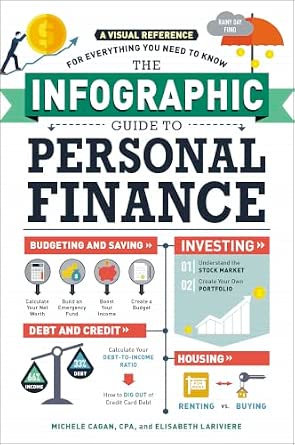 | Best Visual Reference | Format: Visual reference guide | Subject: Personal finance | Presentation: Infographics | VIEW LATEST PRICE | See Our Full Breakdown |
| Money Skills for Young Adults: A Beginner’s Guide to Smart Financial Habits |  | Best for Young Adult Money Habits | Format: Beginner’s guide | Audience: Young adults | Topics: Budgeting, saving, and investing | VIEW LATEST PRICE | See Our Full Breakdown |
| Financial Literacy for Young Adults: Manage, Save, and Invest Money for a Secure Future |  | Best for Core Money Fundamentals | Format: Personal finance guide | Audience: Young adults | Topics: Managing, saving, and investing money | VIEW LATEST PRICE | See Our Full Breakdown |
| The Psychology of Money: Timeless Lessons on Wealth, Greed, and Happiness |  | Best for Money Mindset | Format: Personal finance book | Focus: Psychology of money | Themes: Wealth, greed, and happiness | VIEW LATEST PRICE | See Our Full Breakdown |
| I Will Teach You to Be Rich: No Guilt. No Excuses. Just a 6-Week Program That Works (Second Edition) |  | Best Structured Action Plan | Format: Six-week program | Edition: Second Edition | Approach: Practical financial habits | VIEW LATEST PRICE | See Our Full Breakdown |
| Personal Finance QuickStart Guide: The Simplified Beginner’s Guide to Eliminating Financial Stress, Building Wealth, and Achieving Financial Freedom |  | Best for Reducing Money Stress | Format: Book | Audience: Beginners | Primary focus: Reducing financial stress and building wealth | VIEW LATEST PRICE | See Our Full Breakdown |
| Dave Ramsey’s Complete Guide to Money |  | Best for Step-by-Step Money Management | Format: Book | Audience: Beginners and experienced readers | Primary focus: Personal money management and building wealth | VIEW LATEST PRICE | See Our Full Breakdown |
| Personal Finance for Teens and Young Adults: Learn Money Skills Not Taught in School |  | Best for Teen and Young Adult Beginners | Format: Book | Audience: Teenagers and young adults | Primary focus: Practical money skills | VIEW LATEST PRICE | See Our Full Breakdown |
| The Simple Path to Wealth: Your Road Map to Financial Independence and a Rich, Free Life |  | Best for a Financial Independence Focus | Format: Book | Audience: Beginners | Primary focus: Financial independence | VIEW LATEST PRICE | See Our Full Breakdown |
| Personal Finance 101: From Saving and Investing to Taxes and Loans, an Essential Primer on Personal Finance |  | Best Broad-Scope Primer | Format: Book | Audience: Beginners | Primary focus: Personal finance fundamentals | VIEW LATEST PRICE | See Our Full Breakdown |
| Budgeting 101: From Getting Out of Debt and Tracking Expenses to Setting Financial Goals and Building Your Savings |  | Best for Building Budgeting Habits | Format: Book | Primary focus: Budgeting | Topics: Debt reduction, expense tracking, financial goals, savings | VIEW LATEST PRICE | See Our Full Breakdown |
| Finance for Beginners: 101 Concepts |  | Best for a Broad First Look | Format: Book | Primary focus: Introductory finance concepts | Topics: Personal finance, investing, money management | VIEW LATEST PRICE | See Our Full Breakdown |
| Personal Finance For Dummies |  | Best General-Purpose Starter | Format: Book | Primary focus: Personal finance fundamentals | Topics: Budgeting, saving, investing, debt management | VIEW LATEST PRICE | See Our Full Breakdown |
| personal finance books for beginner | Format | Topics | Audience | Approach |
|---|---|---|---|---|
| The Infographic Guide to Perso | Visual reference guide | Money management, budgeting, investing, and financial planning | — | — |
| Money Skills for Young Adults: | Beginner’s guide | Budgeting, saving, and investing | Young adults | Simple tools and practical advice |
| Financial Literacy for Young A | Personal finance guide | Managing, saving, and investing money | Young adults | — |
| The Psychology of Money: Timel | Personal finance book | — | — | Reflective lessons |
| I Will Teach You to Be Rich: N | Six-week program | — | — | Practical financial habits |
| Personal Finance QuickStart Gu | Book | Budgeting, saving, and investing | Beginners | Straightforward and practical |
| Dave Ramsey’s Complete Guide t | Book | Budgeting, personal finance, and wealth building | Beginners and experienced readers | Step-by-step practical guidance |
| Personal Finance for Teens and | Book | Budgeting, saving, and investing | Teenagers and young adults | — |
| The Simple Path to Wealth: You | Book | Personal finance and investing principles | Beginners | Straightforward advice |
| Personal Finance 101: From Sav | Book | Saving, investing, taxes, and loans | Beginners | Accessible primer |
| Budgeting 101: From Getting Ou | Book | Debt reduction, expense tracking, financial goals, savings | Beginners | Practical financial management guidance |
| Finance for Beginners: 101 Con | Book | Personal finance, investing, money management | Beginners | — |
| Personal Finance For Dummies | Book | Budgeting, saving, investing, debt management | Beginners | Straightforward introduction |
More Details on Our Top Picks
The Infographic Guide to Personal Finance: A Visual Reference for Everything You Need to Know
Visual explanations make this a useful first stop for beginners who find money terminology easier to absorb through diagrams than long explanations. It surveys budgeting, investing, money management, and financial planning, so readers can build a broad map of the subject and return to it as questions arise. Compared with The Psychology of Money, which centers on attitudes and behavior, this guide aims for a wider, more practical overview. That breadth also comes with a limit: a visual reference can introduce concepts without providing the detailed steps needed to make a full plan or choose investments. I’d choose it for orientation and quick refreshers, not as a standalone investing manual. Readers who already understand the basics may find its introductory coverage too elementary.
Pros:- Infographics make foundational finance concepts easier to scan and understand.
- Covers several beginner topics, including budgeting, investing, and financial planning.
- Works as a quick reference after an initial read.
Cons:- Offers an overview rather than detailed, step-by-step financial strategies.
- May not explain advanced investing concepts in enough depth.
- Experienced readers may find the material too basic.
Best for: Visual learners and first-time readers who want a quick, approachable overview of budgeting, investing, and financial planning.
Not ideal for: Beginners seeking detailed instructions for investment decisions or an in-depth financial plan, and experienced investors who already know the fundamentals.
- Format:Visual reference guide
- Subject:Personal finance
- Presentation:Infographics
- Topics:Money management, budgeting, investing, and financial planning
- Intended level:Beginner
- Use:Overview and quick reference
Our verdict“Choose this if you learn best visually and want a broad finance primer, but pair it with a more detailed guide for action steps.”
Money Skills for Young Adults: A Beginner’s Guide to Smart Financial Habits
Young-adult-focused guidance gives this book a narrower audience than The Infographic Guide to Personal Finance, but that focus can make its advice feel more relevant to readers building financial independence for the first time. It covers budgeting, saving, and investing, with simple tools intended to help readers put habits into practice rather than just learn terminology. That makes it a plausible starting point for someone managing their own money without much prior experience. The description does not specify the tools or lay out an investment process, though, so I wouldn’t choose it for a detailed, sequential investing curriculum. Compared with I Will Teach You to Be Rich, it offers less clearly defined structure: the latter promises a six-week program, while this book’s appeal is its audience-specific beginner framing.
Pros:- Addresses the financial independence goals of young adults.
- Covers budgeting, saving, and investing in one beginner-oriented guide.
- Includes simple tools intended to support budget and savings habits.
Cons:- Does not describe a detailed investment strategy.
- The available description does not identify specific tools or explain how they are used.
- Its young-adult focus may be less relevant to readers looking for a general finance reference.
Best for: Young adults starting to manage their own income who want basic budgeting and savings habits alongside introductory investing guidance.
Not ideal for: Readers who want a clearly scheduled action plan or detailed, step-by-step investment instructions.
- Format:Beginner’s guide
- Audience:Young adults
- Topics:Budgeting, saving, and investing
- Focus:Smart financial habits
- Approach:Simple tools and practical advice
- Goal:Financial independence and security
Our verdict“Pick this for young-adult-focused guidance on basic money habits, but choose the six-week program in I Will Teach You to Be Rich if you want a more clearly defined plan.”
Financial Literacy for Young Adults: Manage, Save, and Invest Money for a Secure Future
Manage, save, and invest sets out a straightforward foundation for young adults who want to understand the main jobs their money needs to do. Like Money Skills for Young Adults, it is aimed specifically at younger readers, but its description gives fewer details about tools or practical exercises. That makes it harder to tell how much hands-on guidance it offers beyond the core topics. I’d place it behind that companion option for readers who want explicitly described budget and savings tools, while this title may suit someone seeking a broad introduction without a more specified program. It also differs from The Psychology of Money: the emphasis here is on basic financial activities, not the psychology behind money choices. The limited detail means buyers should keep expectations modest.
Pros:- Keeps its scope on three central beginner tasks: managing, saving, and investing money.
- Speaks directly to young adults working toward financial independence.
- Frames money skills around building a more secure future.
Cons:- The available description does not identify specific tools or exercises.
- Offers little detail about the depth or sequence of its guidance.
- May be less actionable than Money Skills for Young Adults, which describes simple budgeting and savings tools.
Best for: Young adults seeking an introductory overview of managing money, saving, and investing as part of building financial independence.
Not ideal for: Readers who need named budgeting tools, a detailed course structure, or clear step-by-step investment guidance before buying.
- Format:Personal finance guide
- Audience:Young adults
- Topics:Managing, saving, and investing money
- Focus:Financial literacy
- Goal:A secure financial future
- Intended level:Beginner
Our verdict“Choose it for a broad young-adult introduction to managing, saving, and investing, but favor a more detailed guide if you want defined exercises or steps.”
The Psychology of Money: Timeless Lessons on Wealth, Greed, and Happiness
Money behavior and mindset are this book’s central value for beginners: it explores how ideas about wealth, greed, and happiness shape financial decisions. That gives it a different job from I Will Teach You to Be Rich, which is framed as a practical six-week program. I’d use this title to reflect on the habits and assumptions behind money choices, not to find a ready-made budget or an ordered checklist of tasks. Its lessons are described as practical, but the emphasis remains psychological rather than procedural. That’s a meaningful tradeoff for a beginner: better self-awareness may help with long-term decisions, while readers who need immediate instructions on saving or investing will need a more tactical companion. It pairs best with a guide that supplies the concrete steps it lacks.
Pros:- Explores the psychological factors that influence financial choices.
- Offers lessons connected to wealth, greed, and happiness.
- Provides a mindset-focused complement to more tactical beginner guides.
Cons:- Focuses more on money attitudes than specific financial tactics.
- Does not serve as a detailed budgeting or investing manual.
- Readers seeking a structured action plan may find I Will Teach You to Be Rich more direct.
Best for: Beginners who want to understand how their attitudes and emotions affect money decisions before building long-term financial habits.
Not ideal for: Readers looking for a step-by-step budget, investment instructions, or a structured program such as the one offered by I Will Teach You to Be Rich.
- Format:Personal finance book
- Focus:Psychology of money
- Themes:Wealth, greed, and happiness
- Approach:Reflective lessons
- Intended level:Accessible to beginners
- Primary use:Understanding attitudes toward money
Our verdict“Choose this if you want to examine your money mindset, and pair it with a practical guide if you need concrete steps.”
I Will Teach You to Be Rich: No Guilt. No Excuses. Just a 6-Week Program That Works (Second Edition)
A six-week program makes this the clearest choice in this group for beginners who want a defined path from reading to action. Its guilt-free framing may also appeal to people who find conventional money advice judgmental or hard to maintain. Compared with The Psychology of Money, which is more focused on attitudes and decision-making, this book presents itself as a practical program for improving financial habits. That structure is its main advantage, but the available description does not detail the program’s individual steps, so readers should not assume it supplies every answer for their situation. It may also feel too introductory for advanced readers. For someone who wants a more organized starting point than the broad visual overview in The Infographic Guide to Personal Finance, the program format is the distinguishing reason to choose it.
Pros:- Organizes its approach as a six-week program.
- Emphasizes straightforward, guilt-free financial habits.
- Offers a more explicitly structured path than The Psychology of Money.
Cons:- The available description does not spell out the program’s weekly steps.
- Its beginner orientation may not satisfy advanced readers.
- The structured approach may be less appealing to readers who prefer a broad visual reference.
Best for: Beginners who prefer a time-bounded, practical program for improving money habits and want advice presented without guilt.
Not ideal for: Advanced readers seeking specialized financial strategies, or buyers who want the specific weekly steps described before choosing a book.
- Format:Six-week program
- Edition:Second Edition
- Approach:Practical financial habits
- Tone:Guilt-free and straightforward
- Focus:Improving financial habits and building wealth
- Intended level:Beginner
Our verdict“Choose this if you want a time-bounded, action-oriented beginner program, but look elsewhere for advanced or highly specific investment guidance.”
Personal Finance QuickStart Guide: The Simplified Beginner’s Guide to Eliminating Financial Stress, Building Wealth, and Achieving Financial Freedom
I’d point a beginner feeling overwhelmed by money toward this guide’s plain-language, practical approach. Its focus on budgeting, saving, and investing gives readers a starting framework for taking action, with an emphasis on easing financial stress rather than mastering every technical detail. Compared with Personal Finance 101, which spans topics such as taxes and loans, this title appears more focused on building workable habits and pursuing financial goals. That narrower scope can make it easier to approach, but readers seeking detailed investment instruction may find the guidance too introductory. The listing also mentions no specific tools or worksheets, so people who learn best by filling out guided exercises may prefer a more hands-on resource. I see it as a useful first step, not a full financial reference.
Pros:- Uses beginner-friendly explanations
- Covers practical budgeting and saving strategies
- Connects money management with reducing financial stress
- Introduces investing as part of a broader personal finance plan
Cons:- Does not provide detailed investment advice
- Includes no specific tools or worksheets, based on the provided product information
Best for: Beginners who feel anxious about budgeting and want straightforward steps for organizing their finances
Not ideal for: Readers seeking detailed investing guidance or a workbook with exercises and planning templates
- Format:Book
- Audience:Beginners
- Primary focus:Reducing financial stress and building wealth
- Topics:Budgeting, saving, and investing
- Approach:Straightforward and practical
- Investment detail:Not detailed
- Tools or worksheets:None specified
Our verdict“Choose this guide if you want accessible steps for getting your finances under control, but look elsewhere for detailed investing lessons or guided worksheets.”
Dave Ramsey’s Complete Guide to Money
This is the strongest fit in this group for readers who want structured, step-by-step guidance across everyday money decisions. The description covers budgeting, managing personal finances, and building wealth, making it broader than the stress-reduction focus of Personal Finance QuickStart Guide. That breadth can help a beginner connect day-to-day choices with longer-term goals, while the accessible presentation keeps the subject approachable. The tradeoff is that its advice may feel too conservative for readers who want a range of competing strategies, and it does not offer detailed investment methods. Compared with The Simple Path to Wealth, this book is framed around a wider set of money-management topics rather than a direct focus on financial independence. I’d choose it for a guided foundation, not for advanced investing analysis.
Pros:- Covers budgeting, personal finance management, and wealth building
- Presents guidance in an accessible format
- Offers step-by-step direction for readers building financial routines
- Addresses a wider range of money-management goals than a narrowly focused investing guide
Cons:- Some readers may find its advice too conservative
- Does not provide detailed investment strategies
Best for: Beginners who want organized guidance on budgeting and broader money management before exploring specialized investing books
Not ideal for: Readers who prefer flexible or aggressive financial strategies, or who need detailed investment instruction
- Format:Book
- Audience:Beginners and experienced readers
- Primary focus:Personal money management and building wealth
- Topics:Budgeting, personal finance, and wealth building
- Approach:Step-by-step practical guidance
- Investment detail:Not detailed
- Advice style:May feel conservative to some readers
Our verdict“Pick this for accessible, structured help with everyday money management, but pair it with another resource if you want detailed investing strategies or less conservative viewpoints.”
Personal Finance for Teens and Young Adults: Learn Money Skills Not Taught in School
Unlike the broader adult-oriented guides in this list, this book is explicitly aimed at teenagers and young adults. Its focus on budgeting, saving, and investing can help readers build basic money skills early, especially if they want an introduction that speaks to their life stage. Compared with Dave Ramsey’s Complete Guide to Money, its clearest distinction is its younger audience, not a stated advantage in depth or method. The description promises practical concepts that are often missing from school, but it gives few details about the book’s structure or learning aids. That makes it harder to judge how much guidance it offers on each topic. Advanced readers may outgrow its material, while adults looking for a broad reference may be better served by Personal Finance 101.
Pros:- Targets teenagers and young adults directly
- Covers budgeting, saving, and investing
- Focuses on practical skills that may not be taught in school
- Connects money habits with financial independence
Cons:- The available description does not specify tools, exercises, or other learning features
- May be too basic for readers with existing financial knowledge
Best for: Teenagers and young adults learning to budget, save, and invest before managing money independently
Not ideal for: Experienced readers or adults seeking detailed, advanced coverage of personal finance topics
- Format:Book
- Audience:Teenagers and young adults
- Primary focus:Practical money skills
- Topics:Budgeting, saving, and investing
- Stated learning aim:Teach skills not typically taught in school
- Financial goal:Greater financial independence
- Advanced coverage:May be basic for advanced learners
Our verdict“Choose this as an age-focused introduction for a young beginner, but select a broader or more detailed guide if the reader already knows the basics.”
The Simple Path to Wealth: Your Road Map to Financial Independence and a Rich, Free Life
For a beginner whose main goal is financial independence, this book offers a clear, focused route into personal finance. The description emphasizes straightforward advice and essential investing principles, tying money decisions to the larger aim of building a freer life. That makes it more purpose-driven than Personal Finance 101, which covers a wider set of subjects such as taxes and loans. The narrower focus may help readers stay oriented around a long-term goal, but it also means this is not the most complete first reference for someone who needs help across many areas of money management. The listing notes that investment guidance is not detailed, so readers seeking in-depth strategy will need another source. Compared with Personal Finance QuickStart Guide, this title foregrounds financial independence rather than reducing financial stress.
Pros:- Explains personal finance in straightforward language
- Connects money principles to financial independence
- Includes essential investing concepts
- Offers a focused alternative to broad survey-style primers
Cons:- Does not provide detailed investment strategies
- Its focused scope may leave gaps in topics beyond investing and financial independence
Best for: Beginners motivated by financial independence who want an accessible introduction to personal finance and investing principles
Not ideal for: Readers seeking an all-subject money reference or detailed investment strategies
- Format:Book
- Audience:Beginners
- Primary focus:Financial independence
- Topics:Personal finance and investing principles
- Approach:Straightforward advice
- Investment detail:Not detailed
- Intended outcome:A financially independent and freer life
Our verdict“Choose this if financial independence is your main reason for learning about money, but opt for a broader primer if you need coverage across many everyday finance topics.”
Personal Finance 101: From Saving and Investing to Taxes and Loans, an Essential Primer on Personal Finance
Beginners who want one starting point across several money topics may prefer this book’s wide-ranging primer format. Its stated coverage spans saving, investing, taxes, and loans, giving it broader subject range than The Simple Path to Wealth, which centers on financial independence. That breadth can help a new reader identify which areas need further study rather than approaching money through a single goal. The compromise is depth: the description presents it as an overview, not a detailed manual, and lists no particular tools or exercises to turn lessons into a personal plan. Compared with Dave Ramsey’s Complete Guide to Money, this title is distinguished by its named topic range, including taxes and loans. I’d choose it for orientation, then add specialized reading where the overview leaves questions open.
Pros:- Covers a broad range of personal finance subjects
- Includes saving, investing, taxes, and loans
- Designed as an accessible primer for beginners
- Can help readers identify topics for further learning
Cons:- The available description does not specify tools or exercises
- A broad overview may not provide detailed guidance on each subject
Best for: New learners who want an accessible overview of saving, investing, taxes, and loans before choosing a more specialized resource
Not ideal for: Readers who already know the basics or want detailed guidance, practical worksheets, or deep investment instruction
- Format:Book
- Audience:Beginners
- Primary focus:Personal finance fundamentals
- Topics:Saving, investing, taxes, and loans
- Approach:Accessible primer
- Coverage:Broad overview of personal finance
- Tools or exercises:None specified
Our verdict“Pick this for an accessible first survey of several money topics, but follow up with specialized books when you need depth or practical exercises.”
Budgeting 101: From Getting Out of Debt and Tracking Expenses to Setting Financial Goals and Building Your Savings
Budgeting 101 is the most directly focused choice here for beginners who want to organize day-to-day money decisions. Its coverage links expense tracking and debt reduction with setting goals and growing savings, helping readers see budgeting as more than cutting spending. Compared with Personal Finance For Dummies, which spans a broader range of subjects, this book keeps the focus on the practical routines that shape a budget. That focus is also its limit: readers looking for detailed investing guidance or advanced financial planning may need another resource. The supplied description does not identify worksheets, templates, or other tools, so buyers should not expect a hands-on budgeting system. I’d choose it for a first pass at creating better money habits, not as a reference for complex financial questions.
Pros:- Connects expense tracking with debt reduction and savings goals
- Keeps budgeting at the center rather than treating it as a side topic
- Designed for readers new to personal finance
- Covers several practical parts of managing a household budget
Cons:- The available description does not identify worksheets, templates, or other practical tools
- Its introductory coverage may feel basic to readers with established budgeting skills
- Its budgeting emphasis gives less attention to investing than broader guides
Best for: Beginners who want a budgeting-centered introduction to tracking expenses, reducing debt, setting goals, and building savings
Not ideal for: Readers seeking advanced investing instruction, specialized financial planning, or a book with confirmed worksheets and budgeting tools
- Format:Book
- Primary focus:Budgeting
- Topics:Debt reduction, expense tracking, financial goals, savings
- Audience:Beginners
- Approach:Practical financial management guidance
- Tools specified:None listed in the supplied product details
Our verdict“Choose this if your first priority is building a workable budget, but look elsewhere for deeper investing coverage or ready-made tools.”
Finance for Beginners: 101 Concepts
Finance for Beginners: 101 Concepts is aimed at readers who want a clear introduction to personal finance, money management, and investing in one place. Its broad subject mix gives it a different role from Budgeting 101, which concentrates on spending plans, debt, and savings habits. That makes this a better starting point for someone still learning the vocabulary and basic ideas across several parts of finance; it is less suited to a reader who wants a step-by-step budgeting routine. The tradeoff is breadth over depth: the product details describe an overview, not advanced strategies, detailed examples, or case studies. Its stated beginner-friendly explanations may help reduce the barrier to learning, but readers who want to apply concepts through worked scenarios may need a more detailed guide.
Pros:- Introduces personal finance, investing, and money management together
- Described as using clear, beginner-friendly explanations
- Can help readers build familiarity with essential financial concepts
- Offers broader topic coverage than a budgeting-only introduction
Cons:- Does not provide detailed advanced strategies according to the supplied description
- No specific examples or case studies are identified
- Complex financial instruments receive limited attention
Best for: New learners who want an accessible overview spanning personal finance, investing, and money management before choosing a narrower topic
Not ideal for: Readers who want detailed investment strategies, case studies, or a guided plan for improving a specific part of their finances
- Format:Book
- Primary focus:Introductory finance concepts
- Topics:Personal finance, investing, money management
- Concept count:101 concepts
- Audience:Beginners
- Explanation style:Easy-to-understand overview
- Examples or case studies:None specified in the supplied product details
Our verdict“Pick this for an accessible survey of core money topics, but choose a more focused guide if you need detailed steps or examples.”
Personal Finance For Dummies
Personal Finance For Dummies is the broad, straightforward pick for beginners who want one introductory resource covering budgeting, saving, investing, and debt management. Compared with Finance for Beginners: 101 Concepts, its listed topics foreground familiar personal-money tasks rather than presenting itself as a wide survey of finance and investing concepts. It also reaches beyond budgeting more than Budgeting 101, making it a plausible first choice for readers who have not yet settled on a single financial priority. The tradeoff is that this general coverage may not give any one subject the depth a motivated reader needs, and the supplied details warn that advanced readers may find it too basic. The product information does not specify editions, tools, or examples, so I would treat it as an introductory overview rather than a detailed action plan.
Pros:- Covers budgeting, saving, investing, and debt management
- Designed as a straightforward introduction for beginners
- Broader subject range than the budgeting-focused Budgeting 101
- Useful for readers who want a general personal finance starting point
Cons:- May be too basic for readers who already understand personal finance fundamentals
- The supplied description does not specify how deeply each subject is covered
- No exercises, tools, or case studies are identified in the product details
Best for: Beginners who want one accessible introduction to budgeting, saving, investing, and debt management without focusing on just one area
Not ideal for: Experienced readers or beginners looking for in-depth investing guidance, specialized advice, or confirmed exercises and tools
- Format:Book
- Primary focus:Personal finance fundamentals
- Topics:Budgeting, saving, investing, debt management
- Audience:Beginners
- Approach:Straightforward introduction
- Coverage:Multiple core personal finance topics
Our verdict“Choose this as a general entry point if you want several core money topics in one book, but not if you need advanced detail.”

How We Picked
I compared these 13 books by how well they serve a true beginner: clarity of explanations, usefulness for everyday decisions, breadth of coverage, and how easily a reader can turn ideas into next steps. I also weighed audience fit and format. A teen-focused book can be a strong introduction for its intended reader but may leave an adult looking for broader financial context wanting more; a visual reference can ease first contact with unfamiliar terms but may not offer the depth of a full guide.
The order reflects those differences rather than treating every book as interchangeable. I gave the strongest placement to books that offer a clear entry point and a useful balance of accessibility and practical guidance. More specialized books rank higher for readers with a matching need—such as budgeting, debt reduction, or investing—but lower as universal first picks. I also factored in tradeoffs: a structured program may be motivating but prescriptive, while a broad primer may cover more ground without giving a reader one focused plan.
| personal finance books for beginner | Format | Audience |
|---|---|---|
| The Infographic Guide to Perso | Visual reference guide | — |
| Money Skills for Young Adults: | Beginner’s guide | Young adults |
| Financial Literacy for Young A | Personal finance guide | Young adults |
| The Psychology of Money: Timel | Personal finance book | — |
| I Will Teach You to Be Rich: N | Six-week program | — |
| Personal Finance QuickStart Gu | Book | Beginners |
| Dave Ramsey’s Complete Guide t | Book | Beginners and experienced readers |
| Personal Finance for Teens and | Book | Teenagers and young adults |
| The Simple Path to Wealth: You | Book | Beginners |
| Personal Finance 101: From Sav | Book | Beginners |
| Budgeting 101: From Getting Ou | Book | Beginners |
| Finance for Beginners: 101 Con | Book | Beginners |
| Personal Finance For Dummies | Book | Beginners |
Factors to Consider When Choosing Personal Finance Books For Beginners
Before choosing a title, match the book to the money decision you need to make next. A beginner can lose momentum by buying a broad reference when they need a budget, or by starting with an investing guide before sorting out basic cash flow.
Pick One Immediate Money Goal
Choose a book that helps with the next decision on your list, not every financial question you might have someday. If you are trying to track spending, a budgeting-focused guide can provide a tighter path than a general survey. If your main concern is building wealth, an investing-oriented book may be more relevant, provided you already understand your income, expenses, and debts. A common mistake is choosing the most ambitious topic first and leaving basic habits unattended. You can always add a second book once the first one has helped you take action. For a first purchase, one clear goal is often more useful than a shelf of overlapping introductions.
Match the Format to How You Learn
Think about whether you retain information through diagrams, short definitions, stories, or exercises. Visual layouts and quick-reference formats can make unfamiliar terms easier to approach, but they may compress explanations that need context. Narrative books can make behavioral ideas memorable, although they may not function like a checklist. A workbook or program can prompt action, but it asks for more time and follow-through. Don’t mistake a format that feels easy to read for one that answers your particular questions. The best fit is the book you can understand and return to when making a real choice.
Check the Intended Reader and Assumptions
Books written for teens or young adults may explain foundational habits in a way that suits a first-time account holder, but an older reader may need material on household obligations or longer-term planning. Some authors also use a distinct financial philosophy, shaping advice about debt, saving, and investing. That can be helpful when you want a consistent system, yet less suitable if you prefer to compare several approaches. Read the description for clues about the intended audience and the kind of financial life the book assumes. Avoid choosing only by title: “beginner” can mean a young reader, a new investor, or anyone starting from scratch. A close audience match can save you from chapters that feel either too basic or too advanced.
Decide How Much Structure You Want
Some readers want a sequence of tasks and a defined routine; others want principles they can adapt to changing circumstances. A structured plan can help turn reading into action, especially when a reader feels unsure where to begin. Its tradeoff is that firm rules may not fit every income pattern, family setup, or priority. A broader guide leaves more room for judgment but can make the first step less obvious. Before choosing, ask whether you want the book to tell you what to do next or help you weigh your own options. If you prefer flexibility, treat any single author’s method as a framework to evaluate rather than a rulebook.
Choose Breadth or Depth Deliberately
A broad primer can introduce budgeting, saving, credit, taxes, and investing in one place, making it useful when you do not yet know which subject needs attention. Its limitation is that each topic may receive less space than in a dedicated book. A focused title can explain one problem in more detail, but it may leave you without the surrounding basics. Buyers often expect one book to serve as a full financial education and then feel frustrated when it cannot answer every personal question. Instead, use a general guide to map the subject, then choose a specialist title if a specific issue remains. This staged approach avoids paying attention to advanced topics before you have a reason to act on them.
Treat Currency and Personal Fit as Separate Questions
Personal finance principles can last, but tax rules, account details, and financial products may change. When a book makes claims about current regulations or specific accounts, check whether those details still apply where you live. This matters most when you are making a decision with legal or tax consequences; a beginner book is an introduction, not personalized professional advice. Also consider whether the examples reflect your country, household, and access to financial services. A well-written book can still be a poor fit if its assumptions differ sharply from your situation. Use books to build understanding, then verify time-sensitive facts before making a consequential move.
Frequently Asked Questions
Should I start with a broad personal finance book or one about budgeting?
Start with budgeting if you cannot yet see where your money goes or have trouble covering regular expenses. A focused book can help you build a working routine before you take on wider topics. Choose a broad primer if you already manage day-to-day spending and want a map of credit, saving, taxes, and investing. The choice is less about which subject matters most in general and more about which gap is blocking your next decision. You can read the other type later rather than expecting one book to solve both needs at once.
Are books written for teens and young adults useful for adult beginners?
They can be useful if you want plain explanations of foundational habits and have little prior experience with money management. Their examples and assumed life stage may not match an adult managing a household, debt, or complex financial responsibilities. Check whether the topics go beyond introductory concepts before choosing one as your only guide. An adult beginner who wants coverage across several financial areas may prefer a general primer. A younger reader or someone starting with basic habits may find the age-specific framing easier to follow.
Which kind of book is better if I need a plan rather than theory?
Look for a book organized around a sequence of actions, routines, or exercises rather than one built mainly around general principles. A structured guide can reduce the effort of deciding what to do after each chapter. The tradeoff is that its system may reflect the author’s priorities and may need adjustment for your income, debt, or family situation. If you are unsure whether you want that level of direction, begin with a clear but flexible primer. Whichever style you choose, judge it by whether it helps you take a sensible next step, not by how forcefully it presents its method.
Can one beginner book teach me budgeting, debt, and investing well?
A broad introduction can explain how these topics connect and give you starting knowledge in each area. It is unlikely to offer the same depth as a book dedicated to a particular challenge. If you are dealing with a specific debt problem or want to understand investing in more detail, a focused title may be more useful after you have the basics. Avoid buying several books that repeat the same overview before acting on what you learn. A practical sequence is to choose one general guide, identify your biggest unanswered question, then add a specialist book only if needed.
How should I handle advice that may have changed since a book was published?
Separate durable ideas, such as tracking spending or setting goals, from details tied to current rules, accounts, or products. Verify time-sensitive information through reliable, up-to-date sources before acting, especially for tax or legal decisions. A book can still teach useful concepts even when a specific example is dated. Check whether the author’s advice applies in your country and to your circumstances rather than assuming every recommendation transfers directly. For decisions with substantial consequences, use a book to prepare informed questions for a qualified professional.
Conclusion
For a balanced first read, I’d choose The Psychology of Money as the best overall pick, especially if you want approachable lessons about financial behavior. Personal Finance 101 is my best-value-style choice for readers who want a wide-ranging primer in one volume, while I Will Teach You to Be Rich is the best premium-style pick for someone who values a structured program and is ready to follow through. For a visual, easy-entry format, choose The Infographic Guide to Personal Finance; for a teen or young adult, start with one of the books written for that audience. If your need is specific, favor Budgeting 101 for spending and savings habits, Dave Ramsey’s Complete Guide to Money for a more directive money framework, or The Simple Path to Wealth for an investing-centered focus. My recommendation is to buy for the decision you need to make next, then add a second book only when a real gap remains.