

Bitcoin initiatives at the state level are reshaping the financial landscape in ways you might not expect. States like Texas and Pennsylvania are stepping up by proposing strategic Bitcoin reserves and allowing pension funds to invest in cryptocurrency. This shift could redefine how retirement investing is approached, moving beyond traditional methods. But what does this mean for the future of digital assets and their role in your financial strategy?
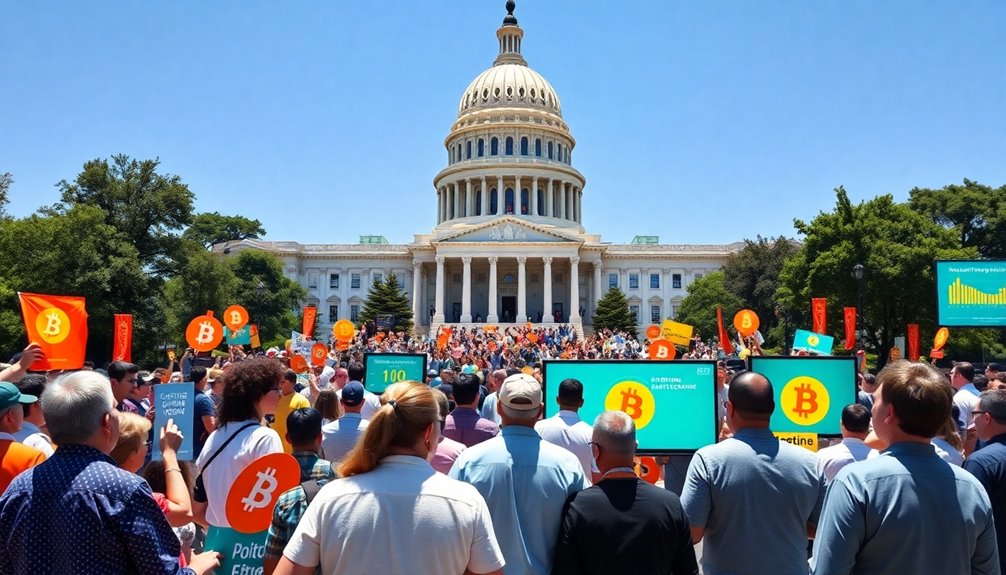
As states increasingly recognize Bitcoin's potential, many are moving ahead with initiatives that could reshape their financial landscapes. You might be surprised to learn that as of January 17, 2025, seven U.S. states have proposed establishing strategic Bitcoin reserves. This shift reflects a growing acceptance of Bitcoin as a legitimate asset class, with sixteen state legislatures currently considering bills that allow for digital asset stockpiles or even permit state retirement funds to invest in cryptocurrency.
What's fascinating is how state-level initiatives are outpacing federal efforts. By focusing on local fiscal strategies, these states are tapping into Bitcoin as a hedge against economic instability and inflation. For instance, Texas has introduced the Strategic Bitcoin Reserve Act, which aims to create a secure Bitcoin reserve while allowing community donations. Diversification within these investments can help mitigate volatility in retirement accounts that may arise from fluctuating crypto markets.
Pennsylvania's Bitcoin reserve bill proposes investing up to 10% of state funds in Bitcoin, potentially nearing $1 billion. Ohio's Bitcoin Reserve Act gives the state Treasurer flexibility in managing Bitcoin investments, showcasing a proactive approach to this evolving financial instrument.
Utah's Blockchain and Digital Innovation Amendments have also gained traction, allowing up to 10% of state funds to be invested in eligible crypto assets. These proposals often include stringent cold storage requirements for Bitcoin holdings, ensuring the security of these assets. Many bills specify that eligible digital assets must have a market cap of at least $500 billion, a threshold currently met only by Bitcoin, which reflects the growing recognition of strategic Bitcoin reserves as a viable financial strategy.
The implications of these initiatives are significant. If states start investing substantial amounts in Bitcoin, you could see the market dynamics shift, potentially locking down billions of dollars and impacting the value of circulating assets.
However, investing state pension funds in cryptocurrency brings both risks and benefits for public employees. It could enhance retirements, but it also exposes them to the volatility of the crypto market.
Moreover, states see Bitcoin not just as an investment opportunity, but as a vehicle for innovation and economic diversification. This evolving landscape demonstrates how state-level initiatives are redefining retirement investing and setting new standards for Bitcoin adoption.
As an affiliate, we earn on qualifying purchases.

As an affiliate, we earn on qualifying purchases.

Bitkey Bitcoin Hardware Wallet, No Screen – Self-Custody, No Seed Phrase
- Bitcoin Exclusive Design: Dedicated hardware wallet for Bitcoin
- All-in-One Management: Compare prices, send, receive, and track wallet
- Enhanced Security: Three-key approach simplifies self-custody
As an affiliate, we earn on qualifying purchases.
As an affiliate, we earn on qualifying purchases.
As an affiliate, we earn on qualifying purchases.