

When evaluating your employer-sponsored wellness programs, focus on more than just participation rates; look for actual health improvements and cost savings. Measure engagement levels, personalized experiences, and health outcomes like BMI or blood pressure changes. Use digital tools to track real-time data and guarantee sustained benefits through ongoing support. By emphasizing meaningful outcomes over surface-level metrics, you can better assess program success and identify opportunities for lasting impact—discover more strategies that can transform your wellness initiatives.

Get smart everyday buys delivered free with Prime
- Fast, free delivery on millions of items
- Prime Video, Amazon Music and more included
- Member-only deals all year
Key Takeaways
- Focus on meaningful engagement and behavior change rather than just participation rates.
- Use health metrics and cost data to measure tangible improvements and program ROI.
- Incorporate employee feedback and personalized options to increase program relevance and motivation.
- Regularly review health outcomes and sustainability of benefits for long-term effectiveness.
- Leverage digital tools for real-time data, personalized insights, and continuous program refinement.
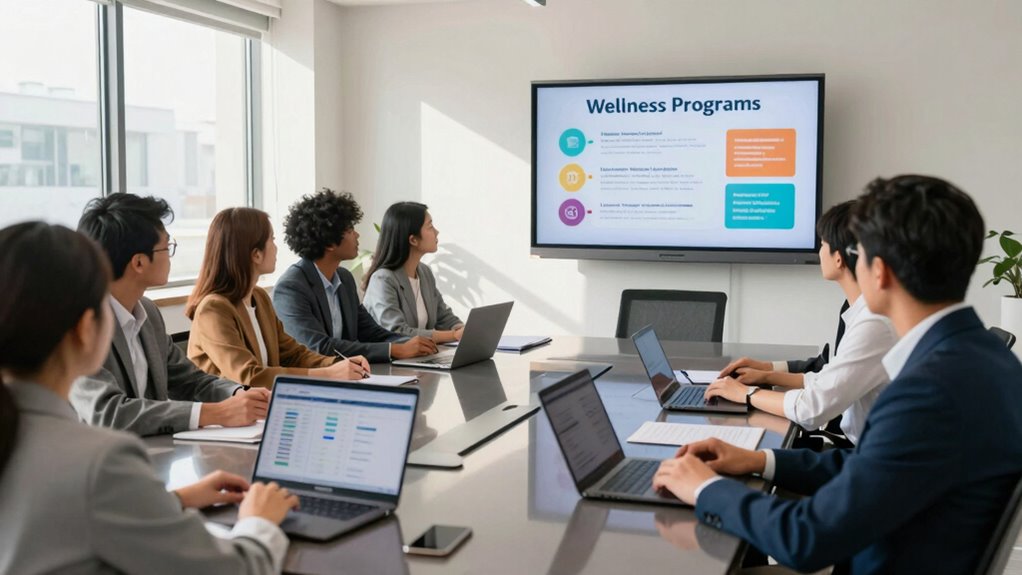
Are employer-sponsored wellness programs truly effective in improving employee health and reducing healthcare costs? That’s a question many companies grapple with as they invest resources into these initiatives. To determine their success, you need to look beyond surface-level participation and focus on key factors like employee engagement and overall program effectiveness. If employees aren’t genuinely involved or motivated, the program’s impact will likely fall short, no matter how well-designed it seems on paper. High participation rates don’t always translate into meaningful health improvements, so it’s essential to dig deeper into how engaged employees truly are and whether the program fosters lasting behavior change.
High participation alone doesn’t guarantee health improvements; genuine engagement and lasting behavior change are key.
You should assess whether the wellness initiatives resonate with your workforce. Employee engagement is critical because it indicates whether employees see value in the offerings and feel motivated to participate. Engagement can be influenced by how well the program addresses employees’ specific needs, whether it offers personalized options, and if it creates a supportive environment. If employees view the program as just another corporate requirement or a check-the-box activity, its effectiveness diminishes. Conversely, programs that involve employees in planning, provide incentives that matter to them, and promote a culture of health tend to see higher engagement and better outcomes. Additionally, understanding the role of employee motivation can help tailor strategies to boost participation. Incorporating behavioral science principles can further enhance the design of these initiatives by addressing underlying motivators and barriers.
Evaluating program effectiveness involves measuring tangible health improvements, like reduced BMI, lower blood pressure, or increased physical activity levels. But it also means analyzing whether these health changes lead to lower healthcare costs over time. Does participation correlate with fewer sick days or decreased utilization of medical services? Are employees reporting improved well-being and job satisfaction? It’s not enough to track participation numbers; you need data that demonstrates actual health gains and cost savings. Regularly reviewing these metrics can help you refine the program and ensure it remains relevant and impactful. Incorporating digital health tools can further enhance this process by providing real-time data and personalized feedback.
Moreover, consider the sustainability of the program’s effects. An initial spike in participation might not translate into long-term health benefits if employees revert to old habits once the program ends. Thus, successful wellness programs integrate ongoing support and education that encourage lasting lifestyle changes. They foster a culture of health that permeates the workplace, making wellness a shared priority. If the program’s design includes continuous engagement strategies, it’s more likely to produce sustainable benefits, justifying the investment. Additionally, understanding the importance of emerging trends in digital health can help tailor programs that leverage innovative tools for better engagement. Incorporating data-driven approaches and the latest technology enhances the ability to personalize wellness initiatives, increasing their effectiveness and relevance.
In the end, evaluating employer-sponsored wellness programs requires an all-encompassing approach that balances participation metrics with real health outcomes. When you focus on fostering genuine employee engagement and measuring program effectiveness holistically, you’re better positioned to determine whether these initiatives truly deliver on their promises of healthier employees and reduced healthcare costs.
digital health tracking tools for wellness programs
As an affiliate, we earn on qualifying purchases.
As an affiliate, we earn on qualifying purchases.
Frequently Asked Questions
How Do Wellness Incentives Impact Employee Morale?
Wellness incentives can substantially boost your employee morale by providing motivation and showing that their well-being matters. When you incorporate engaging strategies like rewards and recognition, employees feel valued and motivated to participate. This motivation boost leads to increased engagement, a more positive workplace atmosphere, and higher job satisfaction. Overall, well-designed incentives foster a sense of community and support, making employees more committed and happier at work.
Are Wellness Programs Effective Across All Age Groups?
Wellness programs can be effective across all age groups, but their success depends on understanding age-specific engagement and generational differences. Younger employees might prefer tech-savvy, flexible options, while older employees may value personalized health coaching. You should tailor programs to meet these diverse needs, ensuring inclusivity. By doing so, you’ll foster better participation and improve overall health outcomes, making your wellness initiatives more impactful across generations.
What Privacy Concerns Arise With Wellness Data Collection?
Privacy concerns in wellness data collection are like shadows lurking behind transparency. You worry about data security—how securely your health info is stored—and consent management—whether you’re truly in control of what’s shared. You might fear misuse or breaches, risking sensitive details. It’s crucial to guarantee your employer adopts strict data security measures and clear consent protocols, so your personal health data remains protected and your privacy respected throughout the wellness program.
How Do Companies Measure Long-Term Wellness Outcomes?
You measure long-term wellness outcomes by tracking behavior change over time, using follow-up surveys, health assessments, and biometric data. Companies also analyze participation rates and health improvements to gauge program effectiveness. These metrics help determine if wellness initiatives lead to sustained behavior change and program sustainability. Regularly reviewing data guarantees that the program continues to meet employee needs, fostering ongoing engagement and long-lasting health benefits.
Can Wellness Incentives Inadvertently Increase Health Disparities?
You might not realize it, but wellness incentives can unintentionally deepen health disparities due to socioeconomic barriers and cultural biases. When programs favor those with more resources or cultural familiarity, they exclude others, widening gaps. Coincidentally, this highlights that well-meaning initiatives can reinforce inequalities unless companies actively address these issues, ensuring equitable access. Recognizing these pitfalls helps you create more inclusive wellness strategies that truly serve everyone.
personalized employee wellness incentives
As an affiliate, we earn on qualifying purchases.
As an affiliate, we earn on qualifying purchases.
Conclusion
When evaluating wellness programs and incentives, remember that you get what you pay for. By carefully examining their design, participation rates, and outcomes, you can guarantee they’re truly benefiting your organization and employees. Don’t be afraid to dig beneath the surface—sometimes the real treasure lies in the details. Keep your eyes open and be ready to adapt; the proof of a program’s worth will often be in the pudding.
blood pressure monitor for health improvement
As an affiliate, we earn on qualifying purchases.
As an affiliate, we earn on qualifying purchases.
As an affiliate, we earn on qualifying purchases.
Halloween Picks
halloween
As an affiliate, we earn on qualifying purchases.