
TL;DR
ECB President Christine Lagarde told the European Parliament’s economic affairs committee that the euro-area economy remained resilient, while inflation rose to 3.2% in August. She explained the ECB’s recent 25-basis-point rate increase and said AI could affect productivity, jobs, investment and inflation, though its overall economic impact remains uncertain.
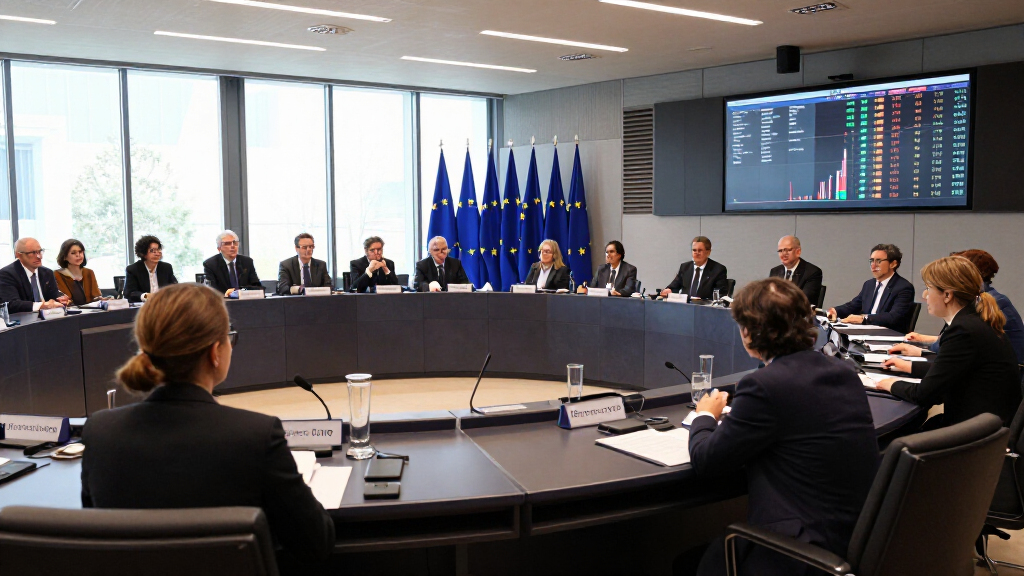
European Central Bank President Christine Lagarde told the European Parliament’s economic affairs committee on 28 September that the euro-area economy had remained resilient despite an energy shock, while inflation rose to 3.2% in August. She defended the ECB’s recent 25-basis-point increase in its three key interest rates and said artificial intelligence could reshape investment, work and inflation, with its overall economic effects still uncertain.
Lagarde said real gross domestic product grew solidly in the second quarter of 2026, with growth across most euro-area countries and sectors. She said that pattern was expected to continue in the third quarter. Manufacturing had been supported by increased government spending on defence and infrastructure, while recovering consumer confidence helped services. The ECB president also pointed to AI-related activity in digital services, business investment and exports. The unemployment rate was 6.4% in July, though employment and labour-force growth were slowing.
Inflation rose from 2.9% in July to 3.2% in August, according to figures Lagarde cited. Energy inflation increased to 14.3% from 10.3%, reflecting higher energy commodity prices and refining margins on liquid fuels. Food inflation eased slightly, and inflation excluding energy and food edged down to 2.4% as services inflation fell. Compensation per employee, a measure of nominal wage growth, slowed to 3.3% in the second quarter from 3.6% in the first.
The ECB raised its three key rates by 25 basis points earlier in September. Lagarde said the decision reflected the risk that higher energy prices could become embedded in wider inflation. She said the bank had not yet seen evidence of energy prices feeding into higher wages. In her account, the September staff projections put euro-area growth at 0.9% in 2026, 1.4% in 2027 and 1.5% in 2028; headline inflation was projected to average 3.0%, 2.5% and 2.1% in those years.
Rate Policy Faces an Energy Test
The remarks outline how the ECB is weighing an energy-driven rise in prices against signs that the shock has not yet spread to wages. Lagarde said inflation was expected to be higher in 2027 and 2028 than the bank had anticipated a few months earlier, while long-term interest rates had risen notably since its previous meeting. That combination leaves policymakers balancing the risk of persistent inflation against the prospect that tighter financial conditions will slow growth.
AI adds another layer to that assessment. Lagarde said firms were expected to devote around 10% of total investment to AI in 2026, and AI-related borrowing already accounted for roughly a quarter of credit growth to firms. Those figures indicate AI’s growing role in business finance, while the speech cautioned that its broader effects on productivity, jobs, prices and monetary policy are not yet settled.
Top picks for "hear committee economic"
As an affiliate, we earn on qualifying purchases.
The ECB’s Three-Part Assessment
Lagarde described the ECB’s approach to energy shocks as responding to the risk that price increases spread through the economy, rather than reacting directly to energy prices themselves. She said the bank assesses three areas: its inflation outlook and the risks around it; underlying inflation, including the pass-through to other prices and wages; and how monetary policy affects borrowing costs and economic growth.
In September, the ECB’s baseline projections pointed to headline inflation easing from 3.0% in 2026 to 2.1% in 2028. Longer-term inflation expectations remained around 2%, Lagarde said, while shorter-term expectations were elevated. She described the outlook as highly uncertain, with upside risks to inflation and downside risks to growth.
“We do not react to energy prices, we react if we see risks of higher energy prices becoming embedded in inflation.”
— Christine Lagarde, ECB president
AI’s Net Economic Effect
Lagarde’s speech did not quantify how much AI will raise euro-area productivity or how quickly its effects might appear. Although she cited expected investment and borrowing figures, the available material does not establish how AI will affect employment, wages, prices or output across the economy. Those outcomes could matter for monetary policy, but their scale and timing remain unclear.
The energy outlook also remains uncertain. Lagarde said there was no evidence yet that higher energy prices were feeding into higher wages, but she did not rule out that pass-through in the future. The speech gives the ECB’s projections and assessment at the time of the hearing; subsequent data could change both.
Future Data Will Guide Rates
The ECB’s next policy choices will depend on incoming information about inflation, wages, energy prices, growth and how rate changes pass through to borrowing costs. Lagarde said the bank would continue to assess those developments against its three criteria. The hearing did not announce a timetable or commitment for another rate move.
Further evidence will also be needed to judge AI’s effects on investment, productivity and labour markets. Lagarde’s remarks set out the issues facing policymakers; they do not resolve how quickly AI will change the economy or how the ECB will respond if those changes alter inflation.
Key Questions
What did Lagarde discuss at the hearing?
She discussed the euro-area economic outlook, the ECB’s September rate increase, recent inflation and the possible effects of AI on the economy and monetary policy.
Why did the ECB raise interest rates?
Lagarde said the ECB raised its three key rates by 25 basis points to keep inflation on track to stabilise at its 2% medium-term target. She said policymakers were watching for energy price increases to spread to wages and other prices.
What happened to euro-area inflation in August?
Headline inflation rose to 3.2% in August from 2.9% in July. Energy inflation rose to 14.3%, while inflation excluding energy and food edged down to 2.4%, according to figures in Lagarde’s speech.
What did Lagarde say about AI and inflation?
She said AI could affect investment, labour markets and inflation, making it relevant to monetary policy. She also said its overall macroeconomic effect remains uncertain.
Did Lagarde signal another rate increase?
The speech did not commit to another rate move or give a timetable. Lagarde said the ECB would assess the inflation outlook, underlying price pressures and the transmission of monetary policy.
Source: primary