
To cut unnecessary monthly subscriptions, start by reviewing your bank statements and tracking what you pay for regularly. Identify which services you use often and cancel those you rarely or never access. Set a clear budget and use management tools to keep track. Negotiating better deals or switching plans can save extra money. Regularly reviewing these subscriptions guarantees you avoid cost creep—continue exploring these tips to maximize savings and simplify your finances.

Get smart everyday buys delivered free — and shop member deals
- Fast, free delivery on millions of items
- Access to Prime Big Deal Days deals on October 6–7
- Prime Video, Amazon Music and more included
Key Takeaways
- Review all bank and credit card statements to identify and categorize recurring subscriptions, cancel unused or underused services.
- Set a monthly budget for essential subscriptions and track spending with management tools to prevent overspending.
- Cancel subscriptions before renewal deadlines, especially those rarely or never used, to avoid unnecessary charges.
- Contact providers to negotiate better deals or switch to lower-cost plans that meet your needs.
- Establish a routine to regularly review active subscriptions, detect duplicates, and eliminate redundant or outdated services.
As an affiliate, we earn on qualifying purchases.
Assess Your Current Subscription Spending

To effectively cut down on unnecessary subscriptions, you first need to understand your current spending. Subscription fatigue can sneak up on you when multiple services automatically renew, often without you realizing the total cost. Review your bank and credit card statements carefully, paying attention to recurring charges aligned with different billing cycles. Some subscriptions might renew monthly, while others are billed annually or quarterly, making it easy to lose track. Tracking these charges helps you identify which subscriptions are essential and which ones you can cancel. Recognizing your spending patterns allows you to make informed decisions about cutting costs. Being aware of your billing cycles also helps you anticipate upcoming charges, so you’re not caught off guard when a renewal hits your account.
As an affiliate, we earn on qualifying purchases.
Identify Active and Inactive Subscriptions

Start by reviewing your monthly bank statements to see all recurring charges. Then, categorize your subscriptions by type and note how often you actually use each one. This will help you identify which services are active, inactive, or unnecessary.
Review Monthly Bank Statements
Reviewing your monthly bank statements is a crucial step in identifying which subscriptions are still active and which ones you can cancel. Look for recurring charges that appear regularly, and note the payment methods used. Sometimes, subscriptions renew automatically without your notice, so spotting these charges helps prevent unnecessary payments. Pay close attention to any unfamiliar or forgotten services, and verify if they’re still needed. Check the renewal dates to see if a subscription is about to renew or has already done so. This process helps you decide whether to keep or cancel each service. By understanding your payment methods and renewal patterns, you gain control over your spending and avoid paying for subscriptions you no longer use or want.
Categorize Subscription Types
Next, categorize your subscriptions into active and inactive groups based on the information from your bank statements. This step helps you see where your money goes and identify unnecessary expenses. Look for patterns such as subscription bundling or multiple payment methods, which might obscure ongoing charges. Consider these points:
- List all subscriptions, regardless of perceived importance.
- Mark those you actively use versus those you haven’t touched recently.
- Note subscriptions paid through different payment methods—credit cards, PayPal, or direct bank transfers.
- Recognize bundled subscriptions that might duplicate services.
Track Usage Frequency
Ever wondered how often you actually use your subscriptions? Tracking your usage frequency helps you identify which services are truly necessary. Review your bank statements or app history regularly to see which subscriptions remain inactive. If you notice some haven’t been used in months, consider canceling them. Be aware of subscription bundling options that might give you multiple services at a lower cost, but only if you use them frequently. Keep an eye out for promotional offers that tempt you to sign up; these often encourage long-term commitment without ongoing usage. By monitoring how often you engage with each subscription, you can make informed decisions to cut down on unused services, saving money and reducing clutter. This process ensures you’re only paying for what you genuinely benefit from.
subscription cancelation service
As an affiliate, we earn on qualifying purchases.
As an affiliate, we earn on qualifying purchases.
Analyze Usage Patterns and Value

Start by tracking your monthly spending to see where your money goes. Next, identify any services you rarely or never use, so you can consider canceling them. Finally, assess the quality of the content or features you actually enjoy to make sure you’re getting good value from your subscriptions.
Track Monthly Spending
Have you ever wondered where your money goes each month? Tracking your monthly spending helps you understand your habits and identify unnecessary expenses. Start by reviewing your bank statements and listing all subscriptions. Next, consider how often you actually use each service and if it provides good value. Look for patterns, like overlapping services that could be bundled or canceled.
Here are four key points to keep in mind:
- Categorize subscriptions by usage frequency and importance.
- Identify opportunities for subscription bundling to save money.
- Watch for promotional offers that may make switching or canceling easier.
- Regularly revisit your spending to prevent unnoticed charges from piling up.
This approach ensures you’re making informed decisions, reducing waste, and maximizing value.
Identify Unused Services
Are you truly getting value from all your subscriptions? To identify unused services, review your usage patterns carefully. Check which subscriptions you rarely or never use, and consider whether they’re worth keeping. Subscription bundling can help you see overlapping services that might be redundant, saving money when combined. Also, examine seasonal subscriptions—if you only use them during certain times of the year, evaluate if they’re necessary year-round. Cancel any services that no longer serve your needs or add minimal value. Tracking your actual usage helps prevent paying for services you don’t utilize, making it easier to cut costs. Regularly reviewing and adjusting your subscriptions ensures you’re only paying for what truly benefits you.
Assess Content Quality
After identifying which subscriptions you rarely use, the next step is to evaluate their content quality and overall value. Look at how you engage with the subscription content—are you truly benefiting from it? Consider these points:
- Frequency of usage – how often you access the content.
- Relevance – does the subscription content match your interests or needs?
- Quality of content – is it well-produced and informative?
- Personal value – does it add enough benefit to justify the cost?
As an affiliate, we earn on qualifying purchases.
Prioritize Essential and High-Value Services

Focusing on essential and high-value services guarantees you’re investing your money where it truly matters. To do this, evaluate each subscription’s role in your daily life or work, and prioritize those that deliver the most benefit. Consider how different providers use pricing strategies to attract customers and how those strategies impact your satisfaction. Opt for services that consistently meet your needs and enhance your productivity or enjoyment. Avoid falling for promotional offers that seem tempting but don’t provide long-term value. By focusing on high-value subscriptions, you ensure your budget supports what truly matters, leading to greater customer satisfaction and less wasted money. This approach helps you make smarter decisions, freeing up funds for more meaningful or necessary expenses.
Cancel Unnecessary or Underused Subscriptions

When you notice that certain subscriptions are rarely used or no longer serve your needs, it’s time to cancel them. Don’t fall for subscription myths that claim cancellations are complicated—most services have straightforward processes. Be aware of renewal policies; many renew automatically, making it easy to forget about unused services. To make smarter decisions, consider these points:
- Review your subscription history to identify underused services
- Check renewal dates and cancellation deadlines
- Understand the service’s cancellation process to avoid charges
- Question whether the subscription still offers value or if it’s just a recurring expense
Cancel unnecessary subscriptions to free up money and reduce clutter. Doing so helps you regain control and avoid falling prey to renewal policies that perpetuate unused services.
Set a Monthly Budget for Subscriptions

Setting a monthly budget for your subscriptions helps you stay in control of your spending and prevents costs from spiraling. Start by identifying your essential subscriptions and setting a cap for total monthly expenses. Consider subscription bundling options that offer multiple services at a discounted rate, helping you maximize value while controlling costs. Keep an eye out for promotional offers, which can reduce your expenses temporarily or give you added benefits. Allocate funds based on your priorities, ensuring you don’t overspend on entertainment, streaming, or apps. Regularly review your budget to adjust for changes in your usage or new offers. By setting and sticking to a budget, you maintain clarity on what you spend and avoid falling into unnecessary subscriptions.
Use Cancellation and Subscription Management Tools
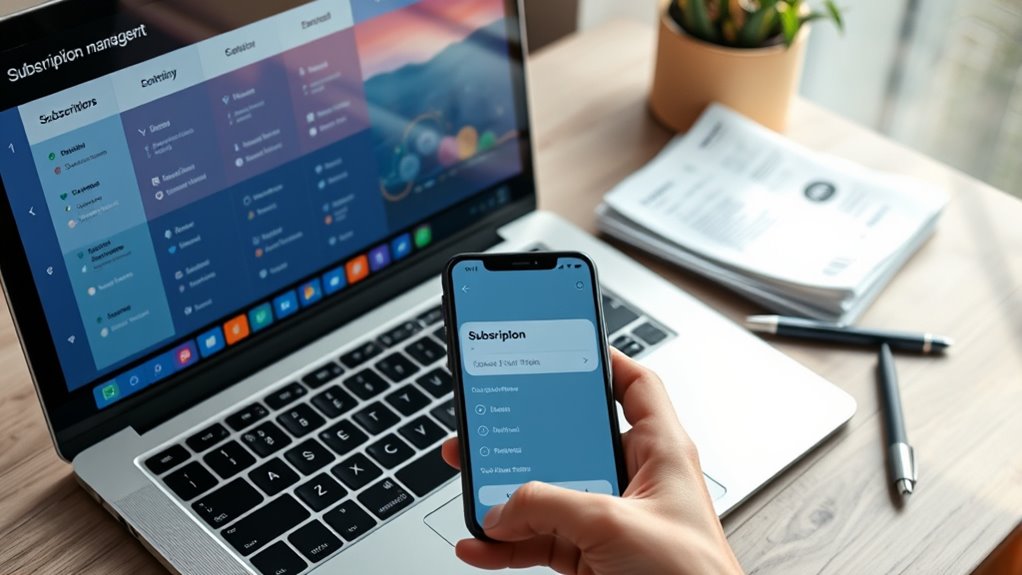
Using cancellation and subscription management tools makes it easier to monitor and control your recurring expenses. These tools help you identify unused or underused subscriptions, making it simple to cancel or pause them. They also allow you to bundle subscriptions through loyalty programs, saving money and reducing clutter. Here are four ways these tools benefit you:
- Track all subscriptions in one place for better visibility.
- Detect duplicate or unnecessary services to cut costs.
- Manage subscription bundling offers for discounts.
- Receive reminders to review or cancel before charges recur.
Negotiate Better Deals or Alternatives
After identifying unused or unnecessary subscriptions with management tools, you can often negotiate better deals or explore alternative plans. Contact your service providers directly and ask about discount negotiations; many companies are willing to offer discounts or customized plans to retain your business. Highlight your loyalty or suggest a long-term commitment to secure better rates. If negotiations don’t yield savings, consider switching to alternative plans that offer similar features at a lower cost. Comparing different options ensures you’re not overpaying for services you don’t need. Be proactive and confident in discussing your options—many providers appreciate customer feedback and are open to making adjustments. This approach helps you cut costs while maintaining access to the services you value most.
Establish a Routine for Ongoing Review

How can you guarantee your subscription costs stay in check over time? Establishing a routine for ongoing review ensures you stay mindful of your spending. Regularly assess your subscriptions to spot unnecessary or duplicated services. Take advantage of subscription bundling options and review promotional offers to maximize savings. Here are four steps to keep your expenses in check:
Regularly review and cancel unused subscriptions to keep your costs in check.
- Set a monthly reminder to review all active subscriptions.
- Cancel unused or redundant services promptly.
- Track promotional offers that can be combined or renewed.
- Reevaluate your needs periodically, considering whether bundle discounts suit your usage.
Frequently Asked Questions
How Often Should I Review My Subscriptions to Stay on Track?
You should review your subscriptions at least once every three months to stay on track. During these reviews, check your subscription renewals and billing cycles to see what’s still useful. Cancel any services you no longer need or use. Regularly monitoring your subscriptions helps prevent unexpected charges and keeps your budget in check. Staying proactive guarantees you only pay for what truly benefits you.
What Signs Indicate a Subscription Is No Longer Valuable?
You’ll notice a subscription no longer adds value when you experience subscription fatigue or when renewal notifications pile up without use. If you rarely log in or use the service, it’s a clear sign to cancel. Unwanted charges or feeling overwhelmed by multiple subscriptions also indicate they’re no longer worth it. Regularly reviewing your renewal notifications helps you catch these signs early and avoid wasting money on unused services.
How Can I Detect Hidden or Forgotten Subscriptions?
You can detect hidden or forgotten subscriptions by regularly reviewing your bank and credit card statements for any subscription scams or billing errors. Don’t rely solely on email notifications; instead, use subscription management apps or set calendar reminders to check your accounts monthly. Be cautious of charges that seem unfamiliar or duplicate, and contact your bank if you notice suspicious activity. Staying vigilant helps you avoid unnecessary expenses and potential scams.
Are There Tools to Automatically Track Subscription Spending?
Yes, there are tools for subscription management that automatically track your expense tracking. Apps like Truebill, Bobby, and Subby connect to your bank accounts and credit cards, scanning for recurring charges. They give you a clear overview of your subscription spending, alert you to unused services, and even help you cancel unwanted subscriptions easily. Using these tools simplifies expense tracking and helps you stay on top of your subscription costs effortlessly.
What Strategies Help Prevent Accumulating Unnecessary Subscriptions?
You can prevent unnecessary subscriptions by conducting regular subscription audits to identify unused or redundant services. Set up cancellation reminders so you don’t forget to cancel subscriptions you no longer need. Also, scrutinize your receipts and bank statements monthly. Limiting new subscriptions and asking yourself if you truly need each one helps you avoid cluttering your finances. Staying proactive keeps your spending under control and ensures you only pay for what you use.
Conclusion
By regularly reviewing your subscriptions, you can save money and avoid wasting on unused services. For example, Sarah noticed she was paying for multiple streaming platforms she rarely used, so she canceled the extras and stuck with one. Now, she saves $20 each month and feels more in control of her spending. Making this a habit guarantees you only pay for what truly benefits you, keeping your finances healthier in the long run.
Fall Picks
fall essentials
As an affiliate, we earn on qualifying purchases.