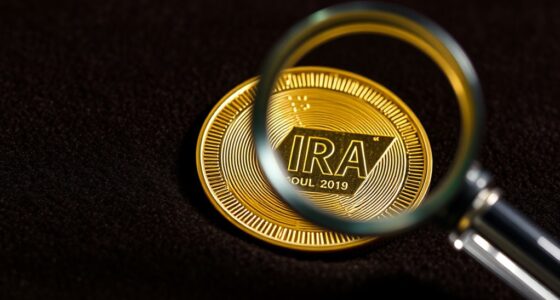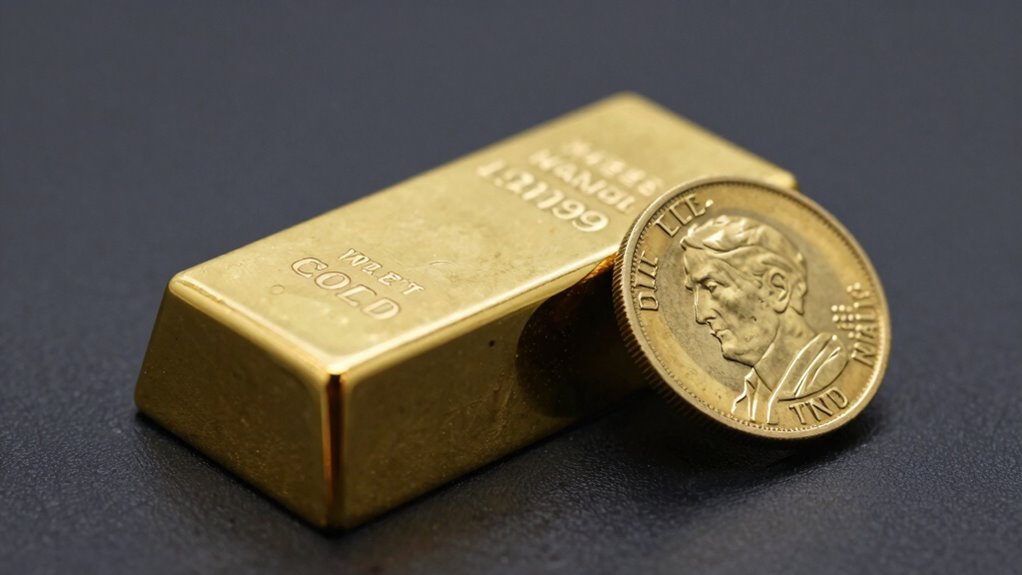

To spot fake gold bars and coins, examine their markings for clear, consistent stamps that match official mint standards. Check the surface for signs of poor craftsmanship, like rough edges or discoloration. Use a precise scale to verify weight, as genuine gold is dense and consistent. Perform simple tests like a magnet or acid test to detect fakes, but for certainty, more advanced methods exist. Keep in mind, understanding these signs can help you identify fakes—continue to explore for detailed tips.
Open a free Amazon Business account
Business pricing, bulk buying and tax-exempt orders.
As an affiliate, we earn on qualifying purchases.
Key Takeaways
- Check for clear, consistent markings and official mint marks; poorly stamped or uneven marks indicate fakes.
- Examine surface finish for irregularities, discoloration, or rough textures that suggest counterfeit craftsmanship.
- Verify weight with a precise scale; genuine gold’s density should match official specifications.
- Perform a magnet test; real gold is non-magnetic, so attraction signals a fake.
- Use professional testing methods like XRF analyzers for definitive authenticity verification.
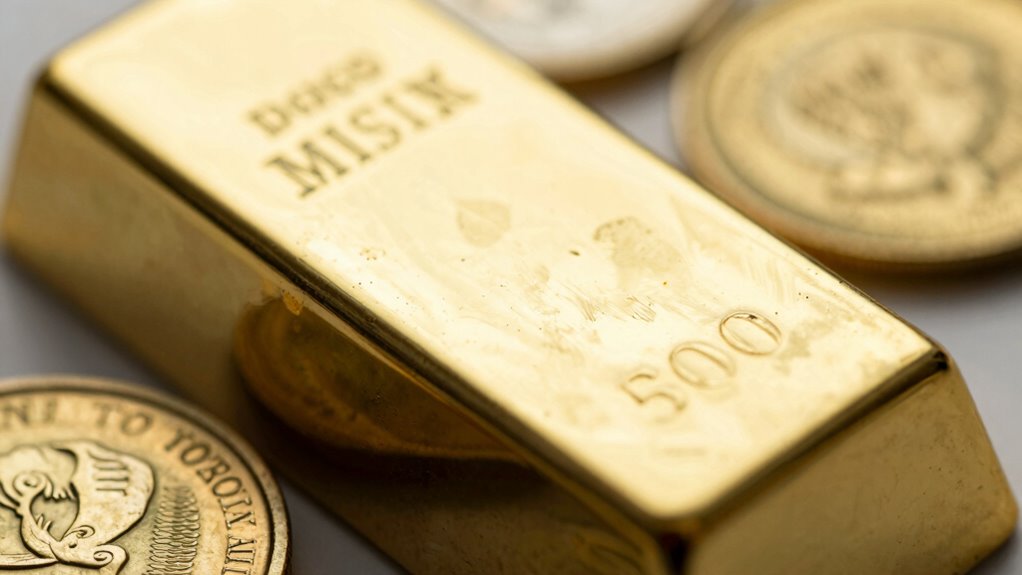
Gold bars and coins are prized for their value and security, but unfortunately, counterfeit versions are common. When investing or collecting, it’s essential to know how to identify fakes to protect your assets. One of the most important factors in authenticating gold is understanding gold purity. Genuine gold bars and coins are made with a high level of purity, often marked with specific stamps indicating their karat or fineness, such as 24-karat or .999 fine gold. You should always look for these markings and verify that they match the standards claimed. Counterfeit detection involves scrutinizing these details—if the markings are poorly stamped, uneven, or inconsistent with official mint marks, it’s a warning sign.
Authentic gold displays clear, consistent markings indicating high purity; poor or uneven stamps are red flags.
Beyond the markings, you can perform simple tests to gauge gold purity. A common method is the magnet test; genuine gold isn’t magnetic, so if your piece attracts a magnet strongly, it’s likely fake or at least not pure gold. However, note that some non-gold metals aren’t magnetic either, so this test isn’t conclusive but can serve as an initial screening. For more trustworthy results, consider using an acid test kit, which involves applying a small amount of nitric acid to the gold surface to observe the reaction. Genuine gold will show little to no reaction, whereas fake gold or gold-plated items often react by discoloring or bubbling.
Another critical aspect of counterfeit detection is examining the weight and size. Real gold is dense, so a gold bar or coin of a given size should weigh accordingly. If it feels unusually light or heavy compared to authentic standards, it’s a sign to investigate further. You can compare your piece with official specifications or use a precise scale for this purpose. Additionally, checking the surface for signs of poor craftsmanship, such as uneven edges, discoloration, or visible seams, can help identify fakes. Genuine gold items typically have a smooth, uniform finish with clear, sharp engravings. It’s also helpful to familiarize yourself with official mint marks and their appearance to further verify authenticity. Being aware of these counterfeit indicators can save you from potential financial loss.
Furthermore, understanding the manufacturing processes used for genuine gold items can aid in detection, as fakes often lack the detailed craftsmanship of authentic pieces. Using specialized equipment like X-ray fluorescence (XRF) analyzers that are utilized by professionals can provide accurate assessments of gold purity without damaging the item. Recognizing the common scams in the gold market can also help you stay cautious and make informed decisions. Being diligent and combining these methods—verifying markings, performing simple tests, and seeking professional help—can significantly reduce the risk of falling victim to counterfeit gold. By being aware of these market trends and common scams, investors can better protect their assets. They have specialized equipment like X-ray fluorescence (XRF) analyzers that can accurately determine gold purity without damaging the item. By combining these methods—verifying markings, performing simple tests, and seeking professional help—you can confidently distinguish real gold from counterfeit. Protecting your investment requires vigilance, but armed with these knowledge points, you’ll be better prepared to spot fake gold bars and coins before making a purchase.
As an affiliate, we earn on qualifying purchases.
Frequently Asked Questions
Can Fake Gold Be Magnetic?
Fake gold can be magnetic, especially if it’s plated or made with magnetic metals. Genuine gold, however, has no magnetic properties. When you test, keep in mind that gold plating might cause some magnetic attraction because of the base metal underneath. Use a magnet carefully; if it sticks strongly, chances are it’s not real gold. Always combine this test with others for accurate identification.
Are Counterfeit Gold Bars Weight Different?
Did you know that around 80% of counterfeit gold bars are lighter than genuine ones? You can detect this by checking the weight against official specifications. Counterfeit detection often involves measuring the gold purity and weight; fake bars tend to be inconsistent. If a bar feels unusually light or heavy, it’s a clear sign you should investigate further. Always verify weight and purity to avoid falling for fake gold.
How Accurate Are Electronic Gold Testers?
Electronic gold testers are quite accurate for counterfeit detection, especially when testing gold alloy content. They work by measuring electrical conductivity, which varies with purity. However, factors like surface contamination or improper technique can affect results. You should use them as a quick initial check, but confirm with more detailed methods if you suspect a fake, ensuring your gold’s authenticity without relying solely on electronic testing.
What Are Common Fake Gold Markings?
Fake gold often features questionable markings, making Gold authenticity harder to verify. Common fake gold markings include incorrect weight or purity stamps, misspelled words, or inconsistent fonts. Marking identification can be tricky if the markings look too perfect or seem artificially added. Always scrutinize these details closely, as real gold has precise, clean markings that align with official standards. Recognizing these signs helps protect you from counterfeit gold items.
Can UV Light Reveal Fake Gold?
Using UV light won’t reliably reveal fake gold because gold plating often isn’t affected by UV, and fake items can pass this test. Instead, focus on gold density—real gold has a specific density that fake gold can’t match. You can also try other tests like magnetism or acid testing to confirm authenticity. Relying solely on UV light isn’t enough; thorough methods give you better assurance.
As an affiliate, we earn on qualifying purchases.
Conclusion
So, next time you’re eyeing shiny gold, remember: not everything glitters with authenticity. With a keen eye and a little skepticism, you can avoid falling for counterfeit bling. After all, the only thing worse than a fake gold bar is the embarrassment of flashing it at your neighbor’s barbecue. Stay vigilant, because in the world of gold, it pays to be a little suspicious—your wallet will thank you.
As an affiliate, we earn on qualifying purchases.
As an affiliate, we earn on qualifying purchases.
Flea & tick season Picks
flea and tick prevention
As an affiliate, we earn on qualifying purchases.